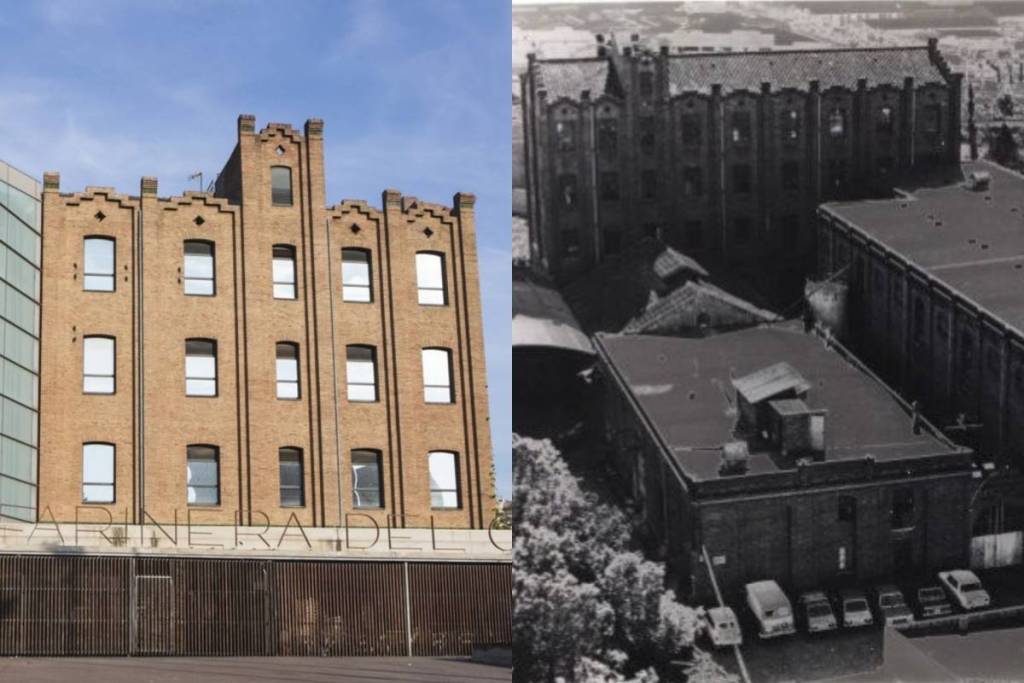

Barcelona wasn’t built in a day, or in a year, or even in a millennium. And although we have evidence that the first inhabitants settled here some 4,000 years ago, you don’t have to search among stones and ruins to learn about the city. Very close to Glòries, we find one of Barcelona’s most interesting buildings, one with a wealth of history to tell: La Farinera del Clot.
Although today it is a cultural center dedicated to promoting theater, the arts, and education among Barcelona residents—and especially the residents of Sant Martí—it was founded for another purpose that isn’t hard to guess from its name: as a flour mill.
The original building was constructed in 1852, although it initially served only as a grain warehouse and traditional mill. In 1892, the business became more professional and gained popularity as Casa Harinera de San Jaime. During the 99 years it was in operation, it came to produce 36% of all the flour consumed in Catalonia.
A Modernist renovation and a key role in the Civil War
But it was in 1908, at the height of Barcelona’s industrial boom and the heyday of Modernism, that architect Josep Maria Pericas i Morros designed a massive four-story red-brick complex with an aesthetic that blended industrial and Modernist styles. Today, only the largest building remains; surrounding it were two secondary wings that were demolished in the 1990s.
During the Civil War, the building was collectivized by workers’ committees and unions, and its production came under the control of the Generalitat and the government of the Second Republic to ensure the supply of bread during times of scarcity. La Farinera remained in operation throughout the 20th century, but it gradually became obsolete and lost its prominence in the flour industry, until it closed in 1991 and the building was abandoned.
Its transformation into a cultural center
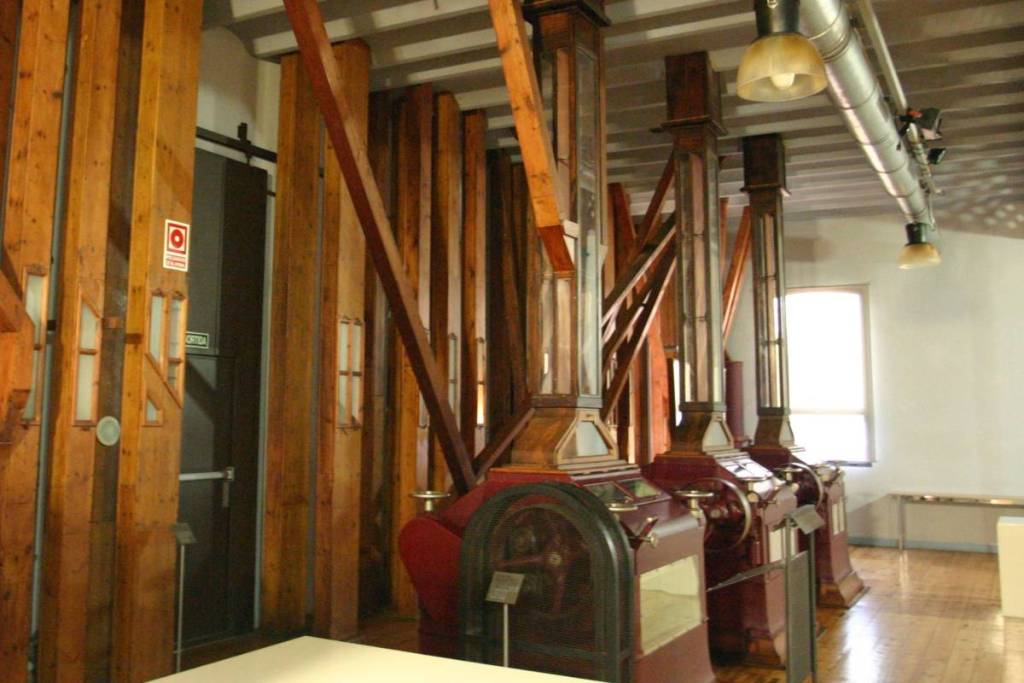
Public pressure and the residents’ need for public and cultural spaces at a time when most industrial buildings were being demolished to make way for apartment complexes led the Barcelona City Council to purchase the site and convert it into a community space. Following the acquisition, a comprehensive renovation of the building was considered, but it was ultimately decided to preserve the factory’s mechanical components and integrate its industrial past into the new space.
Today, the Farinera del Clot is one of the city’s most active cultural centers, but a visit inside remains a journey back to the 19th and 20th centuries, when the turbines and conveyor belts were transporting wheat at full speed; now, they bear witness to the exhibitions, classes, and plays held within its walls.