
You probably never imagined that the concept of recycling could go this far. The renowned Barcelona architect Ricardo Bofill, creator of iconic structures such as Barcelona’s Hotel Vela, saw unique potential in an old, abandoned cement factory. Built in the early 20th century on the outskirts of the city, Bofill decided that this immense structure could have a second life.
And what better way to prove it than by transforming it into his own home?
Carrying out this monumental project was no easy task. The story began in 1973, when Bofill discovered the factory’s skeletal remains and realized he couldn’t let such an opportunity go to waste. The building, its location, and the vast grounds were the dream of any architect with his vision: an area surrounded by open spaces and gardens, combined with a labyrinth of underground galleries that hide far more than we could ever imagine.

It took more than four decades to complete what many describe as a true work of art. Unlike the organic forms and colors that mimic nature—so prevalent in Gaudí’s work—nothing seems further removed from natural life than a colossal concrete structure like this one.
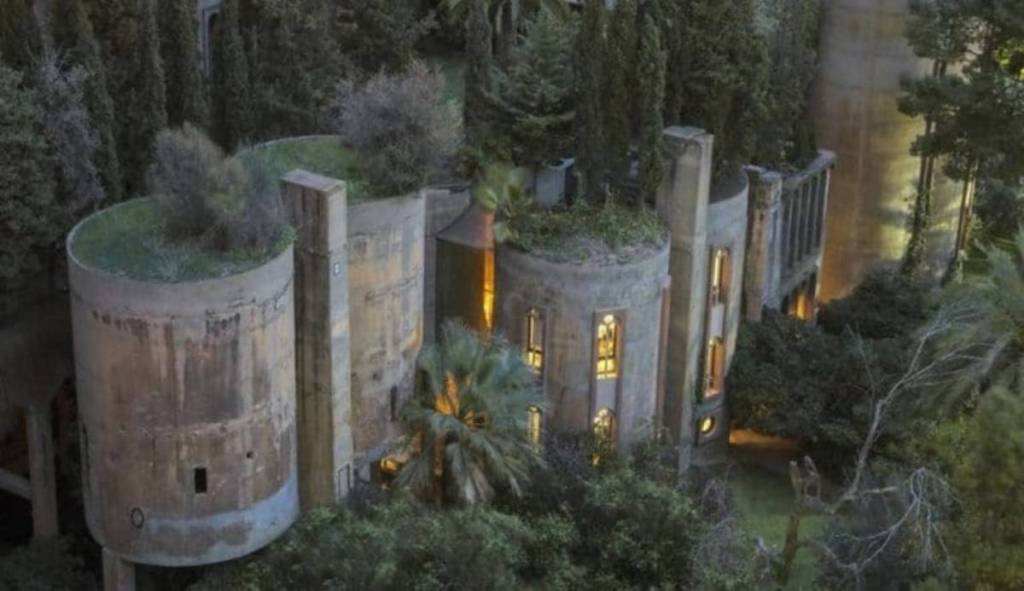
However, this does not mean that nature has been left out. In the images, you can see how greenery floods the entire space: climbing up the facades and taking over courtyards and terraces. The natural element has not disappeared; it has simply been transformed and adapted to the industrial setting.
The result could not be more impressive. A modern palace that seems to whisper a powerful message to us: the space that humans once took from nature is now shared in perfect harmony. More than a palace, it is a temple to communion—a masterful reordering of chaos.