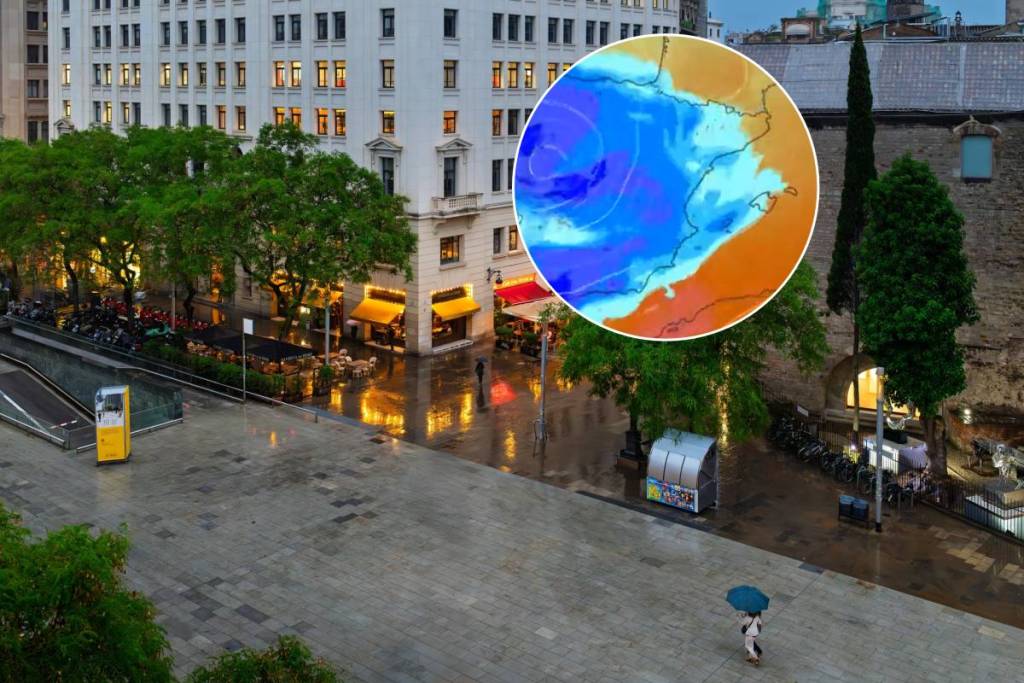

The Iberian Peninsula is facing the coming days with one eye on the sky due to the threat of storms Charles and Bruna. In northern Cáceres, southern Ávila, and the Central Mountain Range, red alerts have already been issued due to the likelihood of rainfall exceeding 120 liters per square meter within 12 hours.
Storm Charles is expected to enter from Portugal and move rapidly toward the center of the peninsula until it reaches the northeast. In Catalonia, with all eyes on the general strike on November 11 and the marches through the major urban centers, meteorologists note a low probability of rain during the day and expect widespread rainfall in Barcelona overnight.
The main demonstration begins at 5:30 p.m. from the Jardinets de Gràcia, and the yellow rain warning issued by Meteocat takes effect in northern Catalonia at 7:00 p.m. Therefore, barring an unexpected change in weather conditions, the rain will not affect the demonstration.
Another yellow warning will take effect in Barcelona at 1:00 a.m. on Thursday, but it will not be due to rain; rather, it is due to rough seas, with waves reaching up to 3 meters along the coast and over 5 meters in the open ocean.
Temperatures in the Catalan capital will remain exceptionally mild for the month of November, with highs expected to reach around 24 °C, a trend that will reverse over the next few days.
Rain on Thursday and a return to normal on Friday
On Thursday, November 12, Charles will begin to weaken as it crosses Catalan territory, but it will be accompanied by rain showers that will fall particularly heavily in the Pyrenees (where rainfall totals of up to 100 liters per square meter are expected) and strong winds that will disrupt maritime conditions.
Starting Friday the 13th and as the weekend approaches, the storm will subside across most of the peninsula, and there will be a significant drop in temperatures throughout Catalonia.