If you had the feeling that depending on where you went there were more tourists than locals, you are not wrong. According to data released by the ACN (Agència Catalana de Notícies) more than 90 Catalan municipalities already have more beds for tourists than for locals. That is to say, there are days when there are literally more tourists than residents sleeping and walking around the municipality.
From the fishing villages of the Costa Brava to the high mountain valleys in the Pyrenees, the map of tourist pressure is beginning to turn red. There are extreme cases such as Sant Pere Pescador or Espot, where tourist beds are six times the number of inhabitants, or Naut Aran, which with less than 2,000 residents has more than 1,300 active tourist licenses.
Municipalities with six times more tourist apartments than normal housing
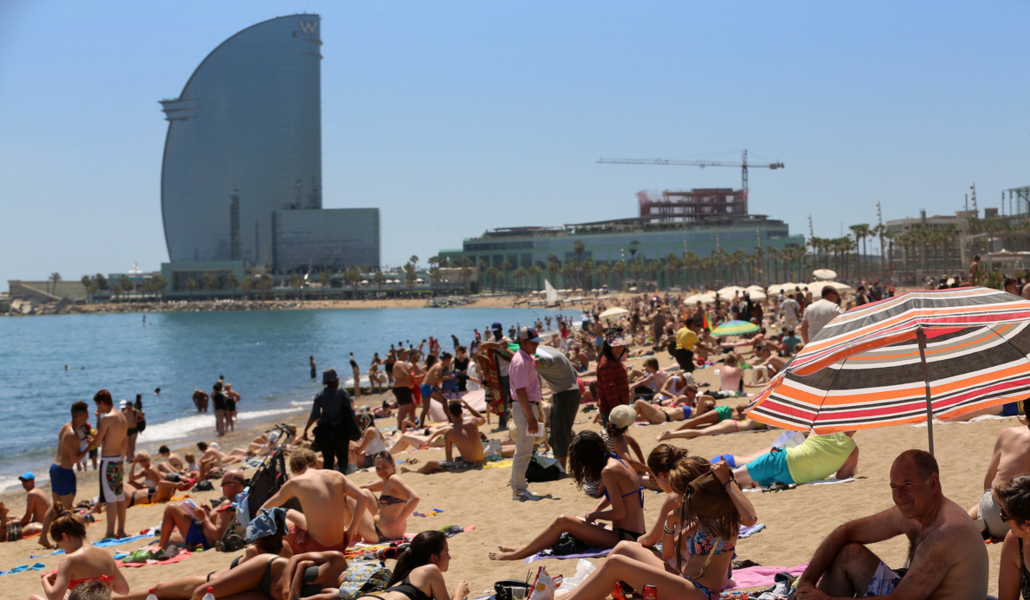
The situation is not isolated. Salou, Lloret de Mar, Cambrils, Platja d’Aro, Tossa de Mar or L’Ametlla de Mar are on the list. Small towns such as Arnes, Àger or Prullans have also seen how the tourist model grows far beyond their residential possibilities.
There are 776,76 tourist places registered in Catalonia, including hotels, campsites, apartments and housing for tourist use, unevenly distributed in Catalonia, since the areas where the municipalities with an unequal balance of tourist housing are most concentrated are in the Costa Brava, Costa Daurada and Pyrenees.
The most paradigmatic cases are Sant Pere Pescador, where the tourist places are six times the number of inhabitants, Salou, the second municipality with more tourist offer in Catalonia, with more accommodations than inhabitants or Espot, in the Pyrenees, where the tourist places are also six times the number of inhabitants.
In general, the municipalities most affected by the tourist pressure in Catalonia are among several coastal and mountain towns where the number of tourist places far exceeds the resident population. Apart from those mentioned, Castellar del Riu, which registers more than a thousand places for barely 160 people. In the Val d’Aran, Naut Aran has more than 1,300 tourist licenses despite not reaching 2,000 residents, while in La Vall de Boí the tourist offer almost doubles the population.
Unlimited growth?

The Generalitat has begun to set limits: it obliges the renewal of tourist apartment licenses every five years and has allowed the town councils to establish ceilings according to their situation. But the truth is that this in itself does not stop the trend, since it is an economic model that is based mainly on tourism.
Barcelona is not on the list (yet), but it is at the center of the debate. The suspension of new tourist apartment licenses in the capital could be the mirror in which other localities look at. The tourist future of Catalonia, and that of its towns, is at stake in how this growing pressure is managed.