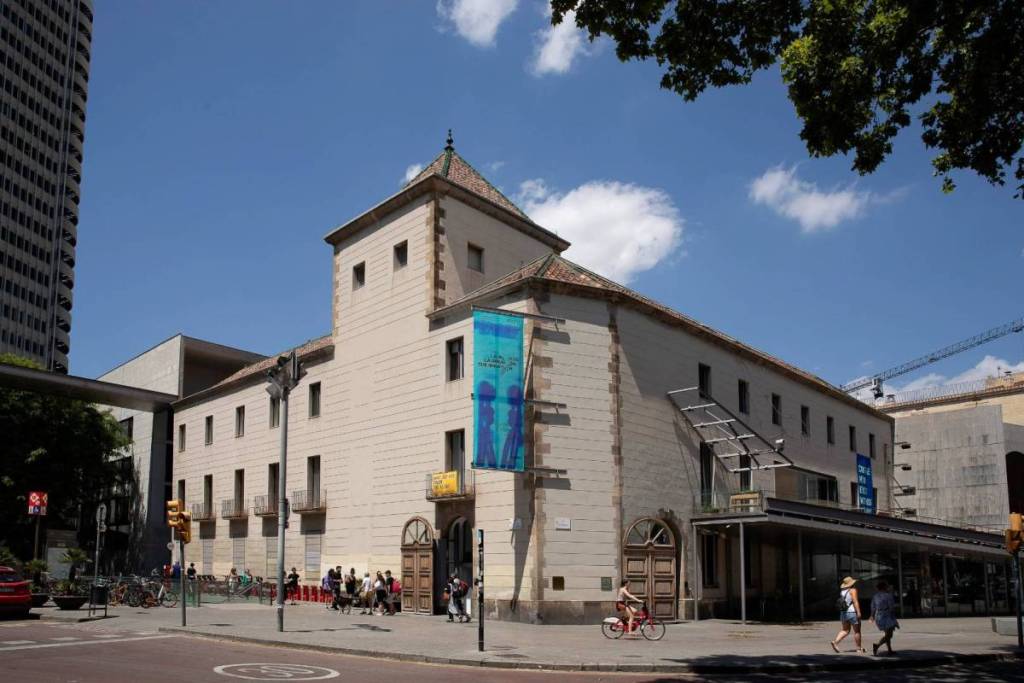

This summer, Barcelona has more than 500 cooling centers spread throughout the city, a network that includes such unique spaces as the Casa Joan Güell —home to the Centro Galego de Barcelona— the Santa Mònica Arts Center, and ten parishes.
The initiative is part of the Pla Calor, the municipal climate change adaptation strategy integrated into the Pla Clima.
A Diverse Network: From Libraries to 17th-Century Convents
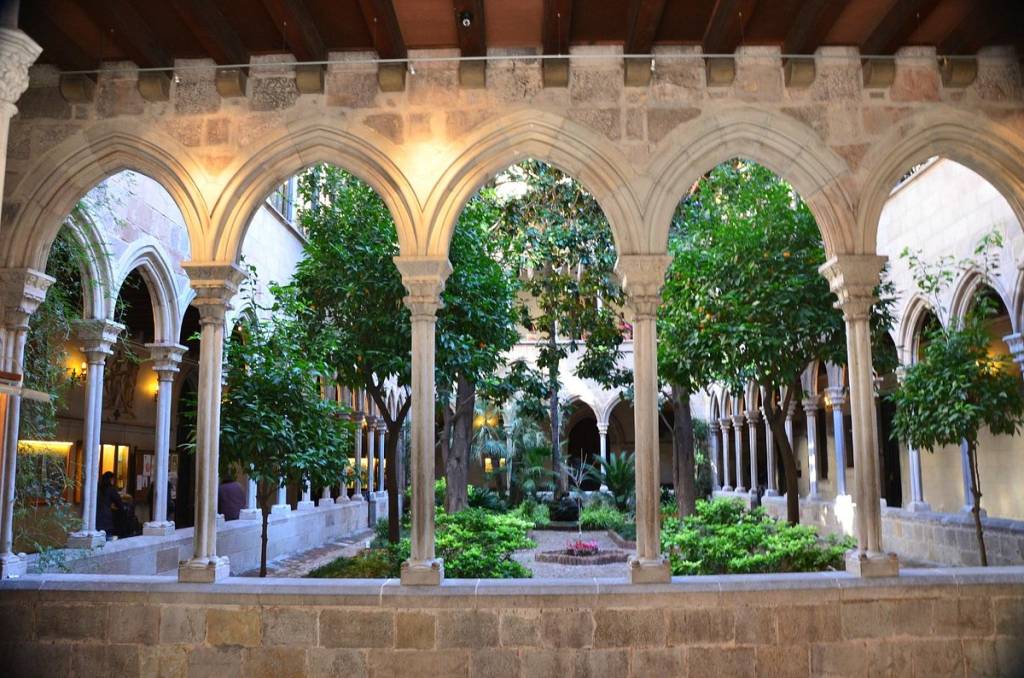
The Santa Mònica Arts Center has its origins in the former convent of the Discalced Augustinians, built in 1636 on the Rambla de Santa Mònica. Following the confiscation of church property in 1835, the building served a variety of purposes, including as the headquarters of the School of Journalism, Red Cross offices, municipal offices, military barracks, and the neighborhood parish church, before taking on its current role as an arts center.
More than 75% of the network’s spaces are indoor facilities—libraries, civic centers, sports facilities, and museums—while the rest are outdoor spaces such as parks and gardens, inner courtyards, school playgrounds, water features, and some swimming pools.
The shelters are designed as open, free-access spaces, with special attention given to seniors, children, and people who have difficulty maintaining adequate thermal comfort at home.
More than 60 new micro-shelters to reach further
This year, more than 60 “micro-shelters” are being added—small, temporary spaces such as pharmacies, shops, or organizations—that provide the public with free, accessible indoor areas where they can rest for a short time in a comfortable temperature.
The goal is to expand the network’s reach, especially in areas with fewer large-scale facilities.
Coverage during August is the main challenge for the initiative. On Sundays during that month, 92.3% of the population has a shelter within a 10-minute walk, and 49% within a 5-minute walk.
Reducing the territorial divide in the most vulnerable neighborhoods
City Hall has once again prioritized expanding the network in neighborhoods with the least coverage and the greatest vulnerability to heat.
In these areas, the gradual addition of new spaces has made it possible to achieve 99.5% coverage within a 10-minute radius and 80.3% within a 5-minute radius. As a new feature of the Pla de Barris, cultural and family activities have been scheduled for July and August.
Preschool playgrounds, open on Saturdays through September
The service offering schoolyards as climate shelters at municipal preschools will be available on Saturdays in June, July, August, and the first half of September, from 10:30 a.m. to 1:00 p.m.
Admission is free and open to the public, and the event is primarily aimed at children up to age 6 accompanied by their families.