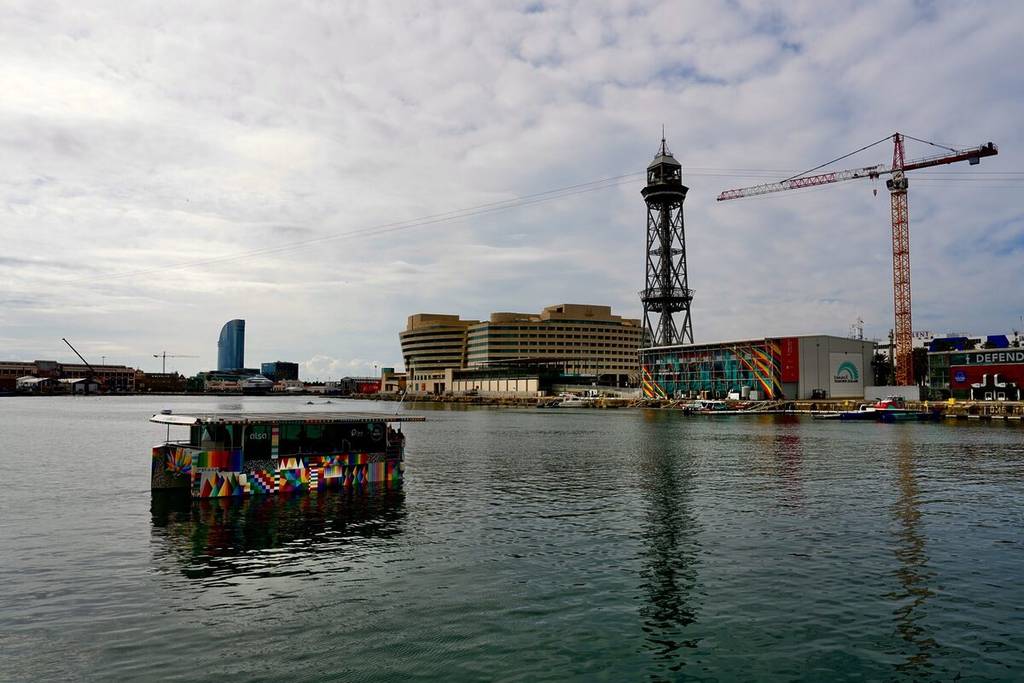
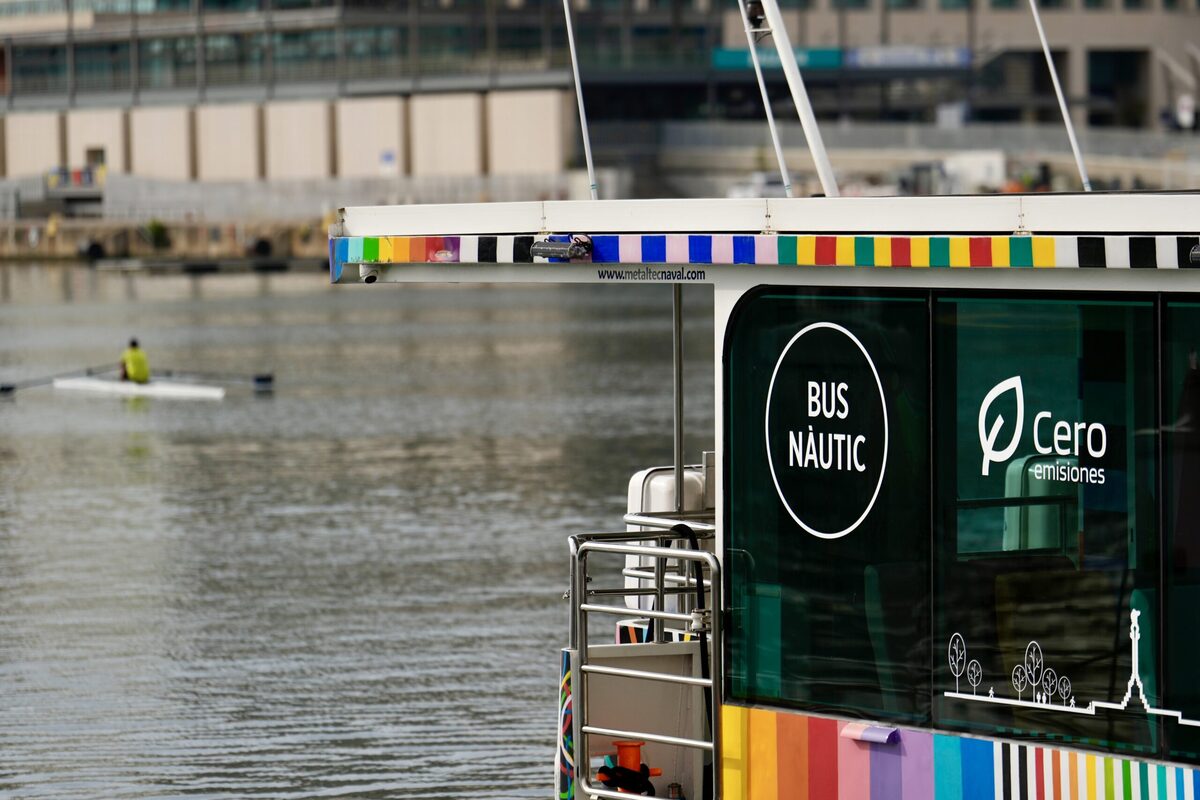
As if it were the Olympic Games and we were back in 1992, Barcelona needed a great event, the America’s Cup, to look at the sea again. Beyond all the urban transformations, the effects on neighbors or the regatta itself, now the city has launched a new system of aquatic mobility to get around the port: the Bus Nàutic.
Last summer the city council announced a “nautical bus” that will connect Las Ramblas with the sheds (or restaurants) of the Moll de Llevant (the ones past the Hotel Vela). This line was premiered this summer with two zero-emission ecological catamarans, which will offer a direct connection to alleviate traffic jams during the summer season due to the intense tourist mobility in the area that is expected to grow with the sporting event.
In this way, Barcelona gains a new “bus” line, this time by sea, connecting the end of the Rambla with the beaches, avoiding having to go all the way around by land.
A “port line” with five stops at €1.9 each way.
 Source: Barcelona City Council
E Moll Llevant under construction now, will soon be connected to the city center. Source: Bear Fotos/Shutterstock
As we said, the new line of “nautical bus” will connect the Portal de la Pau (the port at the end of the Rambla) with a little crowded area, the Moll de Llevant and its new sheds and the new Mirador building with the Rambla de la Nova Bocana (the whole area behind the hotel Vela), which will experience a boost with the reform of the America’s Cup.
The service will operate 12 hours a day,with a frequency of between 15 and 30 minutes. The one-way ticket costs 1.9 € and the round trip costs 2.85 €. There are also passes for 10 trips, which cost €13.30, and for two (€10) or 30 days (€40), as well as discounts for children and young people and for senior citizens. The goal in the future is to integrate the service into the regular fare system.
The Olympic Games and its consequent reforms tore down the sheds of the Barceloneta forty years ago to open Barcelona to the beach and made the port gradually lose its traditional function for the benefit of shopping centers such as Maremagnum or the port for luxury yachts.
Now the reform of the new port involves rebuilding some sheds a few meters beyond where the original ones were, reopening the fish market in a port that is becoming less and less fishing-oriented and seeking the reunion of the people of Barcelona with the Rambla and its port through a boat, as the swallows did a few years ago with the breakwater. In a city devoted to tourism, it remains to be seen whether the new space in the port gained by the city is a gain for the people of Barcelona or simply a new concession to visitors.