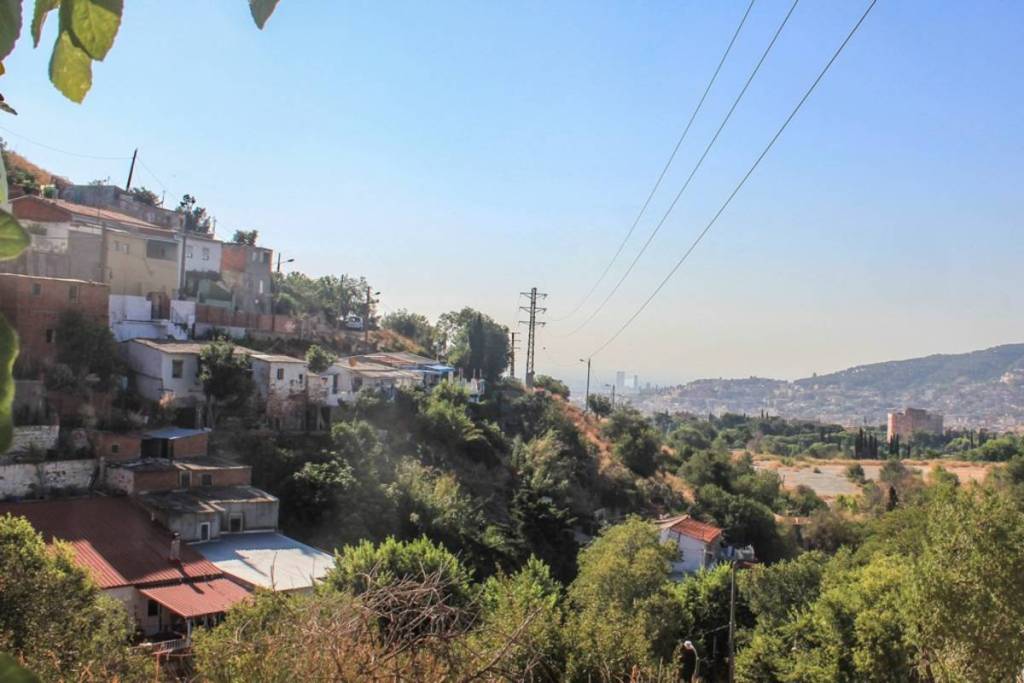

It has a neighborhood association, a post office box, and a Neighborhood Council, but its name does not appear on the official list of Barcelona’s 73 neighborhoods. La Font del Gos, a settlement located on the slopes of Collserola, just above the Ronda de Dalt, survives as a ghost neighborhood within the city. Although its geographic location would place it within the Horta-Guinardó district, the reality is that, administratively speaking, the area is not recognized as such.
Residents complain that they live in an area completely neglected by the government. The main obstacle in their daily lives is transportation, as no bus routes run through their streets. Residents are forced to walk up steep hills to reach their homes—an architectural barrier that particularly affects the neighborhood’s elderly population. The lack of infrastructure extends to all essential areas of the neighborhood. La Font del Gos has no primary care center (CAP), police station , church, or school. The building that housed the school years ago now serves solely as the neighborhood’s community center.
Seventy Years Waiting for Recognition
The root of this situation lies in a legal vacuum within the urban landscape. Neighborhood representatives explain that, while the individual homes are legally registered, the area as a whole lacks official urban designation as a neighborhood. This anomaly has persisted for some 70 to 80 years. The residents’ main demand is that the city council definitively legalize the area so they can repair and renovate their homes with the necessary guarantees. The discontent is palpable among the residents, who say they pay all their municipal taxes but feel that, in return, they receive nothing in the way of public services or investments.
Despite institutional shortcomings, the community maintains strong internal cohesion in the face of isolation. The nearly 200 residents living in the area make up for the lack of municipal support by organizing on their own to celebrate their own neighborhood festival. They use the outdoor facilities of the community center to set up a bar, arrange tables, and prepare the food themselves to keep the neighborhood’s traditions alive.
This sense of community and the isolated setting are the main reasons that keep the residents there. Faced with the option of moving to areas with better transportation links, residents flatly refuse to leave their homes. They argue that the lifestyle and absolute tranquility they find in the streets of La Font del Gos make up for the daily hardships and cannot be found anywhere else in Barcelona.