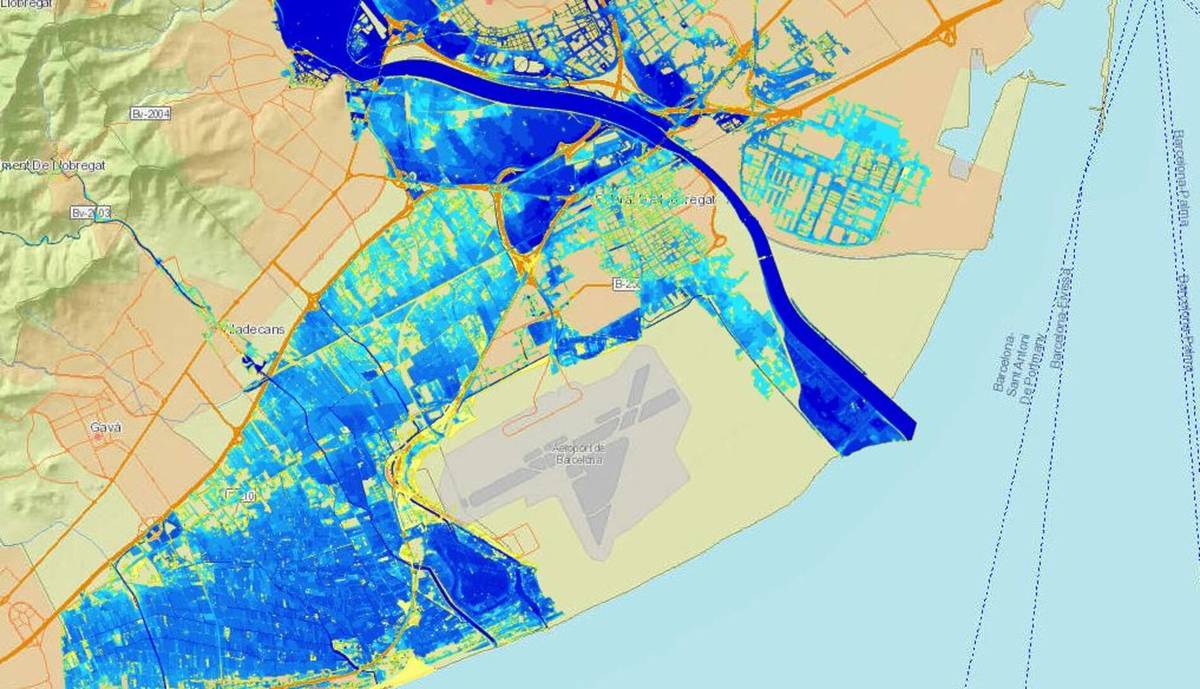
The chaos of Rodalies has been defining our relationship with work for years, but especially this week after several days of total or partial suspension of service throughout Catalonia. But what used to be a simple excuse you gave your boss while waiting on a platform at Sants station now has much stronger legal backing. Following the recent massive disruptions to the rail network and the extreme weather conditions we have experienced, it has become clear that it is not always possible or safe to cross the city to get to the office.
And although the Department of Public Works initially warned that hours lost due to being unable to attend work would have to be made up, the truth is that, in situations of force majeure or disaster, there is paid leave of up to four days that allows you to stay at home without fear of having a single euro deducted from your paycheck. This is not a favor granted by the company, but a right enshrined in the Workers’ Statute that seeks to protect us when the world literally decides that today you cannot get to your job.
A legal shield against the unforeseen events of the rail network
This leave, which has become particularly relevant following recent legislative updates such as Royal Decree-Law 7/2024 (approved in the wake of the DANA emergencies), establishes that if the authorities impose restrictions on movement or if essential public transport collapses across the board, workers can take advantage of these days of paid leave. It is the legal response to the “technical chaos” that we have suffered so many times in Catalonia, leaving thousands of users stranded with no alternative.
The rule is clear: up to four days of paid leave, but the most interesting thing is that this period can be extended if the circumstances preventing access to work persist. In other words, as long as the roads remain closed or access is impossible, the right remains, although from the fifth day onwards, the company could seek other solutions such as a reduction in working hours or the temporary suspension of the contract.
Teleworking or justification: the rules of the game
Of course, this does not mean turning off your cell phone and forgetting about everything. If your job is compatible with teleworking and if the internet works in your home, of course , the company has the power to ask you to perform your duties remotely. In this case, the company must ensure that you have the necessary means, such as a computer and the appropriate tools, so that your living room can be turned into a makeshift office during the emergency.
If teleworking is not an option and you have to take leave, the key is communication and proof. According to legal experts, it is essential to notify the company as soon as possible and provide evidence that it was indeed impossible to get to work. In the case of Barcelona, official notices from TMB or Renfe on social media are sufficient, as is media coverage of track closures or flooding. Good faith remains the cornerstone: notify quickly, justify well, and stay safe until service is restored.