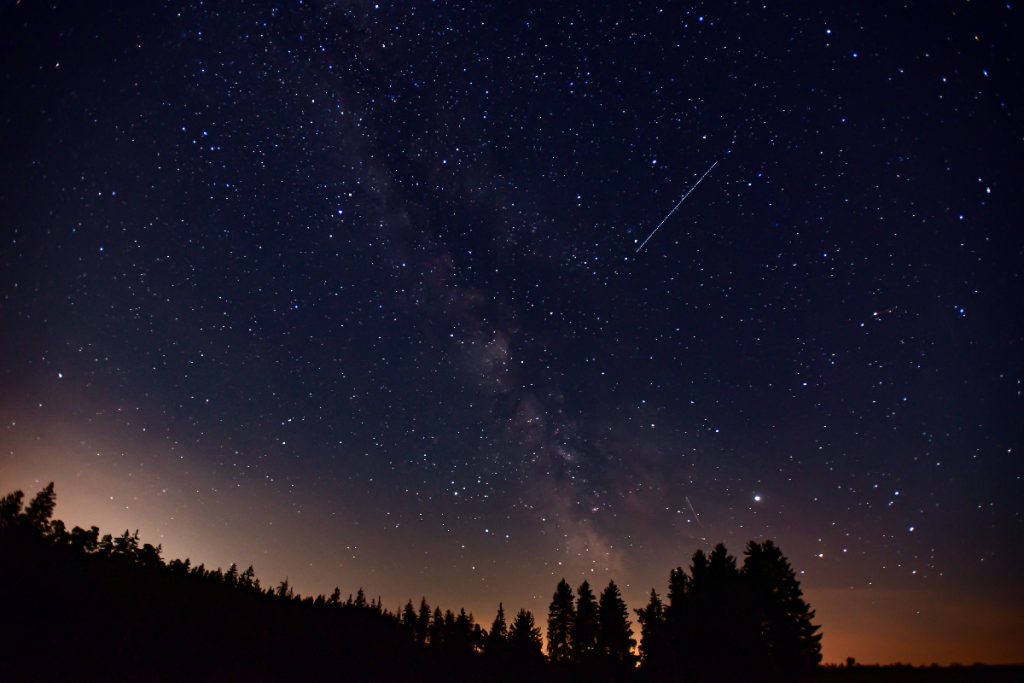

Looking up at the sky and observing the spectacle that stars and celestial bodies offer us is always a comforting activity, and 2026 has been a particularly fruitful year in that regard. Astronomy enthusiasts (and many others who aren’t) will remember for years to come the spectacle provided by the solar eclipse and the subsequent meteor shower in August, but the year isn’t over yet—and neither are the astronomical events.
This November, especially on the night of the 17th to the 18th, we’ll be able to experience the peak of the Leonid meteor shower throughout Catalonia. It’s a phenomenon that recurs every year, though the astronomical conditions aren’t always favorable enough to enjoy it to the fullest.
The Leonids occur when our planet comes into contact with the debris from Comet 55P/Tempel-Tuttle—a trail of dust and rocks that the comet leaves in its wake as it orbits the Sun. When that dust—traveling at more than 70 kilometers per second—enters Earth’s atmosphere, it generates friction and burns up, creating the stunning shooting stars we see from the ground.
In the early morning hours of Wednesday, the 18th, we’ll be able to witness this phenomenon with exceptional clarity, especially starting at 12:45 a.m., since the moonlight will be particularly faint, allowing us to observe between 15 and 20 meteors per hour.
How and Where to See the Leonids in Catalonia
But the Moon isn’t our only—or even our main—“enemy” when it comes to observing this event; light pollution and clouds can turn a magical moment into a completely empty and opaque sky.
If you want to enjoy the Leonids, it’s best to get away from Barcelona or any other major city in Catalonia. You don’t need to look for areas that are excessively high or difficult to access, but it’s vital to find a spot far enough away from light pollution, where you can see the entire sky and relax while lying down or sitting on a lounge chair or beach chair.
We recommend checking the weather forecast to avoid cloudy locations and not using telescopes. Meteor showers occur in several areas at the same time, and using a telescope will only narrow your field of view.
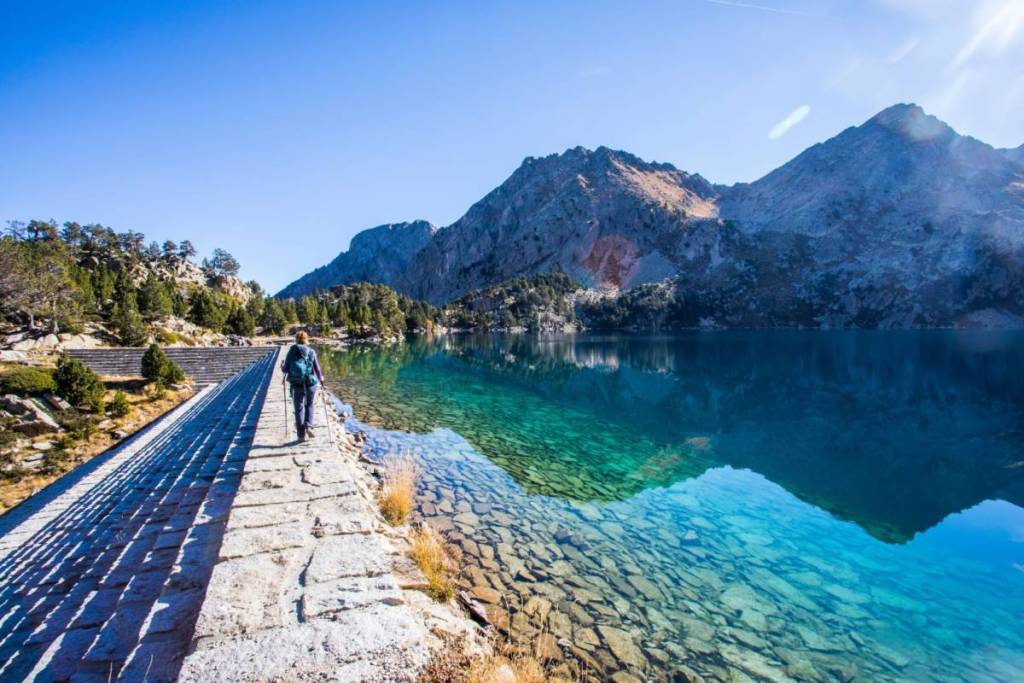
Finally, if you want to take it to the next level, Catalonia boasts several Starlight Reserves and destinations, recognized as some of the best places in the world for stargazing: the Montsec mountain range, the Aigüestortes and Estany de Sant Maurici National Park, the Prades and Montsant mountain ranges, the Castelltallat Astronomical Observatory, and the Albanyà Astronomical Park.
If you visit any of these locations, don’t forget to bring a warm jacket, blankets, and enough gear to withstand the cold, as temperatures are very low at many of these spots.