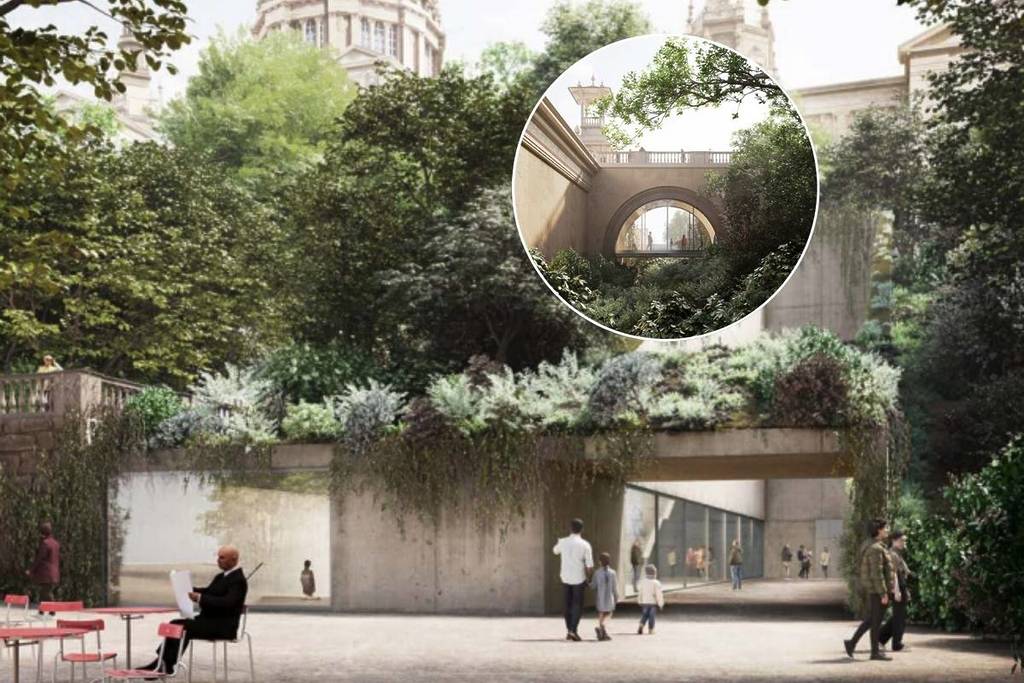
A new heart is emerging on Montjuïc, and it’s not exactly small. If you’ve ever stood gazing at Puig i Cadafalch’s columns and thought that the setting was missing “something” to truly come into its own, the City Council and the Catalan Government have just provided the answer.
The MNAC expansion project is now a reality on paper: a massive renovation costing over 112 million euros that will transform the museum into a cultural behemoth spanning 70,000 square meters.
Twice the exhibition space
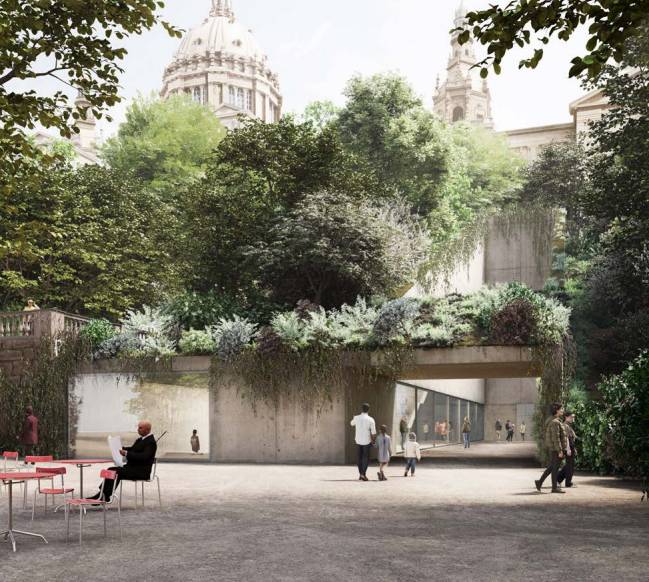 Source: Barcelona City Council
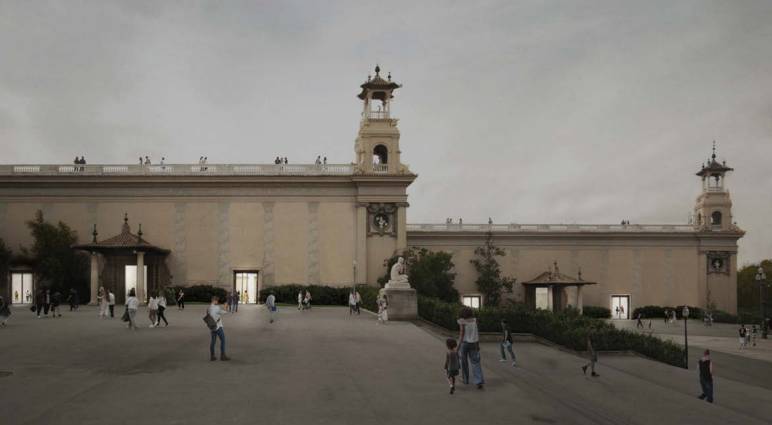
The big news is not just that the museum is growing, but how it is doing so. The MNAC will “step down” from its pedestal at the Palau Nacional to take over the Victoria Eugenia Pavilion, that elegant building flanking the fountains that until now we only saw come to life during occasional fairs.
Both buildings will be connected by a functional passageway, creating an artistic axis that will allow visitors to walk through the history of Catalan art without leaving the premises.
From Romanesque to comics: a leap into the 21st century
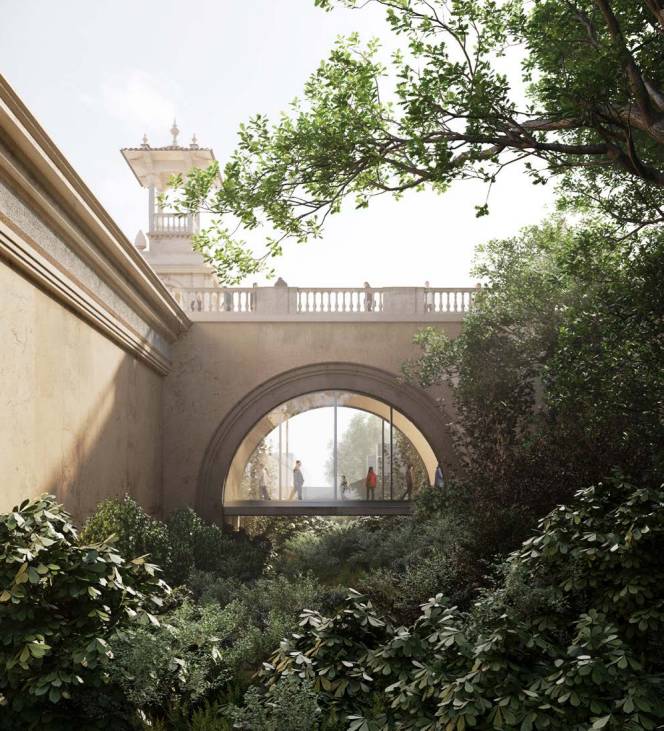 Source: Barcelona City Council
The lack of space was, until now, the MNAC’s biggest challenge. With this expansion, the museum will finally be able to bring out of storage the postwar and second-half-of-the-20th-century pieces that had no room in the current galleries. For the first time, disciplines such as comics and photography will have a permanent presence, allowing the museum’s narrative to extend beyond the 1940s and reach the present day.
The design, by the firms HArquitectes and Christ & Gantenbein, prioritizes sustainability and respect for heritage. The goal is not to build a modern “patch,” but to carefully restore Puig i Cadafalch’s work so that the new MNAC becomes, in the words of Mayor Collboni, the epicenter of the “new Montjuïc.”
A new horizon for the 1929 centennial
 Source: Barcelona City Council
This initiative is no coincidence. Barcelona already has its sights set on 2029, the year that will mark the centennial of the International Exposition that transformed the mountain. The idea is that by that date, the area around Plaza España and the foothills of Montjuïc will have completed their metamorphosis: between the renovation of the Fira, the new Convention Center in the Alfonso XIII Pavilion, and this “super-MNAC,” the city’s cultural hub will be able to stand shoulder to shoulder with Europe’s major museum districts.
Beyond the paintings and sculptures, the project aims to make the museum more accessible. Access from the urban fabric will be improved so that climbing Montjuïc is not an excursion, but an organic stroll. Ultimately, the goal is for the MNAC to cease being that distant castle at the top of the escalator and become a space where Barcelona residents simply want to be.
Before its incorporation into the MNAC: the program at the Victoria Eugenia Pavilion
While the MNAC expansion project continues, the Victoria Eugenia Pavilion remains active and is preparing to welcome spring with The Last Days of Pompeii. This immersive exhibition, awarded by National Geographic’s +Historia in 2024, combines archaeology, history, and technology to immerse the public in the ancient Roman city of Pompeii. An opportunity to rediscover Puig i Cadafalch’s building before its final integration into the museum, through an interactive journey that includes everything from gladiator fights to the eruption of Vesuvius.