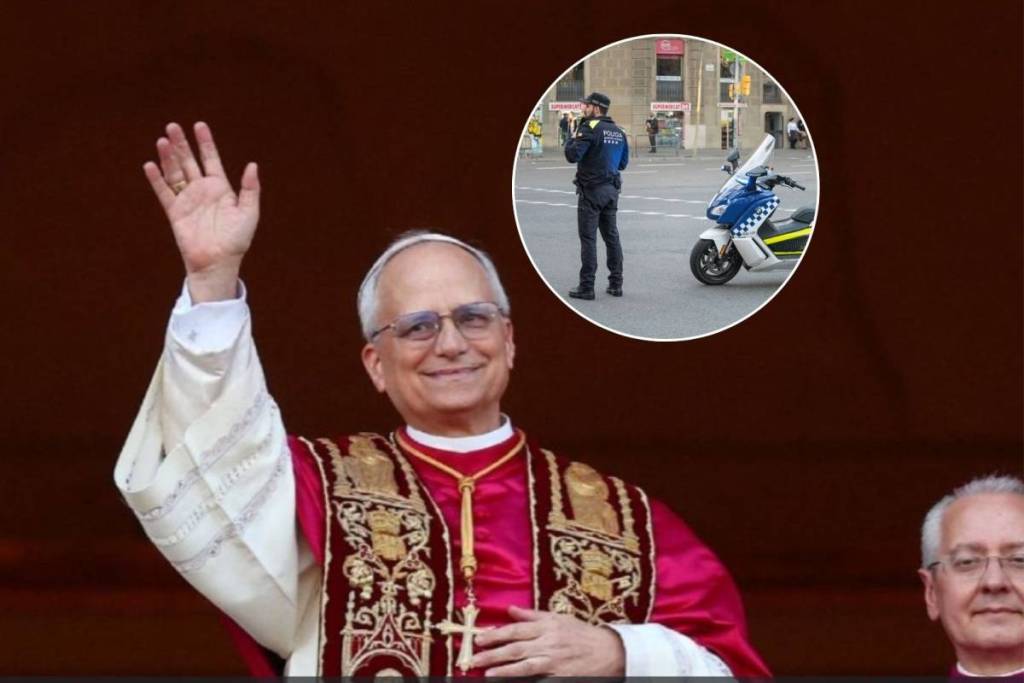

The streets of Barcelona are preparing to alter their usual rhythm in anticipation of Pope Leo XVI’s visit to Barcelona, which will intertwine history, architecture, and community life. Coinciding with moments of profound symbolic significance for the city—the completion of the Tower of Jesus Christ at the Sagrada Família and the centennial of Antoni Gaudí’s death—the urban landscape will be temporarily transformed to accommodate an organizational effort of extraordinary proportions.
Between June 9 and 11, the arrival of Pope Leo XIV will trigger a large-scale operation coordinated by the municipal security, sanitation, and mobility services. Nearly five hundred Guàrdia Urbana officers, along with teams from Civil Protection and Urban Services, will ensure the city’s normal functioning, resulting in significant restrictions on traffic, parking, and public transportation in Ciutat Vella, L’Eixample, and Sants-Montjuïc.
Traffic restrictions and road closures in Ciutat Vella
The historic center will be one of the first areas to notice the changes. In the areas surrounding the Cathedral and the Episcopal Palace, vehicle traffic and parking will be prohibited (including motorcycles, mopeds, and bicycles on the sidewalk) on Avenida de la Catedral, specifically between Plaza de Antoni Maura and Plaza Nova. This measure will be in effect from 7:00 a.m. on Monday, June 8, until 10:00 a.m. on Thursday, June 11.
Meanwhile, the Raval neighborhood will experience total traffic closures on June 9 and 10, coinciding with events at the Church of Sant Agustí and Plaça de la Gardunya. From 7:00 a.m. on Tuesday, June 9, until midnight on Wednesday, June 10, parking will be prohibited and traffic will be blocked in the following areas:
- Calle del Hospital: on both sides, from La Rambla to Rambla del Raval.
- Plaza de la Gardunya: the entire area.
- Calle de Jerusalem: on both sides, from Plaza de la Gardunya to Calle del Hospital.
- Plaza de Sant Agustí: complete closure of the square.
- Calle de l’Arc de Sant Agustí: on both sides, from Calle del Hospital to Calle de Sant Pau
Security measures in L’Eixample and the area around the Sagrada Família
The most significant impact of the operation will be concentrated in L’Eixample on Wednesday, June 10, and in the early hours of Thursday, June 11. A wide security perimeter will necessitate widespread traffic detours within a grid bounded by Plaça del Cinc d’Oros and Carrer de Lepant, and between Carrer de Provença and Carrer de Còrsega.
The police have already announced that access controls and security checks will be conducted on those in the vicinity of the basilica during the 12 hours leading up to the pontiff’s event, to ensure the event’s security.
The following interurban sections will be subject to a total traffic closure and an absolute parking ban from 7:00 a.m. on Wednesday, June 10, until 2:00 a.m. on Thursday, June 11:
- Diagonal Ave.
From Plaça del Cinc d’Oros to Carrer del Bruc - Rosselló Street
From Pau Claris Street to Lepant Street - Pau Claris Street
From Còrsega Street to Rosselló Street - Roger de Llúria Street
From Còrsega Street to Provença Street - Calle del Bruc
From Còrsega Street to Diagonal Avenue - Streets of Girona, Bailèn, Roger de Flor, and Nàpols
From Còrsega Street to Provença Street - Passeig de Sant Joan
From Carrer de Còrsega to Carrer de Provença - Calle de Sicília and Calle de Sardenya
From Còrsega Street to València Street - Marina and Lepant Streets
From Rosselló Street to València Street - Calle de Provença, Calle de Mallorca, and Calle de València
From Sicília Street to Lepant Street
Road closures and restrictions on Montjuïc Hill
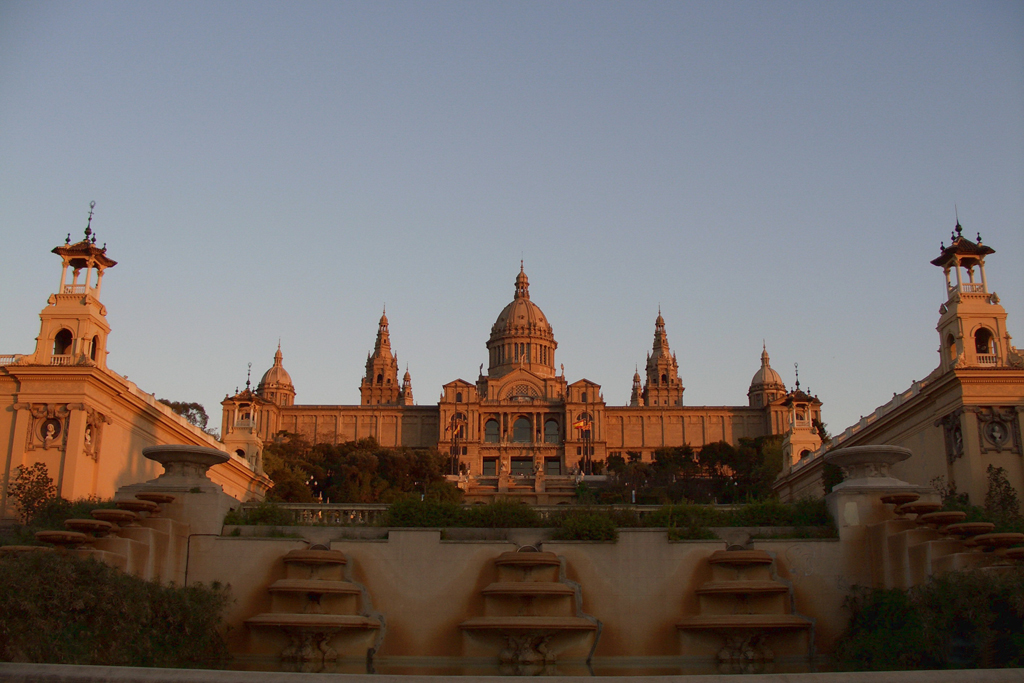
On Tuesday, June 9, the event will move to Montjuïc Mountain following the pontiff’s arrival. Starting at 12:00 p.m. that day, traffic will be completely closed off in the urban park, allowing access exclusively to those with accreditation for the Olympic Stadium area.
The Guàrdia Urbana will establish fixed checkpoints at the intersection of Avinguda de la Reina Maria Cristina and Plaça d’Espanya, at the intersection of Carrer de Lleida and Avinguda del Paral·lel, at Plaça de Carlos Ibáñez, and at the intersection of Carrer del Foc and Passeig de la Zona Franca.
In addition, from 7:00 a.m. on Monday, June 8, until 2:00 a.m. on Wednesday, June 10, parking will be prohibited on Passeig Olímpic, Avinguda de l’Estadi, Carrer dels Jocs del 92, and Vial de la Olivera.
Exceptional reinforcement of public transportation and disruptions to the metro
To handle the high demand for travel, Transports Metropolitans de Barcelona (TMB) will deploy extraordinary resources, increasing metro service and implementing detours on city bus routes.
Changes to the metro network
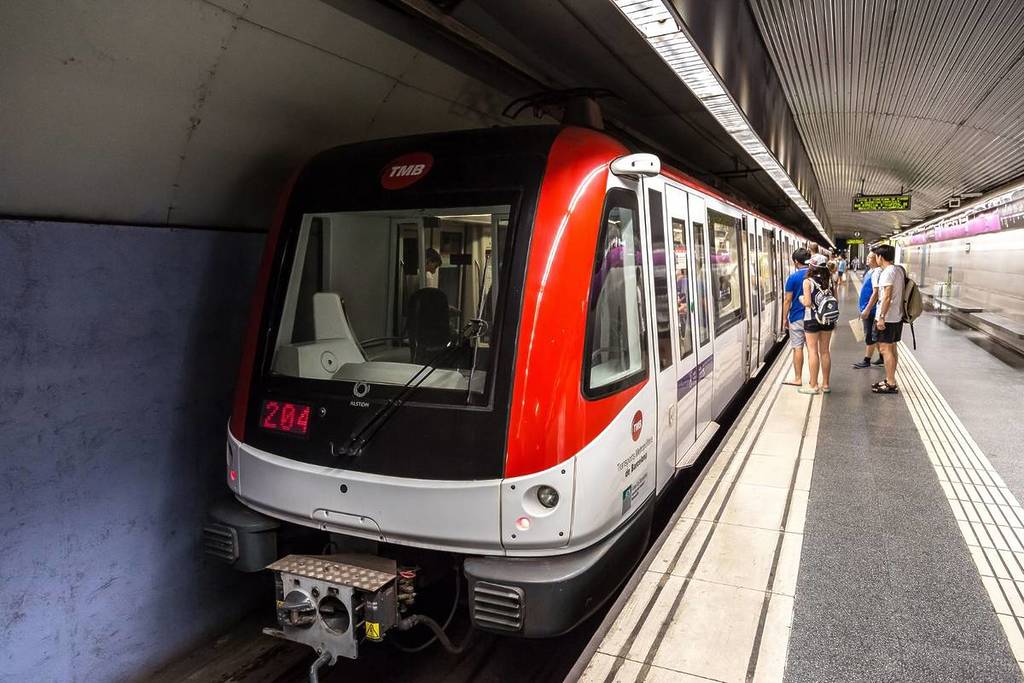
IMPORTANT METRO NOTICE: On Wednesday, June 10, the Sagrada Família metro station (L2 and L5) will be completely closed all day. Trains will pass through the station without stopping. Additionally, at the Verdaguer station (L4), during the afternoon rush hour, only passengers exiting the station will be allowed.
- Montjuïc Area (June 9): Service on metro lines near the mountain will be increased by 30% to 50% in the afternoon and evening, with special staff managing crowds at 26 stations.
- Sagrada Família Area (June 10): Metro service will increase by 30% to 65% during the afternoon. An additional 150 staff members will be deployed to manage passenger flows at 32 key stations.
Changes to the bus network
In Montjuïc,a special shuttle bus service with nine articulated vehicles will operatebetween Plaça d’Espanya and the Olympic Stadium, in addition to increased frequency of the funicular. Conversely, bus lines 13, 55, 125, and 150, along with the southern route of the Tourist Bus, will experience service reductions or detours. In the Eixample district, up to fifteen bus lines will alter their usual routes to avoid the security perimeters.
The Barcelona City Council recommends planning your travel well in advance and giving absolute priority to using the regulated public transportation network.
For citizens who wish to follow the official events without traveling to the most congested areas, the city will install two giant screens in public spaces, located in Plaça de les Glòries and at the Arc de Triomf, with the television feed provided by betevé.
Changes to FGC and intercity buses
On the occasion of Pope Leo XIV’s historic visit to Barcelona and Montserrat on June 9 and 10, Ferrocarrils de la Generalitat de Catalunya (FGC) will implement a special plan with more than 40 additional trains on its rail lines.
For the papal pilgrimage to Montserrat on Wednesday, June 10, access to the mountain will be restricted and will require a mandatory advance reservation on the Abbey’s website; entry will be permitted only via the Cremallera or the Aeri. To meet the demand, the Cremallera will run three times per hour between 5:55 a.m. and 7:35 p.m., and FGC will deploy a special shuttle bus to connect the Aeri stations at Montserrat and Monistrol-Vila.
The Generalitat’s intercity bus network will experience significant changes to its stops and routes within Barcelona during both days.
Giant screens to view the Popemobile
To mark the historic papal visit to Barcelona commemorating the centennial of Antoni Gaudí’s death, the city will install giant screens at strategic locations such as Plaça de les Glòries and the Arc de Triomf. This initiative is designed to disperse the crowds, allowing citizens to follow the official events live from spacious, comfortable, and safe areas, thereby preventing gridlock in the city center.
During these two historic days, the official broadcast will air live coverage of the most iconic moments of the official visit. Attendees will be able to witness events such as the vigil at the Olympic Stadium, the highly anticipated papamobile tour through the Eixample district, and, as the grand finale, the solemn Mass at the Sagrada Família for the blessing of the Tower of Jesus Christ.