
Barcelona has always had a special love affair with the asphalt, a relationship that transforms and deepens every time the city becomes the setting for major historical events. Next July, the usual hum of engines and the daily hustle and bustle will give way to the whistle of tubular tires and the color yellow. The arrival of the Grand Départ of the 2026 Tour de France is not just another event; it is an unprecedented spectacle that will change the rhythm of the city for three days, forcing us to rethink the way we move through our own streets.
To tackle such a challenge, City Hall has designed a comprehensive plan that prioritizes traffic flow and direct support for residents. With six of the ten districts affected—particularly the Eixample, Sants-Montjuïc, and Sant Martí—the City Police, Civil Protection, mobility, and street cleaning services have worked in coordination on a plan designed to maintain essential services and minimize the impact on daily life in Barcelona.
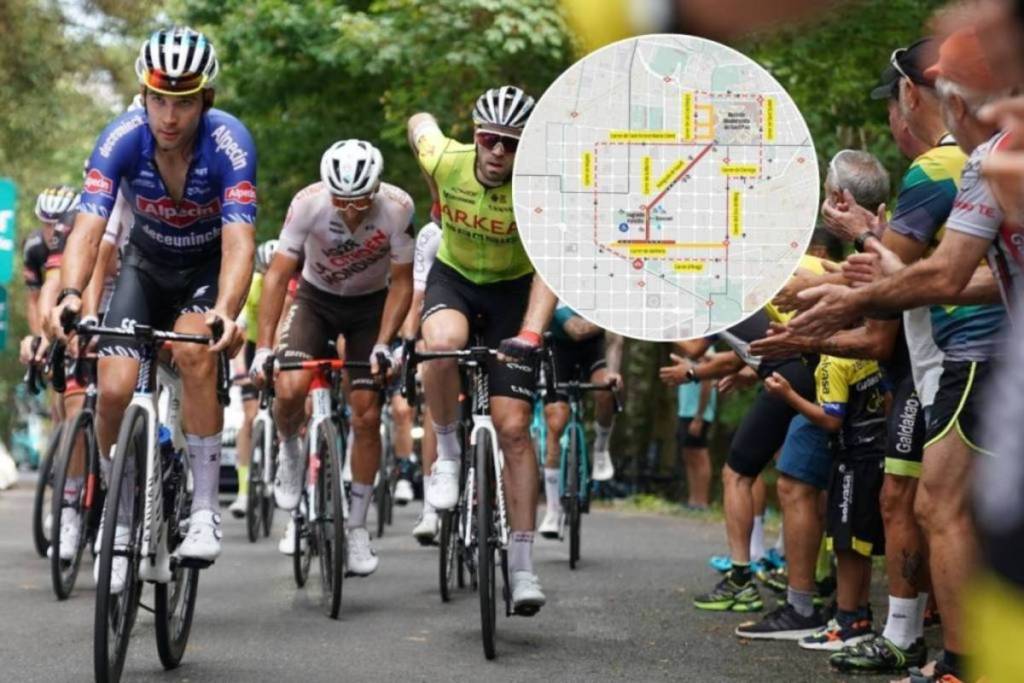
A map of restrictions by stage
The passage of the cycling race will turn the circuits into impassable barriers for private vehicles, with advance parking bans and severe traffic restrictions. Nearly 900 Guàrdia Urbana officers will ensure safety and traffic control at the most critical points.
- July 2 (Team Presentation): The epicenter will be at the Sagrada Família and Avinguda de Gaudí. Road closures will begin at 2:00 p.m. (with barriers being set up the night before), limiting access to parking lots. The main event will take place from 6:30 p.m. to 8:00 p.m., and roads are expected to reopen gradually starting at 9:30 p.m.
- July 4 (Team Time Trial): A route from the Parc del Fòrum to Montjuïc will cut across major thoroughfares such as Avinguda del Litoral, Aragó, Passeig de Gràcia, and Mallorca. The circuit will be completely closed off at 1:30 p.m., with peak restrictions in effect between 4:00 p.m. and 7:30 p.m. Normal conditions will resume around 8:30 p.m. Parking is prohibited along the entire route starting Friday, July 3, at 6:00 p.m.
- July 5 (Stage 2): The peloton will enter via Collblanc and head along Travessera de les Corts, Sants, and Creu Coberta toward Plaça d’Espanya and Montjuïc. Restrictions will begin at 12:00 p.m., leaving the mountain virtually cut off between 3:45 p.m. and 5:45 p.m. Traffic will resume at 6:00 p.m.
The Ronda del Litoral, Under Scrutiny
On Saturday, July 4, the time trial will require precise adjustments to traffic access points on the Ronda del Litoral (B-10), primarily in the direction of Besòs:
Link / Start
Link / Start
Sentido Llobregat
Sentido Besòs
Start 26
Operational
Operational
Start 25
Closed (Open entry)
Exits/Entrances 23 and 24
Closed
Exit 24: Open (restricted to Fòrum/Diagonal Mar)
Entrance 24: Open
Exit 23: Closed
Start 22
Operational
Operational
Alternatives via subway, bus, and crosswalks
With street access blocked, the metro stands as the definitive solution. TMB will increase service by 30% to 40% compared to normal levels, with special attention given to Lines 1 and 5. As a logistical exception, on July 2, trains on Line 2 will not stop at the Sagrada Família station starting at noon due to safety concerns at the station entrances; however, Line 5 at this same station will operate fully and will add up to 9 more trains in the afternoon.
Meanwhile, the bus network will experience detours and occasional service interruptions, with 11 lines suspended on July 4 and 3 lines on July 5.
For those traveling on foot, more than 50 pedestrian crossings will be set up along the route (ensuring a crossing is available within five minutes). The plan includes temporary elevated modular structures and ground-level crossings with designated waiting areas, adapted for strollers and people with limited mobility. The subway concourses themselves will serve as safe crossings to get from one side of the circuit to the other.
Bicing and other two-wheeled alternatives
The Tour will also require the temporary closure of about twenty Bicing stations in the affected areas starting each morning. In addition, three specific stations (Provença between Marina and Lepant, Rosselló-Còrsega, and Passeig Olímpic 8) will be closed days in advance due to setup work.
To compensate, six fenced-in areas for free, supervised parking will be set up, each with a capacity for 150 vehicles:
- Plaça de Pablo Neruda: Open on July 2 and 4, located near the cyclists’ route.
- Joan Miró Park: Open on July 4 and 5, located near the race route.
- MNAC (Montjuïc) Area: Open on July 4 and 5 at the points closest to the route.
- Area around the Hotel Miramar (Montjuïc): In operation on July 4 and 5 to provide coverage for the area near the race.
- Fan Park on Passeig de Lluís Companys: Perimeter parking area for cyclists and personal mobility vehicle (PMV) users.
- Parc del Fòrum: A free, secure parking area for bicycles and scooters.
Adjustments to urban services, street cleaning, and paving
The city’s infrastructure will temporarily adjust its routines to ensure the race shines safely. More than 85,000 m² of roadways have been repaved across 14 areas, complementing the Comprehensive Maintenance Plan, and 2,300 barriers and 3,500 temporary signs have been installed.
As for waste, the trash bins on Avinguda de Gaudí and Carrer València will be removed for the team presentations and will be relocated or moved to the sidewalk at various points in Aragó, Sants, and Foneria during the stages. The removal will take place the night before, and the bins will be returned the night the event ends, with advance notice provided via signs posted at building entrances. Additionally, in collaboration with the Tour organizers, a daily selective waste collection will be carried out, with detailed reporting.
An extraordinary contingent of 250 workers and 120 cleaning crews will use street sweepers and high-pressure water jetsto ensure that no dangerous gravel remains on the pavement. Finally, to combat the summer heat, 14 marked mobile water fountains will be installed along the route, while the city will be bathed in yellow as the Arc de Triomf, the fountains, and the district offices of the ten districts are illuminated. City Hall has already launched a community outreach campaign to explain all these details to residents.
The Tour de France Concerts in Barcelona
Barcelona is celebrating its selection as the host city forthe Grand Départ of the Tour de France with “La Fiesta del Tour,” a major public event that is completely free and offers a varied program of cultural and family-friendly activities. Although the activities span several days, the highlight is concentrated during the first weekend, featuring ten outdoor concerts. These musical performances are strategically spread across two iconic venues in the Catalan capital—Plaza de la Catedral and Plaza Margarida Xirgu—with the aim of revitalizing public spaces and showcasing the talent of local bands.
The festival lineup stands out for its diversity of styles, bringing together acts ranging from pop and rock to rumba and urban rhythms. Among the featured artists are Ladilla Rusa, Sexenni, Suu, and 31 FAM, as well as special highlights such as a performance by Doctor Prats—whose song “¡Energia!” has been chosen as the official theme song for the cycling race’s start—and the trio Sidonie, which is presenting its first album sung entirely in Catalan. The weekend’s musical lineup is rounded out by Mercabanda’s fusion sounds, Joan Garriga’s traditional rumba, DJ Trapella’s electronic sets, and the Jamaican rhythms of Boom Boom Fighters.