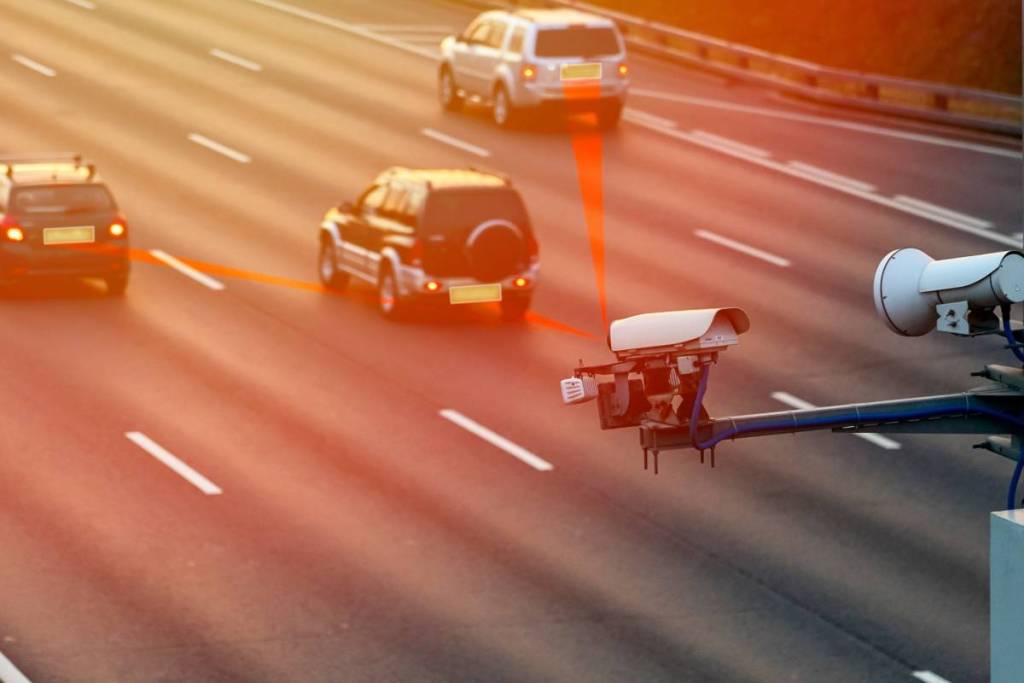

The constant hum of cars on the AP-7 or the frequent sudden braking on the A-2 are part of the daily routine for thousands of drivers. However, during the months of June and July, the monotony of the highway had a silent and extremely attentive observer: the Catalan Traffic Service (SCT) tested a pioneering system to examine what really happens inside vehicles.
It consists of a mobile trailer equipped with high-definition cameras and an advanced algorithm that leaves nothing to the imagination. This technology was deployed on a rotating basis to analyze driving behavior, automatically identifying drivers who are not properly buckled up or are using their cell phones while driving, revealing a level of distraction that had previously gone unnoticed in traditional traffic checks.
An X-Ray of a Bad Habit
The results of this summer test leave little room for doubt. The artificial intelligence system caught more than 8,500 drivers using their phones. The most striking feature of this system is its ability to detect not only those holding the device at steering-wheel height but also those resting it on their laps. The latter habit is particularly dangerous, as it forces drivers to take their eyes off the road entirely.
On average, it is estimated that 4.3% of drivers fiddle with their cell phones while driving, although on some stretches the figure ranged from 3.6% to 6.6%. The section of the A-2 near Cornellà de Llobregat bore the brunt of the problem, with a prevalence rate of 5% compared to 3.6% on the AP-7. A closer look at this violation also reveals that the temptation to look at the screen is greatest between Wednesday and Friday, especially between 11:30 a.m. and 3:30 p.m. and during the early afternoon. An interesting finding from the international study is that Catalonia ranks as the third region with the highest rate of non-compliance, trailing only North America and one other European country.
The Seatbelt: A Late-Night Topic
The analysis of this technology—which has demonstrated accuracy levels exceeding 70% overall and up to 80% when detecting cell phones—also turned its attention to seat belts. The cameras recorded 4,500 instances of occupants traveling without a seat belt or with it fastened improperly, representing between 1.3% and 1.8% of all vehicles analyzed.
In this case, the trend varies by highway and time of day. It is on the AP-7 where this basic safety measure is most often neglected (1.8% compared to 1.2% on the A-2). Furthermore , unlike with cell phone use, these violations spike over the weekend, peaking in the early hours of Saturday mornings.
Toward Surveillance on the Move
The choice of a device mounted on a trailer was no accident. As Ramon Lamiel, director of the Catalan Traffic Service, explains, “on the Catalan road network, accidents are very scattered, and we are committed to a mobility strategy focused on control and surveillance—which is exactly what this technology provides.”
The success of the pilot program, which sought to capture a 100 percent accurate snapshot of Catalan traffic, appears to be setting the course for the coming years. In fact, Lamiel has confirmed that the agency plans to incorporate these mobile cameras into the upcoming 2027–2030 Road Safety Plan, with the goal of cracking down on the most costly driver inattentions on the road.