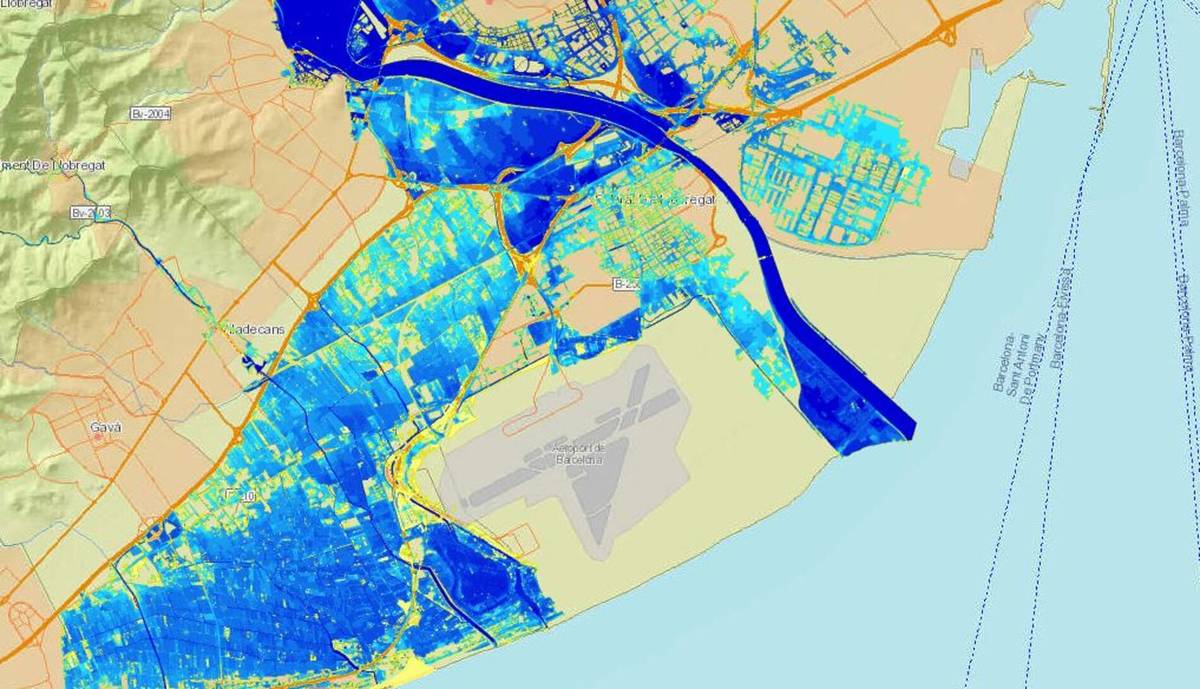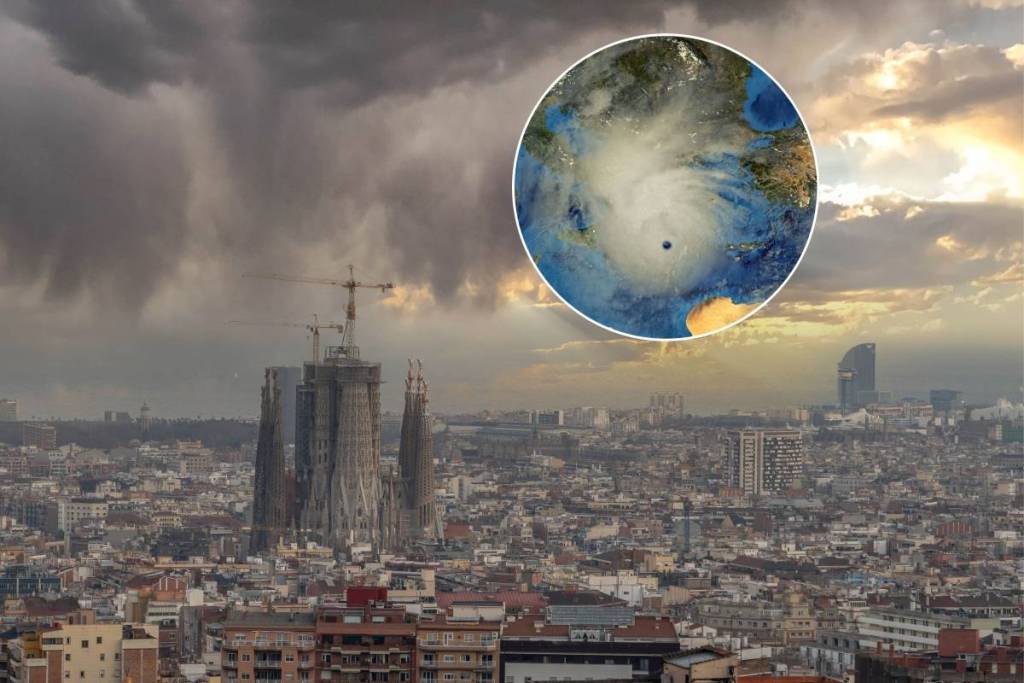

Cold drop, DANA, medicane… the inclement weather along the Mediterranean coast as the seasons change has become a recurring threat that’s impossible to get used to. In recent weeks, Barcelona has experienced one of the worst episodes of torrential rain in the last 40 years. This situation has forced authorities to activate the Inuncat plan and send repeated ES-Alert messages in response to the risk of flooding and the possibility of a medicane.
But… what exactly is a “medicán”? This word is a portmanteau of “Mediterranean” and “hurricane,” and its meaning is precisely that: a Mediterranean subtropical cyclone. It is a phenomenon that forms in much the same way as a DANA: a large mass of cold air collides with another large mass of warm air, leading to a period of atmospheric instability that brings strong winds and extreme rainfall over very short periods of time.
The warming of the Mediterranean: fuel for the medicán
And why in the Mediterranean? This phenomenon occurs particularly along our coast because the Mediterranean is one of the warmest seas in the world and is warming 20% faster than the rest. In other words, if this trend continues, these events will become increasingly common.
The months of September and October are more prone to such events, when the first cold air masses arrive and sea temperatures are at their peak. The main difference between a DANA and a medican is that, in addition to torrential rains and potential flooding, the latter is accompanied by highly destructive winds and extreme waves. They also differ in that a medican has a warm core and a central eye free of clouds.
One of the most recent and catastrophic examples is Medicane Daniel, which in 2023 devastated the coast of Libya, leaving more than 5,200 people dead. According to meteorological services, the days of greatest risk for the Spanish coast have already passed this year, although there could still be other episodes of heavy rain in the coming weeks.