The skyline of the Port of Barcelona will change in the coming years with two major projects aimed at improving mobility and reducing the impact of cruise tourism in the city. The Port of Barcelona and the City Council have signed a new protocol that contemplates a public-private investment of 185 million euros and includes key actions such as the widening of the Porta d’Europa bridge and the construction of an urban corridor along the Montjuïc waterfront.
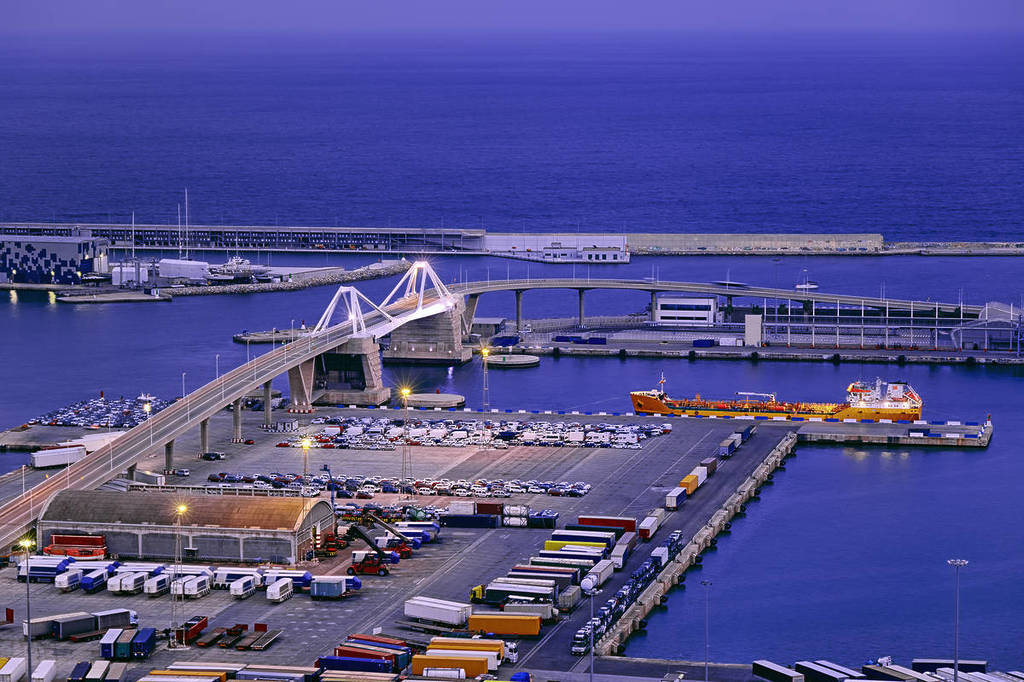
The current Porta d’Europa Bridge, opened in 1992, had become too small: one lane in each direction, narrow sidewalks and no alternative in the event of an incident. It is the only access to the Adossat dock, where most cruise ships dock, and both the City Council and the Port consider it essential to extend it.
The solution: to build a second bridge, twin to the current one, which will allow traffic to be divided. Each bridge will have one direction and will also incorporate a bicycle lane and wide sidewalks for pedestrians. This will not only improve the flow of access, but also safety. The work will cost around 90 million euros and is scheduled to start at the end of 2027.
A new urban corridor on Montjuïc
The protocol also provides for the construction of an urban corridor along the Montjuïc waterfront, intended for public transport, cabs, VTC, bicycles and pedestrians. It will connect Plaça de les Drassanes with the Marina del Prat Vermell and the Zona Franca, facilitating the connection of the neighborhoods on both sides of the mountain. The planned investment is 10 million euros and it will enter service in 2029.
In addition to these infrastructures, the plan includes a mobility study to better manage the flow of cruise passengers in the city. Regular shuttles to key nodes such as Sants or Estació del Nord, a data monitoring system shared with the City Council and information screens at terminals to guide visitors in real time will be put in place. The aim is to reduce pressure in the most saturated areas and better distribute tourism.
In total, the package of measures totals 185 million euros, adding to the 265 million invested since the previous pact in 2018. The roadmap is clear: improve the port’s connection with the city, decongest accesses and make the arrival of cruise ships in Barcelona more sustainable.