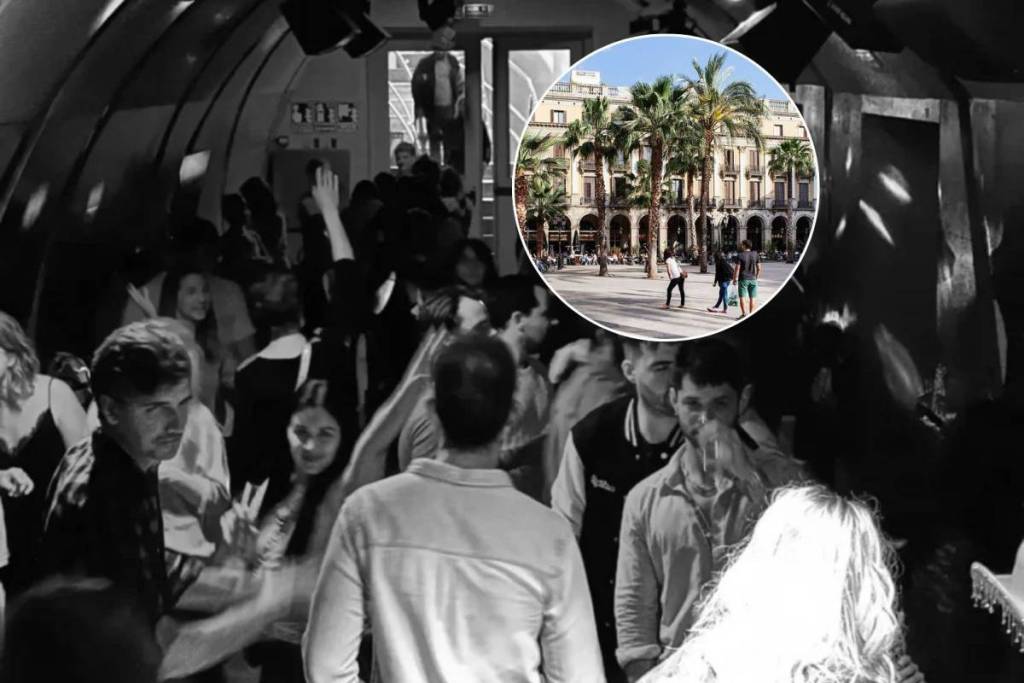

Anyone who has experienced Barcelona’s nightlife over the past few decades knows that Plaça Reial has a life all its own. Strolling beneath its arcades is like walking through the living history of Catalan nightlife and also, unfortunately, through a rampant example of overtourism. When it was announced earlier this year that one of its most legendary venues was closing its doors, many of us assumed that another piece of our collective memory was being lost forever under the weight of changing times and the relentless transformation of Ciutat Vella. Goodbyes have become tragically common in our city’s nightlife, but every now and then, history takes an unexpected turn and gives us a second chance.
That second chance has a name of its own: the Karma nightclub. Barely seven months after that farewell that seemed final, the iconic venue has turned its lights back on. Salvation has literally come from right next door, as the owners of Rei de Copes—the classic bar next door—have acquired the business to prevent this musical sanctuary from falling into oblivion. Since October 10, the venue has once again been welcoming that generation that refuses to stop dancing, focusing on a crowd in their thirties to fifties who, in many cases, already hold indelible memories within its walls.
A New Soundtrack for Daytime Fever
The comeback isn’t a simple repetition of the past, but rather a smart adaptation to Barcelona’s new social rhythms. The demanding early-morning scene is ceding some of its prominence to the “tardeo” phenomenon—a trend that has completely won over Barcelonans and lets them enjoy drinks and the dance floor without having to sacrifice the next day. The current sessions take place on Saturday afternoons and are hosted by El Magnífico Club, which brings its successful blend of indie and pop-rock from the Paseo Picasso to the heart of the Gothic Quarter. This new chapter is further enhanced by a major technical upgrade, featuring significantly improved sound quality and a new climate control system, all while keeping the venue’s roguish essence intact.
The plans for this venue—which originally opened in 1978 and served as a haven for figures like Gato Pérez, Jaume Sisa, and Pau Riba — go beyond the current lineup. The new management’s intention is to consolidate the project by also opening on Sundays and incorporating live music and themed parties starting next February, with a firm commitment to local talent. In Plaça Reial, which recently suffered the loss of the former Sidecar venue, the revival of Karma represents a moral victory for the city. It confirms that Barcelona’s true spirit of resistance continues to thrive on the dance floor.