
Alarms are mounting in Barcelona. Everything was set for this Monday, October 19, at 10:00 a.m., when a large portion of Catalans were to hear the preventive emergency siren. However, Civil Protection has put the brakes on and decided to suspend the mass test of chemical hazard sirens that was supposed to mobilize nearly 930,000 people.
The reason for this last-minute cancellation is the front of heavy rain that will cross the region between Monday and Tuesday, placing 19 counties at high risk. Consequently, the 47 municipalities that were scheduled to participate in this large-scale drill—from the neighborhoods of the Barcelonès to the Camp de Tarragona—will have to wait for a new date, yet to be determined, to test the warning systems and review self-protection measures.
The dress rehearsal: what to do when the alarm sounds
Although the streets will retain their usual soundscape today, the plan remains intact for when the weather gives us a break. The idea is to test the 119 sirens scattered throughout the country for about twenty minutes. Before the sound begins to echo off the building facades, the cell phones of affected residents will receive a direct message (via the ES-Alert system) warning them that this is a drill and not a real emergency.
Immediately afterward, the alarms will signal the start of the drill. The golden rule in the event of a chemical emergency is to stay indoors: seek shelter at home or in the nearest building. Authorities remind residents to seal doors, windows, and shutters tightly, turn off any ventilation systems, and, above all, not to go outside under any circumstances—not even to pick up children from school (about forty schools will also participate in the drill). When the drill ends, a continuous beep—different from the first one—will indicate that the situation has passed. Finally, residents will be asked to fill out a brief survey to assess whether the alert reached them correctly.
A Sound Map for Prevention
These sirens do not sound at random, but rather in areas where protection plans identify a latent risk. The heart of the operation is concentrated in the Camp de Tarragona region, home to southern Europe’s largest petrochemical hub. There, 52 sirens stand ready to sound in locations such as the city of Tarragona, Vila-seca, and Salou.
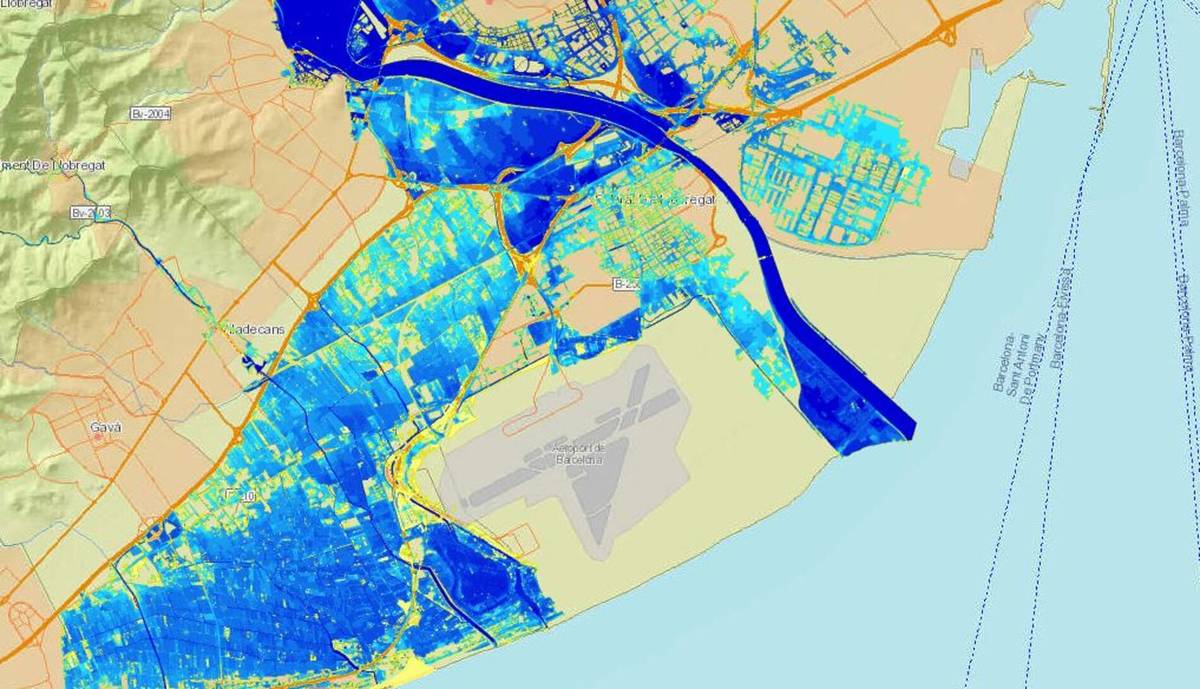
But our area is no exception. In the Baix Llobregat and Barcelonès regions, there are 22 alarms monitoring the situation from Barcelona, l’Hospitalet, el Prat, and Cornellà, among other locations. The early warning network also extends to Vallès, with more than twenty sirens, and reaches parts of Bages, the Tordera area, the Terres de l’Ebre, La Selva, Berguedà, Girona, Anoia, and even the Val d’Aran. As a point of interest, authorities note that the sound knows no municipal boundaries: even if your town doesn’t have its own siren, if you live near an industrial area or a municipality that does, it’s very likely you’ll hear the echo of the alert drifting in through your window.