
Public solidarity is once again key following the serious train crash that occurred this morning in Urda (Toledo). Following the collision of two high-speed trains operated by Renfe and Iryo on the Madrid-Andalusia line, the Community of Madrid Blood Transfusion Center has issued an appeal to ensure sufficient blood supplies, emphasizing the urgent need for blood types 0+, O-, A+, A-, and B-.
In light of this situation, the best way to help from Catalonia is to visit your usual donation centers; while specific blood types are needed, every donation counts and is essential.
Where to donate today in Barcelona and the metropolitan area
The hub for donations in the city is the headquarters of the Banc de Sang i Teixits in the 22@ district (Dr. Frederic Duran i Jordà building, at Passeig del Taulat, 116). It is open continuously Monday through Friday from 8:00 a.m. to 8:00 p.m., and on Saturdays from 9:00 a.m. to 2:00 p.m. and from 4:00 p.m. to 8:00 p.m.
For those near the Eixample or downtown, Hospital Clínic (C/ Villarroel, 170) has its blood collection center open Monday through Saturday from 8:00 a.m. to 8:00 p.m. Likewise, major hospitals such as Vall d’Hebron, Sant Pau, and Hospital del Mar keep their blood banks open to the public with extended hours in the morning and afternoon.
If you live outside the capital, major hospitals such as Bellvitge in L’Hospitalet, Can Ruti (Germans Trias i Pujol) in Badalona, Mútua de Terrassa, and Parc Taulí in Sabadell are also regularly collecting blood. To avoid waiting in line or to locate the mobile units that travel through different neighborhoods, the most convenient option is to visit donarsang.gencat.cat, where you can view the updated map and schedule your appointment.
Requirements and tips before donating
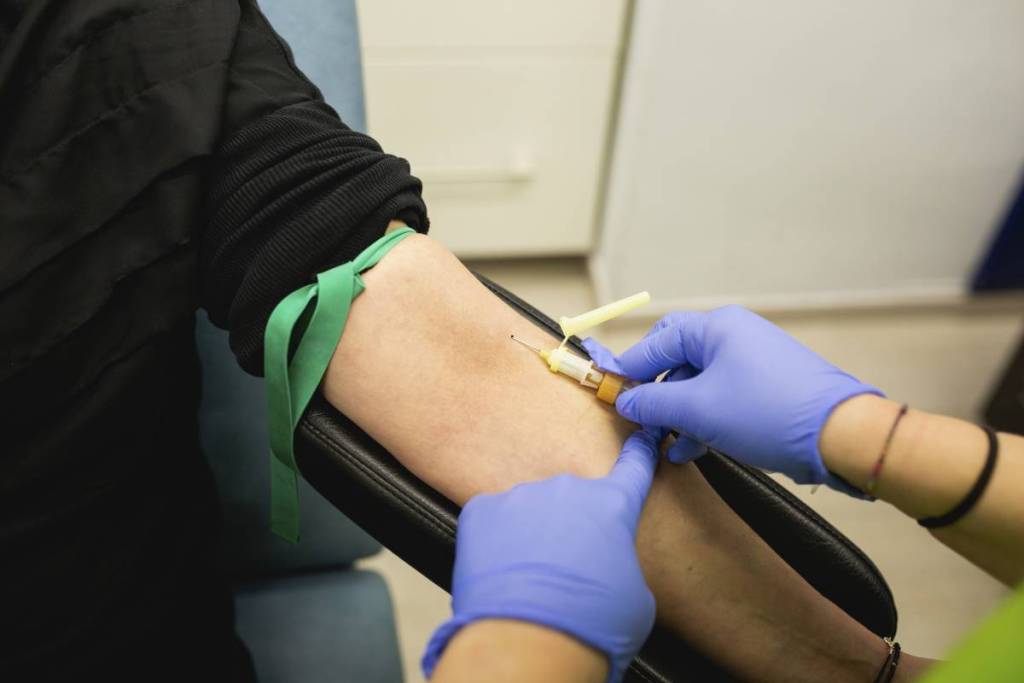
The process is very quick: it will take you barely twenty minutes in total, including the brief medical interview, the blood draw, and the snack you’ll receive afterward to regain your strength. To do your part, you need to meet three basic requirements: be between 18 and 65 years old, weigh at least 50 kilos, and be in good health.
It is essential to bring an official ID, and unlike conventional medical tests, you should never donate on an empty stomach. Stay well-hydrated and eat something before you go. If you’ve recently gotten a tattoo or piercing, have traveled outside Europe, or are taking certain medications, the medical team will evaluate your case on-site to ensure that the donation is completely safe.