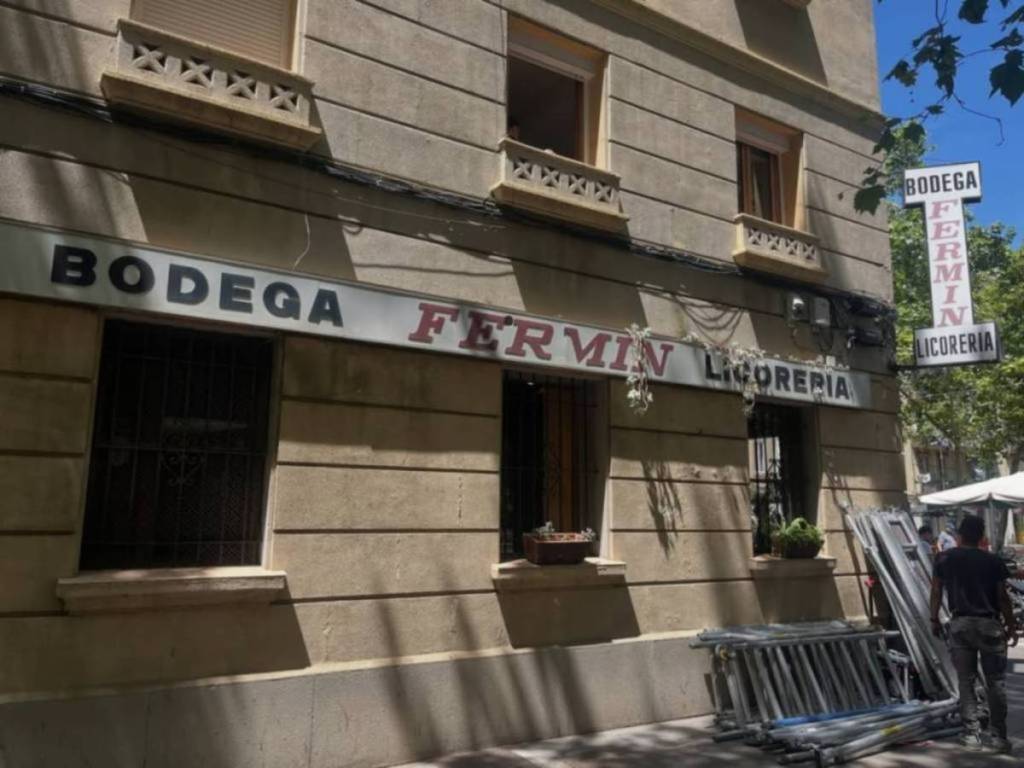

The gold lettering on the glass,the 1970s typefaces, and the weathered wooden signs are more than just advertisements; they are the emotional landscape we walk through every day. To prevent this essence from disappearing under inflexible regulations, the Barcelona City Council’s Urban Planning Commission has approved a legal amendment aimed at protecting, preserving, and restoring all the graphic heritage that gives the Catalan capital its character.
The decision comes just a few days after the iconic Bodega Fermin, located in the heart of Barceloneta, was forced to remove one of its signs installed in 1973 because it directly violated current ordinances. In the wake of this incident, and with the support of all municipal groups, it has been agreed to create a specific regulatory category that will protect signs and posters of high social or heritage value.
Three months to save the city’s “skin”
The approved text sets a clear timeline: the municipal government has a maximum of three months to implement an official strategy to achieve these objectives. The plan seeks to halt the loss of neighborhoods’ visual identity by drafting a special plan to protect graphic heritage.
As Councilman Jordi Coronas, whose group spearheaded the proposal,has pointed out, this amendment to the regulations is “especially necessary in Barcelona, because it is at risk of losing its identity.”
While the new legal framework takes shape, the authorities have also demanded the implementation of containment measures. The proposal calls for the preventive suspension or restriction of any attempt to remove, replace, or destroy signage and graphic elements that may be eligible for inclusion in this future protection plan.
Ultimately, the roadmap will not be limited to prohibiting their destruction. The agreement calls for the creation of a municipal campaign focused on the restoration, conservation, and promotion of these urban treasures—an initiative that must be supported by a specific budget allocation.