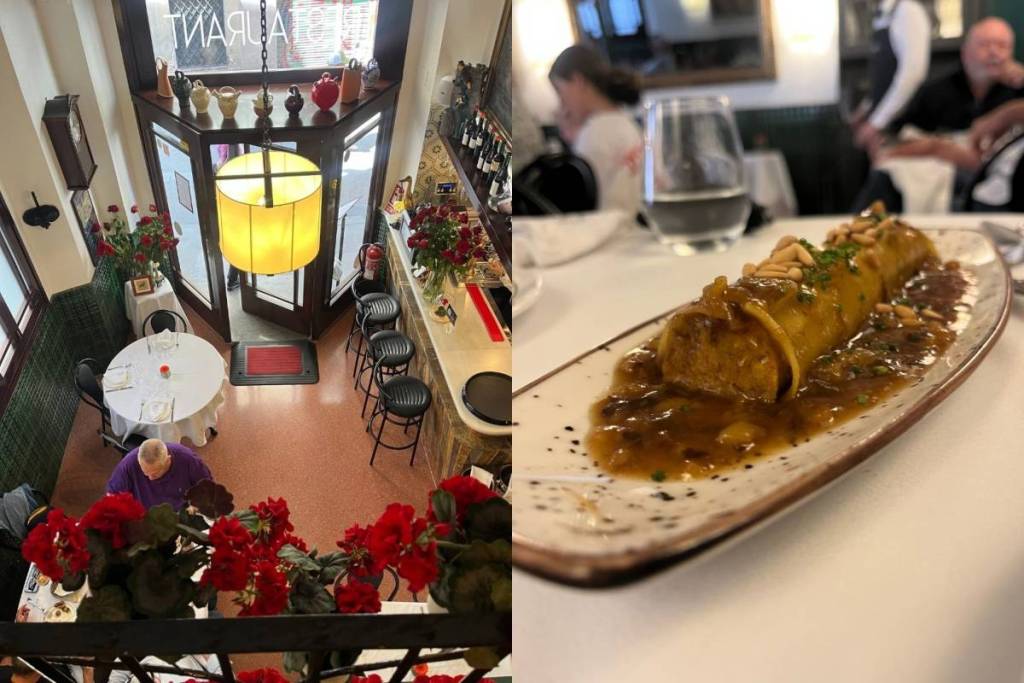

Barcelona is a city that, unfortunately, has grown accustomed to conjugating the verb “to close” when we speak of its most time-honored establishments. We’re a bit tired of seeing century-old shutters come down never to rise again, victims of a real estate market that understands neither sentimental memories nor slow-cooked stews. But every now and then, the story gives us a break. There are places with roots so deep that, even when they try to uproot them, they find a way to sprout again.
A story of resilience worthy of a TV script
The recent story of Can Lluís is, literally, the stuff of fiction. After 90 years of renting in the heart of the Raval, in 2021 the Bermúdez family was forced to pack up their pots and pans and close the door following an eviction process carried out by a vulture fund, involving deception and malpractice on the part of the owners. That episode was not only a blow to the neighborhood, but it also became the inspiration for the series Ravalejar (HBO), directed by Pol Rodríguez, the son of the family that ran the establishment for decades.
The show isn’t just television; it’s a raw portrait of the speculation and gentrification shaking Barcelona, using Can Lluís as a mirror reflecting the loss of identity in our streets. But today, that story of resistance has written a new and hopeful chapter: the restaurant has reignited its stoves. It does so with the same spirit as always, though bearing the invisible scar of one who has had to fight tooth and nail for its survival.
From Messi’s napkin to Vázquez Montalbán’s cookbook
If the walls of this spot on Carrer de la Cera could talk, they’d tell us stories that are already part of the city’s mythology. It’s said that at these tables, between courses, part of Barça’s modern history was forged, as this was one of the settings where Messi’s inner circle gathered back in the days of that famous contract on a napkin. But beyond soccer, Can Lluís was Manuel Vázquez Montalbán’s sanctuary. The writer, a great ambassador for the Raval, found here “authentic” Catalan cuisine—the kind that needs no frills to move the soul.
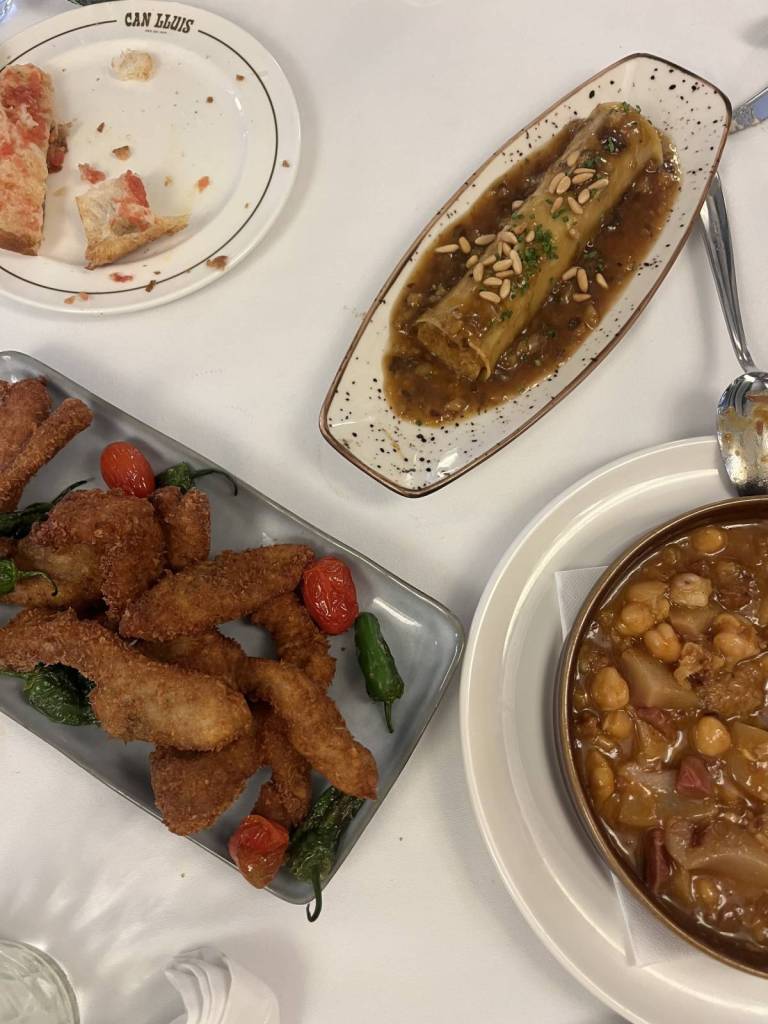
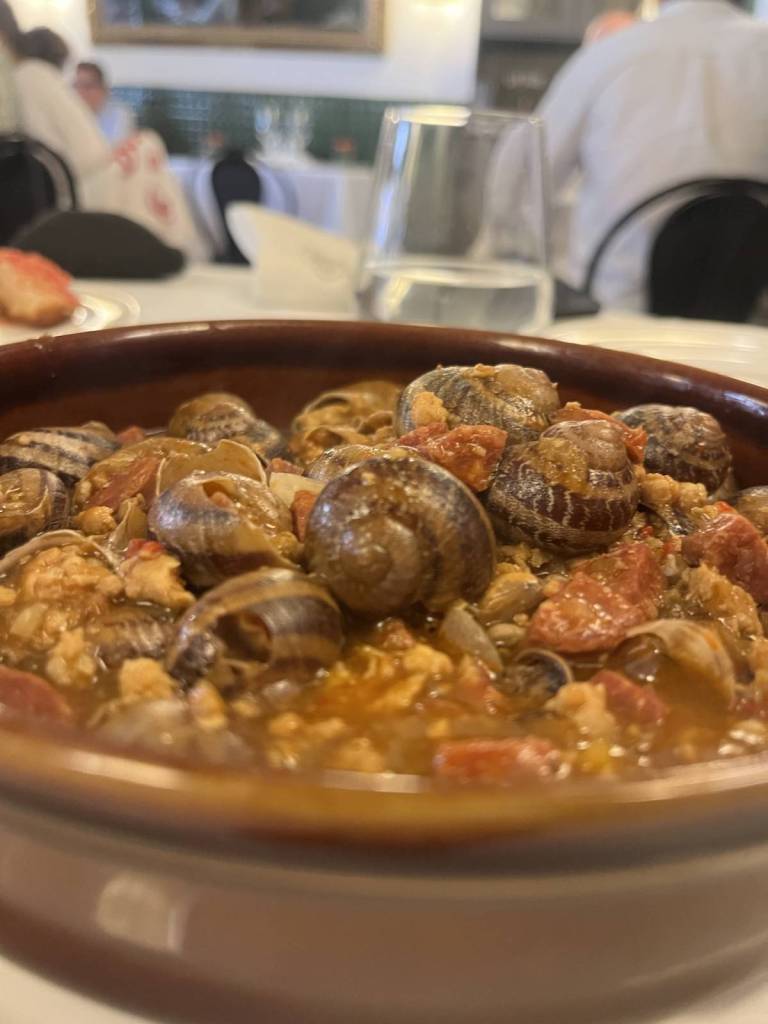
In this new chapter, the menu remains a tribute to honest, no-frills cooking. Its snail stew takes center stage once again, sharing the table with gourmet gems like gratinated garotas (sea urchins). Nor are the legendary house-made cod fritters or its impeccable breaded kid ribs missing from the lineup.
Sitting down now to enjoy their classic cap i pota or traditional cannelloni is , to a certain extent, an act of gastronomic sovereignty. It’s true that the restaurant has lost part of its physical history along the way, but its essence remains intact. As long as the Raval keeps stoves like Can Lluís’s alive, authentic Barcelona still has a chance.