
Taking a photograph has become one of the most routine activities in our daily lives. A shopping list, a restaurant’s hours, or the spot where we parked are just a few of the things we capture with our cell phones without giving them any more thought than their future usefulness.
But a couple of centuries ago, capturing reality in an image was somewhere between science fiction and black magic… until a Catalan, Ramón Alabern i Moles, brought the first daguerreotype camera from Paris and “photographed” the Pla de Palau. That’s how, on November 10, 1839, the first photograph in Spanish history was taken.
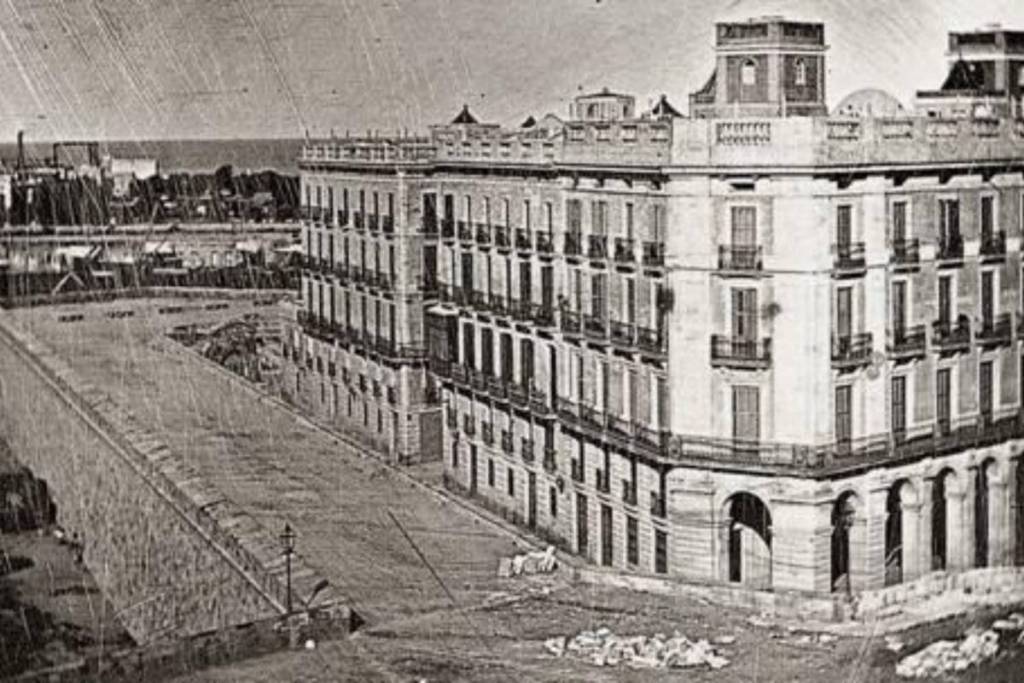
The original daguerreotype was lost, but we know that it took about 20 minutes to process the image, that it was taken from the facade of a building, and that the image featured the Casa Xifré and the Palacio de la Lonja del Mar. And after the photo was taken, the plate was raffled off among those in attendance.
Pla de Palau: From Political Hub to Tourist Attraction
What has been preserved, however, is the history of Pla de Palau and how one of Barcelona’s strategic hubs for commerce and the economy gradually lost its significance.
Until the city walls were demolished between 1854 and 1860, the Pla de Palau was one of the wealthiest and most exclusive neighborhoods. This area was home to the military, the aristocracy, the port market, and customs.
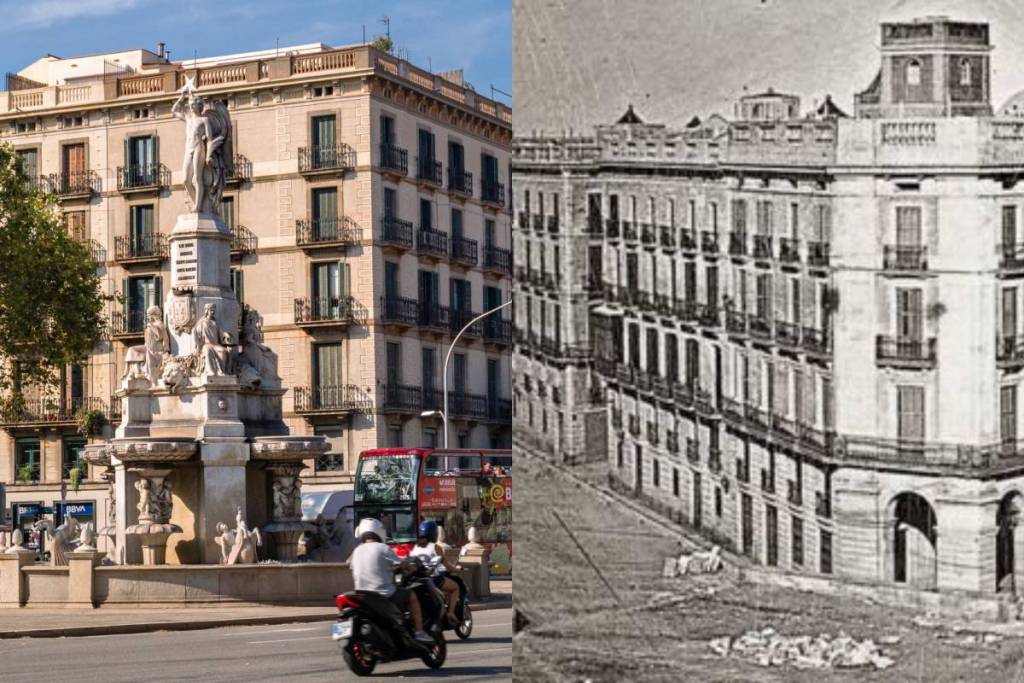
During the 19th century, iconic landmarks were built in this square, such as the Xifré houses, the Fountain of the Catalan Genius (commemorating industrial progress), and Gaudí’s emblematic streetlamps. But in 1875, with the fire and subsequent demolition of the Royal Palace, the square began to lose its economic importance.
With the consolidation of the Via Laietana and the shift in economic activity, the square ceased to be the political and military hub and became a site of historical and monumental value in Ciutat Vella. Today, it retains its heritage value and commemorates its past with a plaque marking the day the famous photograph was taken, but it functions as a public space focused on tourism and dining.