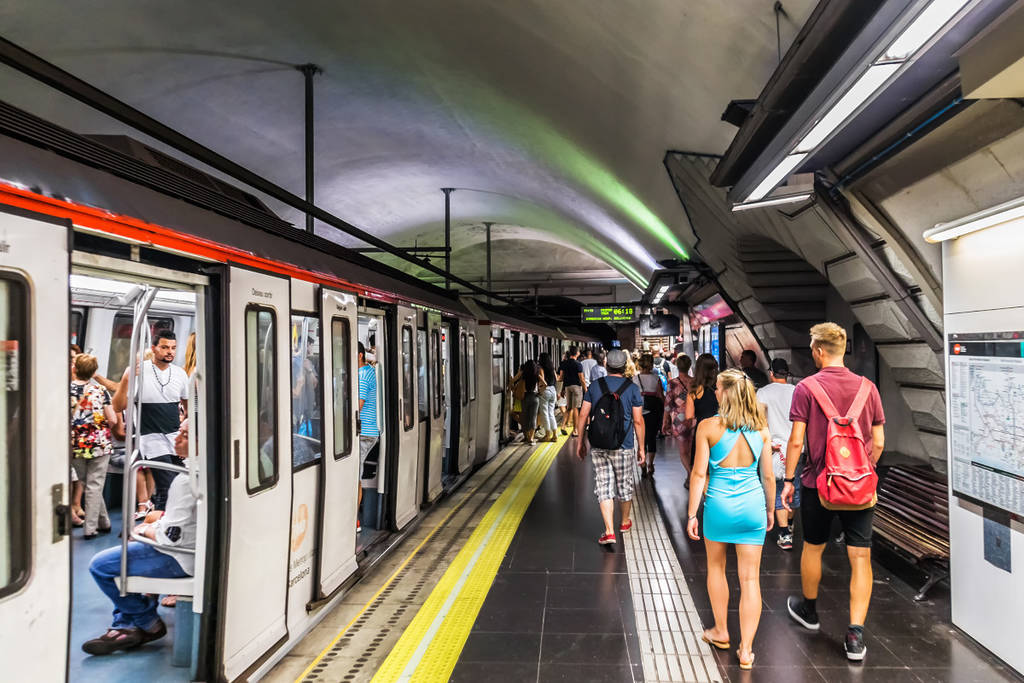

Mornings in Barcelona have an unmistakable soundtrack: the murmur of the platforms, the beep of closing doors, and the clatter of train cars that wake the city. However, that metallic pulse will change its rhythm on November 11. Workers on the Catalan capital’s main rail transit networks have decided what role they will play in the upcoming day of citizen protests.
Following the filing of strike notices by the UGT, CCOO, and CGT unions in mid-October, the workforces of the Barcelona Metro, Ferrocarrils de la Generalitat (FGC), and Rodalies will support the general strike. The mobilization, which is centered on the demand for decent housing and decent work, will thus have the backing of a broad majority in the sector, although the level of participation and unanimity vary depending on the departments within each operating company.
Unanimity Underground
The Barcelona Metro, operated by Ferrocarril Metropolità de Barcelona (FMB) as part of the TMB group, is the only sector where there are no divisions. According to members of the CGT’s works council, all the groups representing subway workers have unanimously agreed to join the strike. In the city’s tunnels, support for the strike has brought all labor representatives into agreement.
Outside Barcelona’s underground system, the picture is somewhat different. At Rodalies, most union representatives will support the strike. The UGT, which has a presence on the Renfe committee, asserts that it will go “all out” for the protest, emphasizing its union identity and the urgency of addressing the housing crisis. However, groups such as the Semaf train drivers’ union have chosen not to take a position either for or against the strike. Its national spokesperson, Teo Moreno, clarifies that they are an “independent and apolitical” organization focused on strictly professional matters; therefore, while they respect the right to strike, they leave the decision up to the free choice of each member.
Meanwhile, the platforms of Ferrocarrils de la Generalitat de Catalunya (FGC) have a similar atmosphere. Its internal structure grants a great deal of autonomy to the various union branches, making a unanimous agreement impossible. In fact, five of the twenty-three committee members belong to groups that do not support the strike. Despite this, the vast majority of the workforce falls under the umbrella of the unions calling for the strike. The UGT, which holds the committee presidency, explains that while it respects each employee’s situation and convictions, it has decided to actively encourage the workforce to participate in this day of mobilization.