
Barcelona is a city that never stops, especially when it comes to its squares. We all know that spot at the intersection of Aragó, Marina, and Lepant streets, right beneath the Sagrada Familia, which, until now, seemed more like a place to pass through quickly than a real gathering spot. However, Pablo Neruda Square has officially begun its transformation. The City Council has kicked off the renovation of this space in the Eixample with a clear goal: for residents, from the youngest to the oldest, to once again feel that the square is theirs in an area where tourist pressure sometimes leaves no room for the neighborhood.
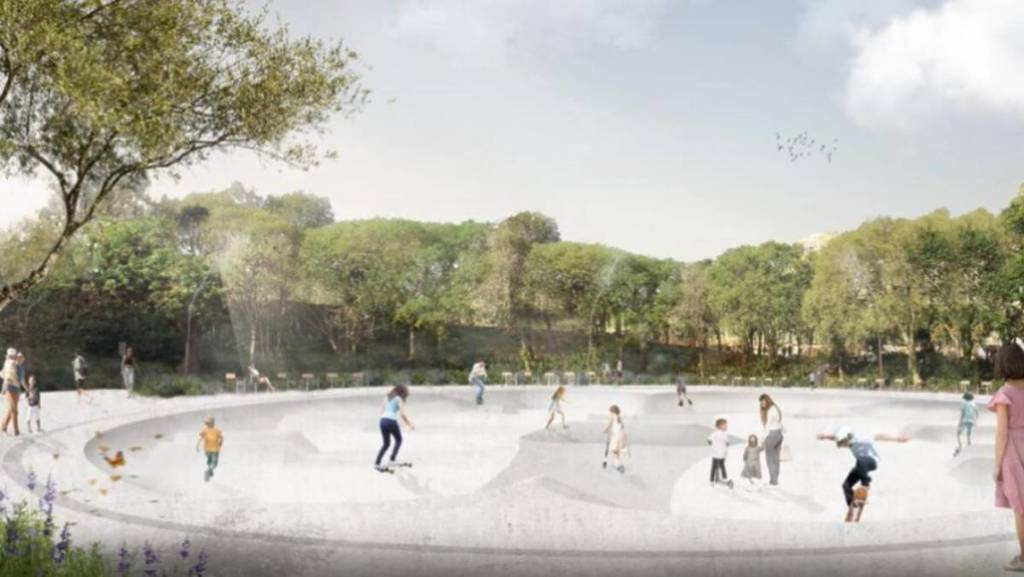
The renovation is not just a matter of aesthetics, but of necessity. The project was conceived to address the deficiencies that time and use have gradually accumulated. The famous central skating rink, which is currently sunken and isolated from the rest of the surroundings, will give way to a much more open and welcoming layout. With an investment of two million euros, the works are part of the Action Plan for the High-Traffic Area of the Sagrada Família, a municipal strategy that seeks to improve coexistence between visitors and residents by returning public space to the community.
A new skating circuit and more green space for the neighborhood
The big change will come with the installation of a pump track circuit, a course designed with slopes and jumps intended for use by roller skates, scooters, and bicycles. It will not only be a magnet for local children and school groups; the project also includes the creation of sports training areas and recreational games such as a climbing wall, a giant chalkboard, and ping-pong tables. The goal is to offer active leisure alternatives that have been conspicuously absent in this part of the neighborhood until now.
But it won’t all be about movement.Accessibility and comfort are fundamental pillars of this new design, which is expected to be ready by the first quarter of 2027. Greenery will be expanded to create more shaded areas, and practical features such as public electrical outlets will be installed, designed to facilitate the organization of neighborhood parties and community events. Ultimately, the goal is to replace asphalt with social interaction, transforming this “complicated intersection” into a much safer and more accessible urban refuge.