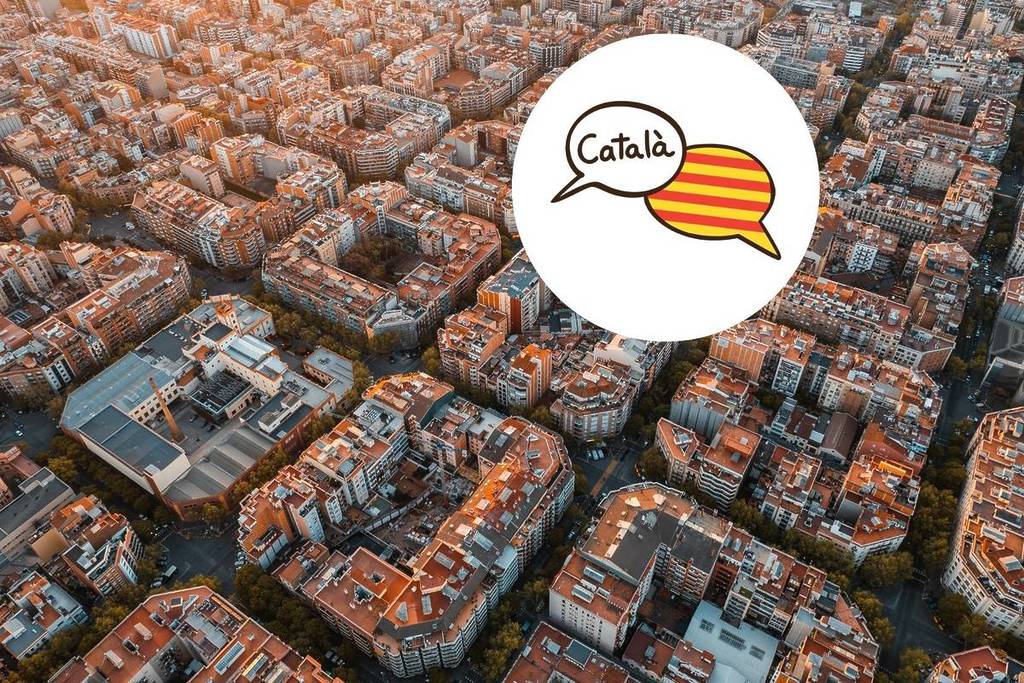
The linguistic map of Catalonia is being reconfigured, and it is doing so with trends that, to say the least, invite reflection. According to the territorialized data of the Survey of Linguistic Uses of the Population (EULP) of 2023, published by the Catalan Ministry of Linguistic Policy and Idescat, the habitual use of Catalan has suffered a generalized decline in almost the entire territory, marking a worrying panorama for the language.
The Catalan average indicates that only a third of the inhabitants of Catalonia use Catalan on a regular basis. However, it is the Metropolitan Area of Barcelona that is on the less favorable side of the scale. This area, which concentrates the highest population density in the country, presents a percentage of habitual use of Catalan of only 24.7%, placing it below the average for Catalonia and marking a decrease compared to the last survey in 2018 (when it was 27.5%).
Only one in 10 people speak Catalan in L’Hospitalet.
Despite the overall figure for the Metropolitan Area, which raises an eyebrow, the data are not univocally homogeneous within this large territorial portion. The study reveals that the sociolinguistic situation is a real mosaic, even a few kilometers apart.
Within the Metropolitan Area, areas such as Maresme (with 43.6% of exclusive habitual use, according to the graph) and Barcelona city (with 26.9%) show low percentages of Catalan use, but still higher than the metropolitan area as a whole.
In fact, Maresme is above the average for Catalonia. In contrast, subareas such as L’Hospitalet de Llobregat (with only 10.3%), Baix Llobregat Sud (12.2%) and Barcelonès Nord (14.3%) show significantly lower figures, reflecting an urban complexity where the language is mixed with demographic factors such as the high concentration of immigrant population or the displacement of residents from other areas.
This diversity is also reflected in combined use. According to the results of the EULP, the Barcelona Metropolitan Area stands out for a percentage of people who use both languages (Catalan and Spanish) frequently, between 10% and 12%, a percentage higher than the Catalan average. In addition, while the ability to understand Catalan declines in general, it is the Metropolitan Area of Barcelona that registers a slight improvement in the ability to write it.
Catalan holds up (but worsens) in inland Catalonia
The picture changes radically when we move away from the central coast and look inland and south. Terres de l’Ebre, Catalunya Central, Ponent and Alt Pirineu remain the strongholds where Catalan is holding its own with the greatest vitality, being the only areas where more than half of the inhabitants use it on a regular basis.
These areas are not only above the Catalan average in terms of use, but also have a higher percentage of people born in Catalonia (around 68%).
The general decline in the use of Catalan can be explained by a combination of factors, such as strong demographic growth (which increases the number of speakers and connoisseurs, but not at the same rate as the total population), the emigration of Catalan speakers and the arrival of people from abroad. Thus, while in the Metropolitan Area the fall is linked to internal migration and the arrival of people from the rest of Spain, in the Girona region, for example, the decline is mainly attributed to the arrival of foreign population.
What is clear is that the debate on the future of Catalan inexorably passes through the urban dynamics of the Metropolitan Area, the population center where the language faces its greatest challenge and where the language policies of reception need a more than evident boost.