
From May 9 to 17, 2026, Girona celebrates a new edition of its iconic Temps de Flors festival. During this period, the city of Girona presents a total of 141 floral projects spread across 113 locations, ranging from the historic center and the most iconic monuments to various outlying neighborhoods.
This ephemeral art exhibition, now in its 71st edition, uses nature as its central theme to transform courtyards, gardens, and streets. The event, which began in 1954 as a small exhibition, is being consolidated this year with a program that combines respect for local identity with artistic innovation and the opening of new points of architectural and social interest.
New additions to the itinerary and new venues
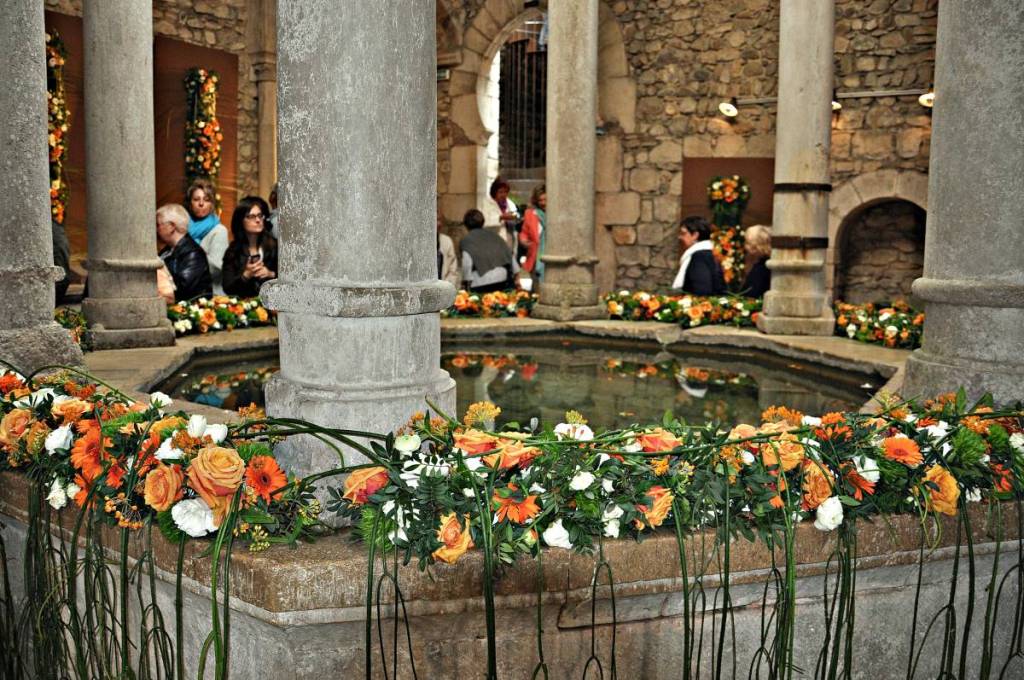
This year’s edition expands its route to include strategic locations such as the Sant Feliu Bridge, which joins the traditional crossings over the Onyar River at Sant Agustí, the Peixateries Velles, and d’en Gómez. In addition, the Barri Vell adds new locations such as the Sant Feliu gardens, the fountain on Passeig Arqueològic, and various facades that are being transformed into living canvases for the first time.
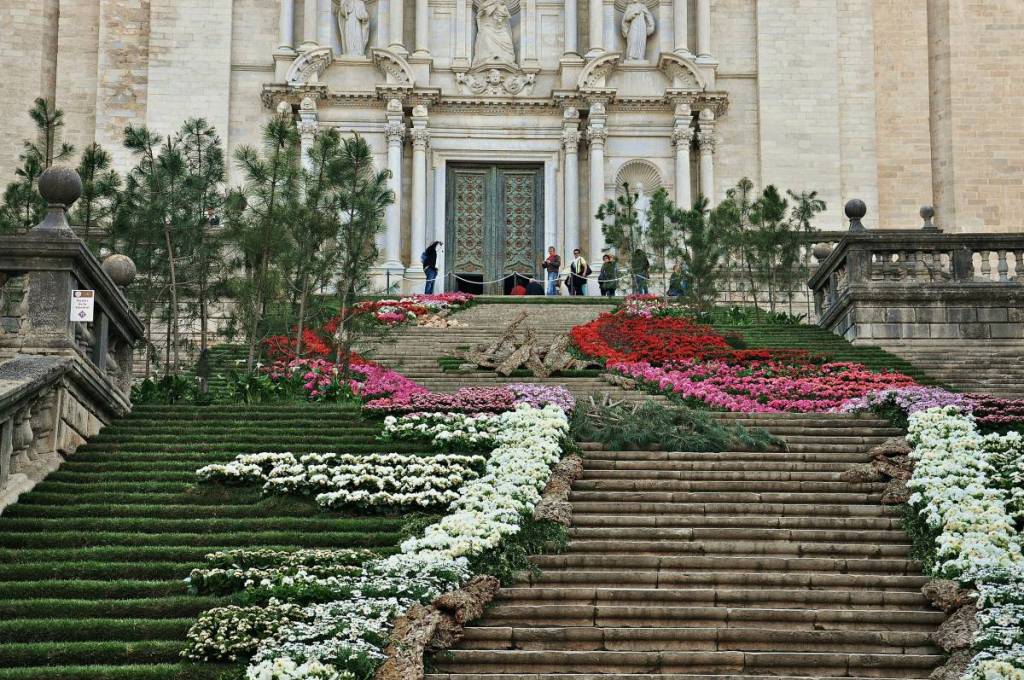
On the steps of the Cathedral, one of the most visited spots, a project by Teresa Vidal in collaboration with artist Nuxu Perpinyà is on display, linking local mythology with Gaudí’s style. The festival also pays tribute to musician Pau Casals on the 150th anniversary of his birth with installations dedicated to peace in the Jardí de la Pau and Plaça de Natàlia Molero i Lloret.
Decentralization to the neighborhoods
One of this year’s main focuses is the festival’s expansion beyond the historic center. With 40 projects spread across 13 areas, the exhibition reaches places like Pont Major, where a structure made of wood and natural fibers stands out, designed as a shelter and play area. Other participating neighborhoods include Santa Eugènia, Montilivi, Sant Narcís, and the Sant Daniel Valley, among others.
To make visiting easier, three main routes have been organized:
- Route 1: Focused on the Barri Vell, the Mercadal, and Sant Daniel.
- Route 2: Explore Sant Narcís, Santa Eugènia, and Can Gibert del Pla.
- Route 3: Connects the Eixample, Pla de Palau, and Vista Alegre. A specific itinerary adapted for people with reduced mobility has also been set up.
You can view all the flower-filled locations on the festival’s website.
Cultural activities and evening hours
Under the name Flors de Nit, the festival offers a nighttime program where outdoor spaces and some indoor venues remain open until 11:00 p.m. on weekdays and until midnight on Saturdays. The program is complemented by the Girona A Cappella festival, concerts in Plaça dels Jurats, and a human tower festival.
Local businesses and restaurants are also participating with decorated storefronts and themed menus. For those in need of a break, “Espais Calma” spaces have been set up at the CaixaFòrum and the Centre Cívic Barri Vell-Mercadal, designed for neurodivergent individuals or nursing mothers.
Visitor recommendations and how to get there
The official opening will take place on Saturday, May 9, at the Jardins dels Alemanys. Although admission to all venues is free, the organizers recommend planning your route in advance and using alternative routes to avoid the most crowded areas.
If you’re planning a trip from Barcelona to Girona to enjoy the floral explosion of Temps de Flors, the smartest and most sustainable option is, without a doubt, the train. From Barcelona Sants station, you can take an AVE or AVANT and be in the center of Girona in just 38 minutes. If you prefer a more economical option and aren’t in a hurry, the Medium-Distance trains (R11) depart from both Sants and Passeig de Gràcia and take approximately an hour and fifteen minutes. Upon arriving at Girona station, you’ll be just a ten-minute walk from the Barri Vell, where the main route of the floral displays begins.
For those who prefer the flexibility of a car, the drive on the AP-7 highway takes approximately one hour and twenty minutes, depending on traffic. However, keep in mind that during Temps de Flors, the city welcomes thousands of visitors and parking in the center is practically impossible. The best option is to leave your car at park-and-ride facilities on the outskirts, such as those in the Fontajau area or at the Sports Pavilion, and walk or take public transportation to the Old Town. Your feet (and your patience) will thank you!