
The final approval of the Vallcarca Central Park project is not merely an administrative formality, but an attempt to put an end to one of the city’s longest-running urban planning conflicts. The 10,000-square-meter site where this “green lung” will be located is the same one that, since 2002, has been the epicenter of a struggle between municipal planning authorities and neighborhood groups denouncing the loss of the neighborhood’s identity and the displacement of its residents.
The transformation, with major construction set to begin in December 2026, aims to replace the temporary nature that has defined the area for more than 20 years. What are now vacant lots and construction sites were once streets flanked by low-rise houses and modernist mansions that gradually disappeared under the wrecking ball following the plan approved in 2002. That plan left hundreds of properties in a limbo of “urban planning designation” that prevented their rehabilitation and accelerated their deterioration.
A two-level design and promotion of biodiversity
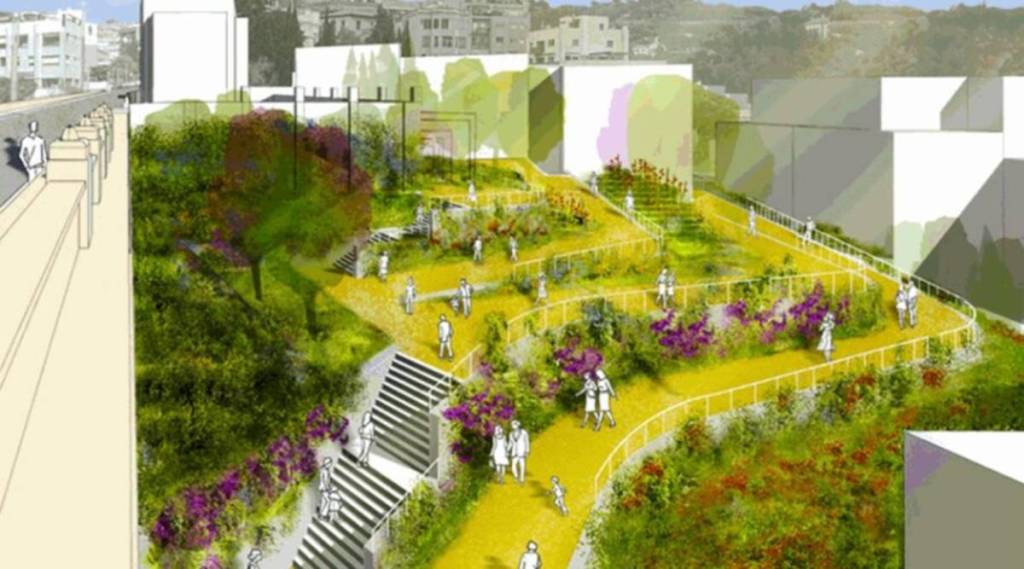
The future park will be structured into two distinct areas to adapt to the topography of the land. The first will have a more urban and open character, located on the flat areas near the buildings, where playgrounds and gathering spaces for community events will be installed. The second area will take advantage of the slope of the land through a system of landscaped terraces connected by accessible ramps and stairs.
To combat the climate emergency, the project focuses on stormwater management through permeable surfaces and increased tree cover to provide shade. Additionally, current neighborhood uses will be maintained, incorporating urban gardens covering nearly 200 square meters and a picnic area on the upper terrace.
One of the pillars of the project is accessibility. A new main pedestrian route will be created that will cross the park, connecting Vallcarca Avenue, under the viaduct, with Gustavo Bécquer Street and the Maria Baldó Gardens. According to Laia Bonet, councilor for the Gràcia district, this approval is the result of a participatory process with the neighborhood and demonstrates that the neighborhood’s transformation is a priority for unsticking long-stalled projects.
Boost to public housing and services
In parallel with the creation of the park, the City Council is moving forward with the construction of affordable housing in the neighborhood. Two housing developments are currently out to bid on Farigola and Mare de Déu del Coll streets, which will add a total of 47 new public apartments. Additionally , the Grèvol development on Vallcarca Avenue will deliver 36 affordable rental units by the end of this year, intended for young people, single-parent families, and people with reduced mobility.
This initiative is complemented by the construction of the “service ring” in Can Farigola, where the development of Cambrils, l’Argentera, and Calendau streets has already been completed. Finally, the city council is making progress on the expropriation of properties on Vallcarca Avenue for the future construction of a stormwater retention basin beneath what will become the Rambla Verda.
A history of demolition and resistance
The future park is built upon a history of social conflict. For two decades, the paralysis of the urban plan has turned Vallcarca into a landscape of abandoned lots and dilapidated buildings. Cases such as the demolition of the “Casita Blanca” became symbols of a transformation that many residents perceived as a strategy of intentional degradation to facilitate speculation and the purchase of land at low prices.
On the very site where the park will be built, there once stood beautiful Modernist mansions that were among the first to be targeted for demolition. In fact, this site and the surrounding area are referred to by the most vocal residents as “ground zero” for the neighborhood’s housing conflicts.
This situation has generated a strong network of resistance. Neighborhood groups have long warned that the construction of the park and the subsequent “Rambla Verda”—which still requires the expropriation of several properties where 15 families live—could trigger a process of gentrification, displacing long-time residents to attract people with greater purchasing power.