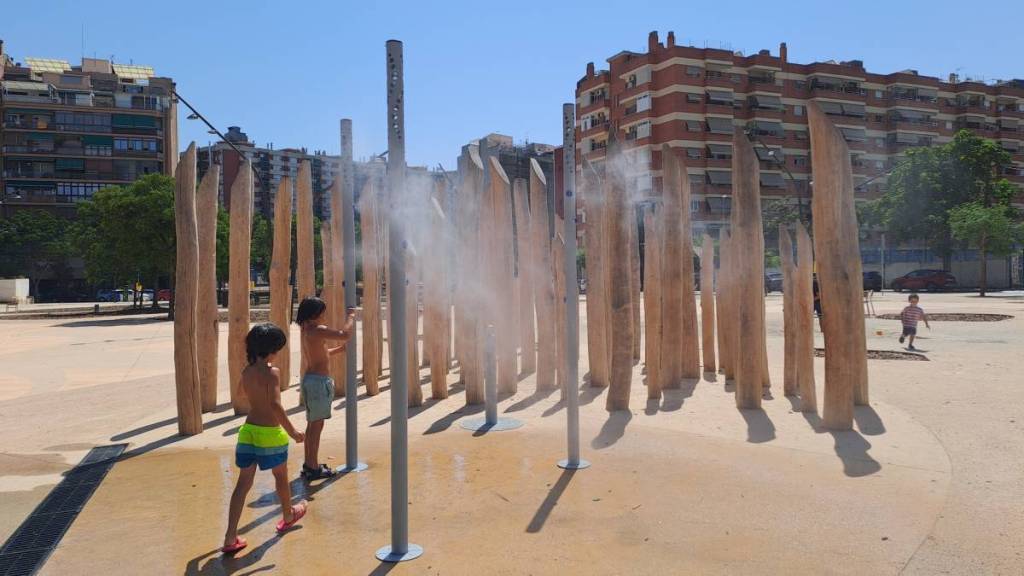

When the asphalt begins to retain the stifling heat of late spring, the sound and coolness of water become indispensable allies on the streets. Faced with the need to mitigate the impact of increasingly extreme temperatures, Barcelona has accelerated the activation and expansion of its water play areas, transforming the urban landscape into a more welcoming environment for its residents during the harshest months of the year.
Part of the city’s climate mitigation plans and part of the Climate Refuge Network, the nine facilities that had already been operating in previous seasons opened early this past Friday due to the recent heatwave at the end of May.
These spaces will be joined, progressively throughout the month of June, by another nine newly created sites distributed across eight districts of the Catalan capital, thereby doubling the current offering.
Expansion to new neighborhoods
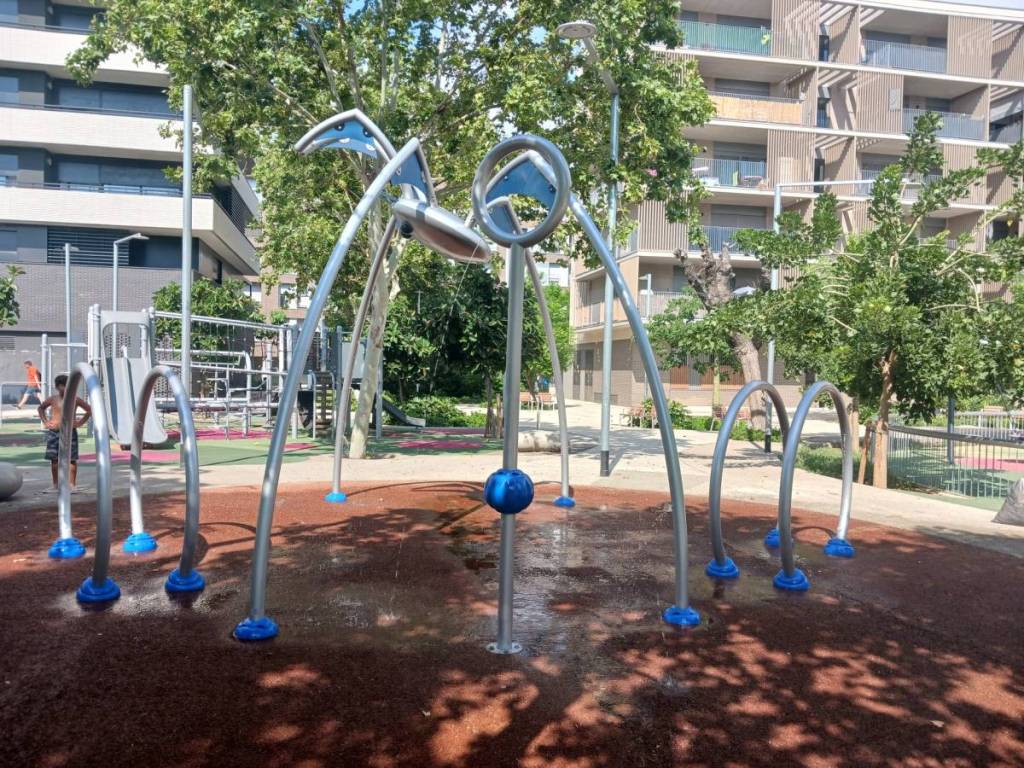
For the first time, the districts of Sants-Montjuïc and Sarrià-Sant Gervasi will have these facilities. The new locations that will open progressively throughout this month are:
- Plaza de Carme Simó (Ciutat Vella)
- Avenida de Mistral (Eixample)
- Plaza de Joan Pelegrí (Sants-Montjuïc)
- Justa Freire Gardens (Sants-Montjuïc) – Now open
- Joan Reventós Park (Sarrià-Sant Gervasi)
- Harry Walker Square (Nou Barris)
- Baix Guinardó Gardens (Horta-Guinardó)
- Antoni Santiburcio Park (Sant Andreu)
- Plaza de Lolita Torrentó (Sant Martí)
These areas are in addition to those that have been fully operational since last week:
- Canyelles (Nou Barris)
- Rieres d’Horta Park (Horta-Guinardó)
- Bon Pastor (Sant Andreu)
- Meridiana Dog Park (Sant Andreu)
- Plaza del Maresme (Sant Martí)
- Antiga Casa de l’Aigua (Sant Andreu)
- Parque de las Glòries (Eixample / Sant Martí)
- Sant Joan de Déu Gardens / Illa Diagonal (Les Corts)
- Plaza de Caramelles (Ciutat Vella)
In addition to these cooling spaces, the city of Barcelona has more than 1,740 drinking fountains distributed throughout the city. Their locations can be found using the Fonts BCN app, which can be downloaded for free, as well as the Barcelona a la butxaca app. These apps allow users to locate Barcelona’s fountains, find the nearest one, get directions, view a map, and access basic information about each one.
Sustainability and rules of use
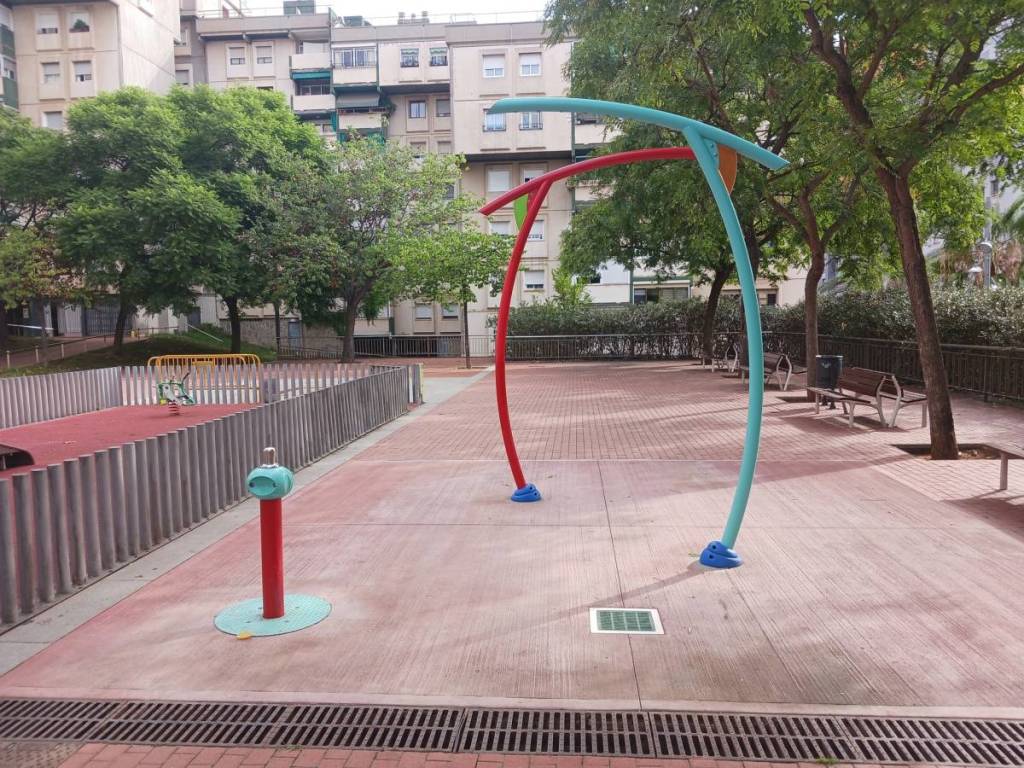
The design of the fountains incorporates environmental responsibility criteria aimed at reducing water consumption. The systems operate via a timed push button that prevents the jet from reactivating until the previous cycle has ended. The service, which will run through September, has extended its hours this year and will operate continuously from 10:00 a.m. to 8:00 p.m. “It’s better for children not to be out on the street at midday, but if they are, it’s better that they have water play,” Bonet noted in this regard.
The facilities are designed for children ages five and up. To use them, visitors must wear shoes, and pets are not allowed. Likewise, the strict ban on swimming in the city’s ornamental fountains remains in effect. As a precautionary measure following the incidents reported last summer, the city council has shut down the fountain at Mirall de l’Aigua in Plaça de les Glòries. As the deputy mayor explains, there is a very popular playground nearby, and the city cannot afford to “have accidents happen again.”
The city’s planning calls for further expansion of this network in the medium term. Looking ahead to 2027, the Barrios plan calls for the construction of five additional cooling areas:
Calle de Palamós (Nou Barris), Intersection of Gran Via de les Corts Catalanes and Plaza de Espronceda (Sant Martí) – Two locations, Plaza del Poeta Boscà (La Barceloneta), Plaza de los Fotògrafs Català (Sant Pere)