Las Ramblas de Barcelona are immersed in one of the most profound transformations of its recent history, a monumental project with a budget of nearly 45 million euros. Although the planned completion date of spring 2027 seems distant, the comprehensive facelift is already revealing some of its most fascinating secrets, especially in terms of lighting.
The aim of this renovation, beyond the economic ambition, is to restore the soul to the promenade. The aim is to create a “friendlier, greener and more comfortable” space that prioritizes pedestrians over traffic, restricting traffic to a single continuous lane intended mainly for residents, buses and cabs. And in this effort to look to the future, the city has decided, paradoxically, to rescue its medieval past.
The secret jewel: where the ancient gates of the city wall used to be.
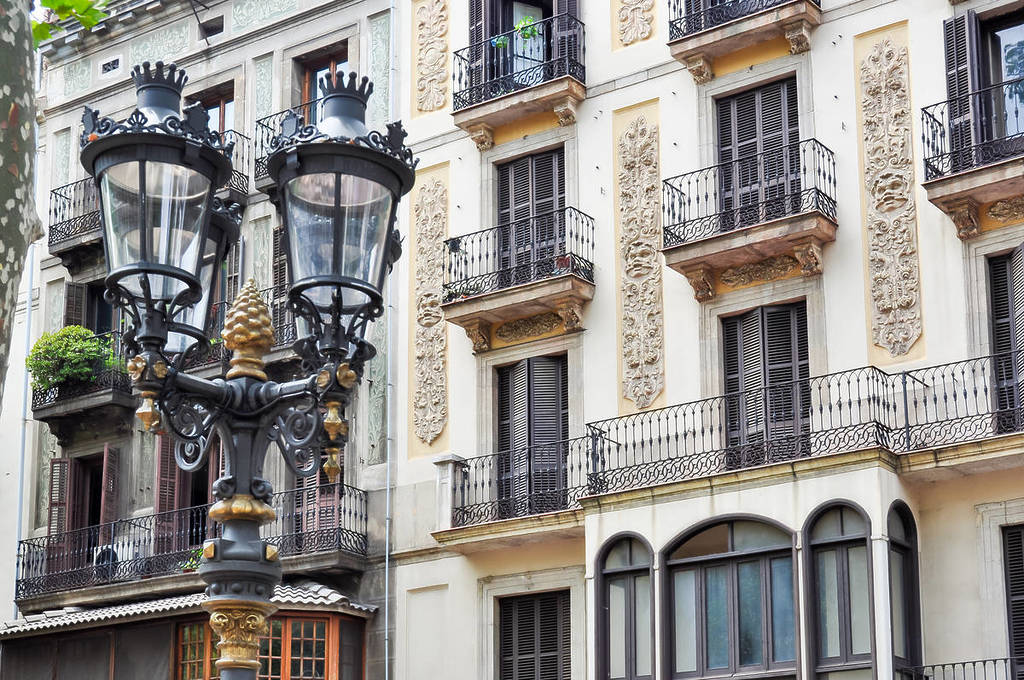
The key to the new lighting lies not only in what is removed, but in where what remains is relocated. The City Council has drawn up a plan to reuse the famous historic four- or five-armed lanterns, which, although replicas of old models, retain their 19th-century flavor. But their return will be very selective.
These traditional luminaires will not return just anywhere. They will only be reinstalled in the large spaces that coincide exactly with the location of the old gates of the medieval city wall. We are talking about such significant points as the Portal de Santa Anna, Portaferrissa, the Portal de la Boqueria and the Portal de Trencaclaus. In these enclaves, the lantern will act as a visible historical marker.
To further reinforce this connection to the Barcelona of the Middle Ages, the paving around these special lanterns will also change. It will be combined with porphyry to delineate and follow the archaeological traces of the ancient fortification. La Rambla will thus become an open-air museum that only those with a good eye and a passion for history will be able to decipher.
The new design that brings order to the promenade
While the historic lampposts serve an ornamental and commemorative function, the rest of the Ramblas will adopt a contemporary model designed specifically for the project. This new design, which can already be seen in the section between Colón and Santa Madrona, has a clear purpose: to eliminate visual chaos.