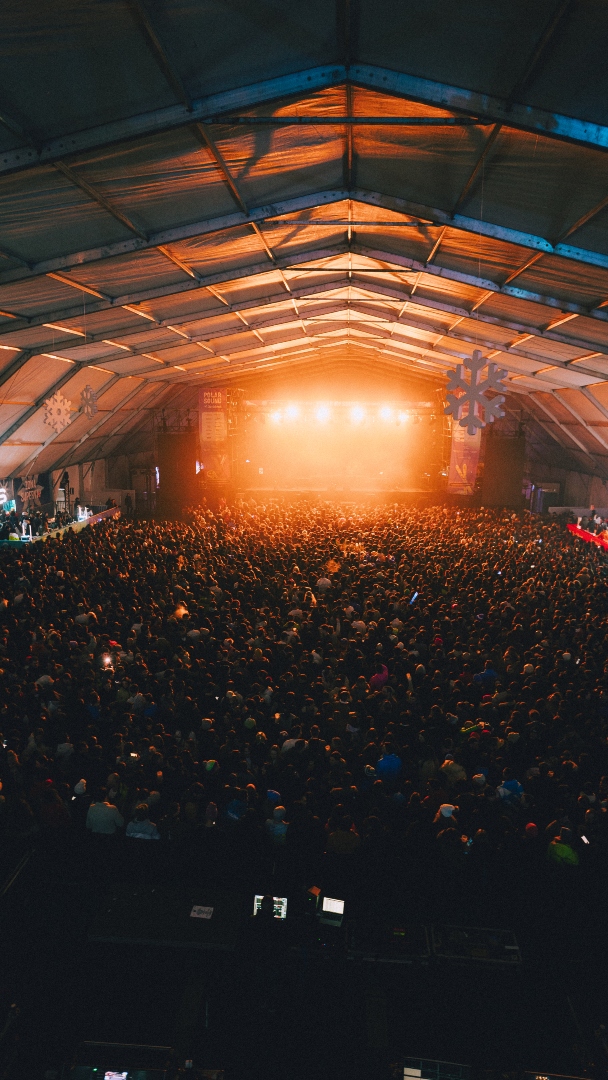

As on every September 11, the Diada celebrations in Barcelona will conclude with live music and a festive atmosphere on Passeig de Lluís Companys. Òmnium Cultural is organizing the 24th edition of the Festa per la Llibertat, an event that brings together thousands of people around the Arc de Triomf to enjoy free concerts and the fair set up in the surrounding area.
In addition to political events and open houses at museums and institutional buildings—as is the case every year— the event will feature a music lineup to celebrate the Diada.
Furthermore, in conjunction with the events marking Catalonia’s National Day, Transports Metropolitans de Barcelona (TMB) and the Barcelona City Council have announced a significant increase in public transportation service for this Friday, September 11, particularly on the metro.
Bus routes will operate with some route modifications and service suspensions, which you can check here.
The demonstration on Catalonia’s National Day on September 11 in Barcelona
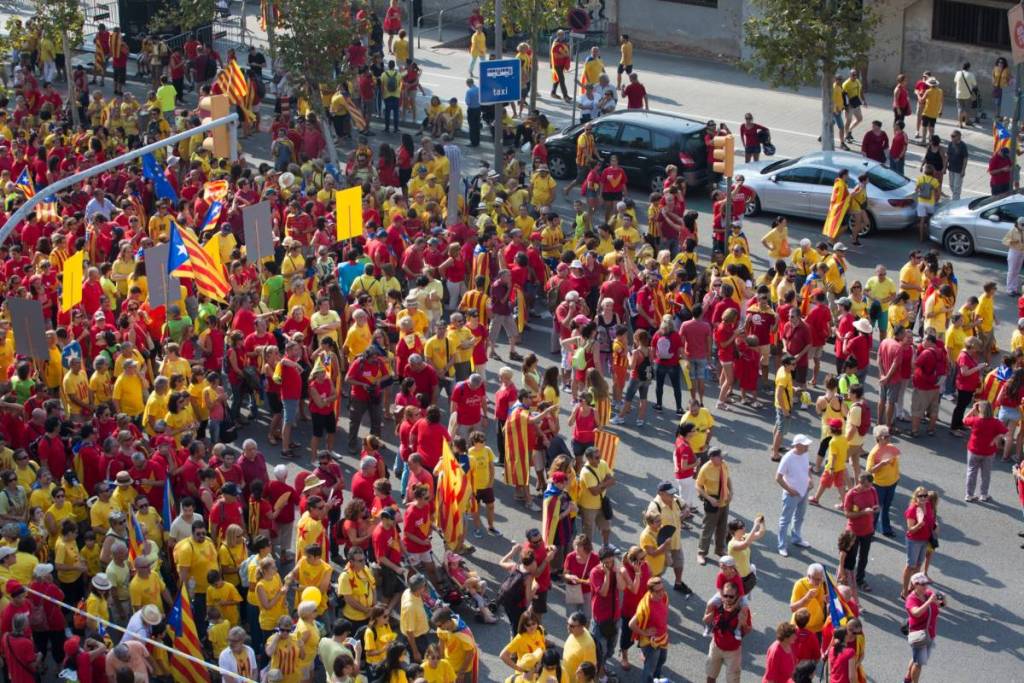
As on every September 11, the streets of Barcelona will once again be the main stage for the demonstrations marking Catalonia’s National Day. For 2026, the organizing groups have designed a “pincer-shaped” route: the march will split into two large columns advancing from different points in the city, ultimately converging for a joint closing ceremony in the heart of the capital.
Although the protest atmosphere and preliminary gatherings will begin at 1:00 p.m., the official start of the march, as is tradition, will take place at 5:14 p.m. The demonstrations will continue until approximately 9:00 p.m.
Below, we detail the route of the two main processions so you’ll know where they start and which streets they’ll pass through on their way to their destination: Plaça de Catalunya.
“Presente” Column
This first march will set off from the L’Eixample side. Participants are asked to gather at the intersection of Gran Via de les Corts Catalanes and Casanova Street.
- Header: It will be located near Muntaner Street.
- The route: At 5:14 p.m., the procession will proceed in a straight line along Gran Via until it reaches Plaça de la Universitat. From there, it will head down Ronda de la Universitat until it emerges directly onto Plaça de Catalunya.
“Future” Column
The second march will begin in the historic center, in the Ciutat Vella district. The main meeting point will be along Vía Laietana, near Antoni Maura Square.
- Header: It will be located near Avenida de la Catedral.
- The route: After the starting signal, demonstrators will march up Vía Laietana until they reach Urquinaona Square. The final stretch will run along Ronda de Sant Pere to meet up with the other column at Plaça de Catalunya.
All the Diada concerts in Barcelona
This year, the lineup for the Festa per la Llibertat includes La Gossa Sorda, DJ Trapella, and DJ K-ZU.
The music will kick off with the energy of DJ Trapella, and the highlight of the night will come from the Valencian band La Gossa Sorda, who will headline the event and perform iconic songs in Valencian and Catalan that continue to resonate throughout the country, such as “Camals mullats” and “Esbarzers.”
DJ K-ZU will close out the festivities, returning once again to the Arc de Triomf stage to get the crowd moving and bring the Diada celebrations to a close with his signature electronic set featuring Catalan music anthems.
Here’s the complete schedule for the Diada so you don’t miss a thing.
- 12:00 p.m.: Opening of the MerCat fair, featuring some 100 organizations and businesses dedicated to language and culture.
- 5:14 p.m.: Demonstration. This year, the demonstrations will once again be decentralized, with notable marches in Barcelona, Girona, and Amposta. In the Catalan capital, the marches will converge at Plaça de Catalunya for the speeches.
- 7:00 p.m.: Concerts begin on Lluís Companys Promenade with DJ Trapella.
- 9:30 p.m.: Headlining concert by La Gossa Sorda.
- 11:45 p.m.: The festival wraps up with DJ K-ZU.
A free, outdoor event with music in Catalan to wrap up the Diada in the heart of Barcelona.
Open houses at museums and institutional buildings for Diada 2026 in Barcelona
In addition to the official events, several cultural venues will open their doors free of charge during the Diada: the Palau Güell, the MNAC, the Parliament, the Palau Robert, the Museu d’Història de Catalunya, and the Palau de la Generalitat, among others. In cases such as the Generalitat, prior registration will be required, while access to the Parliament will be free.
Institutional events leading up to the Diada
In addition to the iconic floral tribute at the Rafael Casanova monument early in the morning on the 11th, the days leading up to the event will feature official ceremonies and events commemorating historical memory:
September 9 (District events and remembrance)
- 5:00 p.m.: Institutional conference “And after Franco, what?” with Dr. Andreu Mayayo in the Saló de Cent at City Hall. (Subject to district scheduling)
- 7:00 p.m.: Commemorative event in the Eixample district at the Jardinets de l’Alguer. (Subject to the district’s schedule)
- 7:00 p.m.: Commemoration of Catalonia’s National Day at Les Corts (Plaça de Comas). (Subject to the district’s schedule)
September 10 (Eve of the Diada)
- 7:30 p.m.: Raising of the Catalan flag at the Parliament of Catalonia in the presence of officials.
- 9:00 p.m.: Traditional institutional address by the president of the Generalitat, Salvador Illa.
- 10:00 p.m.: Torchlight marches in defense of 1714 in various neighborhoods, such as Sants and Les Corts. (Subject to district schedules)
- 11:59 p.m.: At midnight, the traditional wreath-laying ceremony and gathering will take place at the Fossar de les Moreres.
Traffic Disruptions
To mark the 2026 Diada, traffic in downtown Barcelona will face significant disruptions between 3:00 p.m. and 9:00 p.m. to make way for the demonstration marches converging on Plaça de Catalunya. The main restrictions will be concentrated in the Ciutat Vella and L’Eixample districts, completely blocking key sections such as Gran Via (from Entença to Balmes), Via Laietana, Plaça d’Urquinaona, and the northbound lane of La Rambla.
Given this situation, authorities strongly recommend using the metro to get around the city, though they warn of possible crowds at central stations such as Catalunya, Universitat, Urquinaona, Jaume I, and Espanya. Furthermore, if the number of attendees is very high, the City Police may extend the perimeter of road closures toward Plaça d’Espanya, the waterfront (Passeig de Colom and Passeig d’Isabel II), and may even close some exits on the Ronda del Litoral.