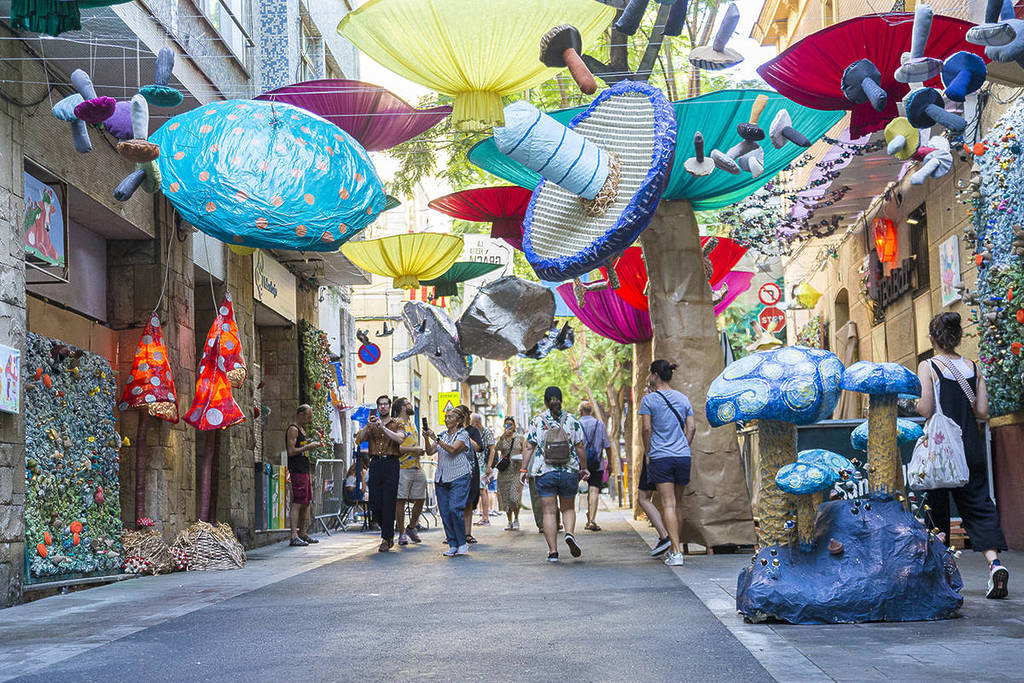

There’s something magical about the weeks leading up to the Gràcia Festival. While the rest of the city slows down, the neighborhood committee offices are buzzing with a constant flurry of scissors, cardboard, and paint. After a full year of quiet, selfless work, the residents have everything ready to transform the neighborhood’s streets into a vast temporary museum. Beyond the stages and official programs, the true heart of this celebration lies in the people who build it with their own hands, proving that the true essence of the festival is, above all, the community spirit.
For this 2026 edition, a total of 23 decorated spaces will bring color to the district, the result of a social project focused on community cohesion and collaborative efforts. This year’s map features new elements that will mark a turning point in the event’s recent history: from unprecedented collaborations between various streets to create immersive worlds, to the revival of sections that hadn’t been decorated in decades. All of this is done with an eye toward facilitating visitor mobility and ensuring that popular culture continues to occupy public spaces safely.
The Return of Sant Pere Màrtir and the Relocation of Jesús Street
One of the most talked-about developments this year is the return of Sant Pere Màrtir Street, which will once again be decked out in decorations after decades of absence along the stretch between Jesús and Domènec. The ones responsible for bringing it to life are none other than the members of the committee that, until last year, decorated Jesús Street.
This relocation does not alter the spirit of the festival community, which maintains its style and has collaborated closely with the Radars neighborhood network, but it responds to a purely practical need. The committee was looking for a wider space, and the Guàrdia Urbana supported the initiative to avoid a recurring problem: crowds of people flooding Gran de Gràcia Street to photograph the portal of Jesús. With this change of location, safety is improved and the flow of visitors is spread out.
Five streets, a single universe of fantasy
For the first time in the neighborhood’s recent history, the southern part of La Vila will come together in a joint large-scale project. The committees of Fraternitat de Dalt, Fraternitat de Baix, Tordera, Progrés, and Llibertat—located practically side by side—have joined forces to recreate the world of J.R.R. Tolkien under the theme of *The Lord of the Rings*. Each section of the route will recreate a different scene from this fantasy saga
Although historical records show that it was once common for several streets to come together around a single theme, this has not been seen on this scale for exactly ten years, when Tordera and Fraternitat de Baix collaborated on the installation “La mar salada.”
The 23 Decorated Streets of the 2026 Gràcia Festival
The committees’ selfless work will leave us this year with a catalog of displays ranging from nostalgia to ecological reflection and historical tributes. These are the proposals selected for 2026:
- Berga (“Anem a ca la Iaia”): An emotional journey back to the feelings we experienced when visiting our grandparents’ home.
- Ciudad Real (“Ens queda la paraula”): A tribute to the poets who suffered reprisals during the Civil War and the Franco regime, coinciding with the 90th anniversary of the military uprising.
- Fraternitat de Baix (“El bosc de Fratergon”): First stop on the joint *Lord of the Rings* project.
- Fraternitat de Dalt (“The Dalt Region – The Fraternity of the Rings”): The corner dedicated to the famous region within the Tolkien universe.
- Joan Blanques de Baix (“Joan Blanques Brigade”): A tribute to the fire department, set against a backdrop of fire, smoke, and water.
- Joan Blanques de Baix de Tot (“A Sea of Jellyfish”): A visual reflection on the fragility of our marine ecosystems through a massive school of jellyfish.
- La Perla (“La Perla Negra”): A total immersion in the world of Pirates of the Caribbean.
- Llibertat (“Argonath, Aranyerra, and Mordor”): Another of the impressive sets from The Lord of the Rings project.
- Lluís Vives (“La calçotada”): A direct invitation to take a seat at the table in this recreation of the popular Catalan meal.
- Mozart (“L’hivernacle encantat”): A nostalgic look back at the era when the arbor in Ciutadella Park served as a ballroom.
- Perill (“Perill in Bloom”): A nod to Barcelona’s Modernism and a tribute to the historic flower shops on La Rambla.
- Plaça del Poble Gitano (“Aniversari”): A double celebration: the tenth anniversary of the Romani association Romanipe’s and its own display in the square.
- Plaça de la Vila (“Un guarnit de merda”): A humor-filled tribute to the long scatological tradition of Catalan culture.
- Plaça del Nord (“The Improbable Garden”): A botanical space filled with imaginary species that will hide a maze for the little ones.
- Plaça Rovira i Trias (“Batiscaforoviruskas”): The square celebrates 20 years of uninterrupted decoration by merging with the 20th anniversary of Antònia Font’s album *Batiscafo Katiuscas *.
- Placeta de Sant Miquel i Rodalies (“L’abecedari de la Festa”): A literary universe dedicated to letters and words.
- Progrés (“Progrés dels Anells: the Return of the Neighborhood”): This street’s contribution to the massive collective set design inspired by Middle-earth.
- Providència (“Floridència”): A stroll among plants and flowers of all sizes that will recreate the magic of a grand greenhouse.
- Puigmartí (“Viet Fest”): A window onto Asia that will recreate various traditional festivals from Vietnamese culture.
- Sant Pere Màrtir (“Can Jesus come down to play?”): A display centered on children’s street games that champions pure fun, setting aside gender roles.
- Tordera (“Tordelfs-Rivendel”): The final piece of the neighborhood puzzle inspired by The Lord of the Rings.
- Travessia de Sant Antoni (“Can Travessia”): A melancholic recreation of a typical abandoned Catalan farmhouse.
- Verdi (“Metamorfosi”): A nature walk that will illustrate, step by step, the magical evolution of a caterpillar into a butterfly.
The Award-Winning Streets
In the 2026 edition of the traditional Gràcia Festival in Barcelona, community effort and artisanal creativity have once again transformed the neighborhood, crowning Plaça de Rovira i Trias with first prize for the first time in its history thanks to its entry“Batiscaforoviruskas,” a heartfelt tribute to Antònia Font’s album. This long-awaited award, achieved after two decades of uninterrupted participation, was joined on the podium by the magical recreation of the Ciutadella Park arbor by Mozart Street (second place) and by the spectacular “Lord of the Rings” universe built by Llibertat Street (third place), in a celebration that continues to celebrate popular culture, neighborhood resilience, and community life.
The Concerts of the Gràcia Festival
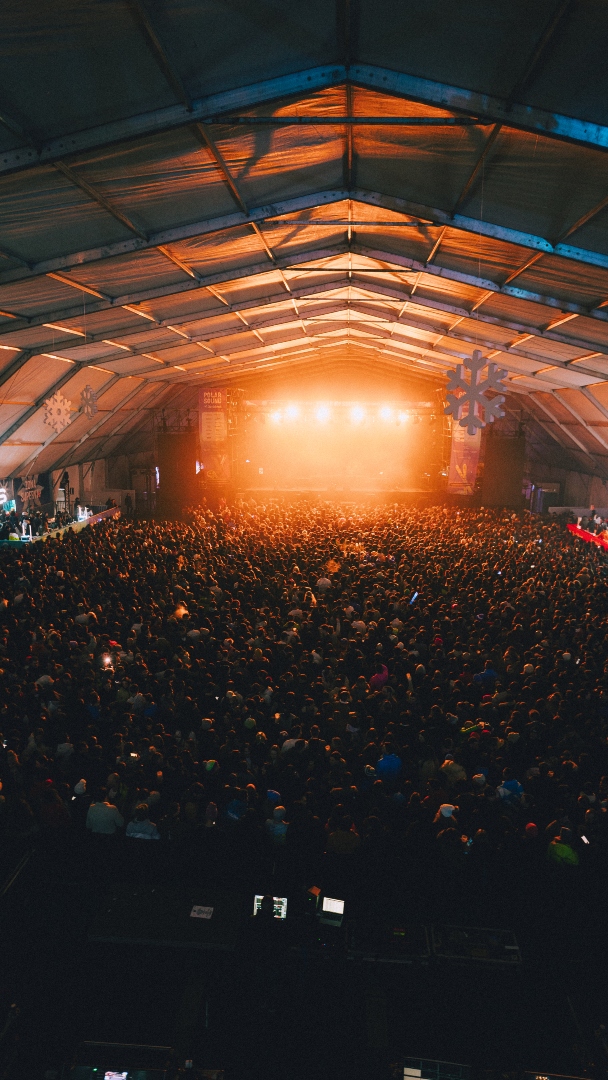
“On the musical front, the 2026 Gràcia Festival once again transforms the neighborhood into a massive open-air festival with more than 50 free concerts scheduled from August 15 to 21. Already iconic venues such as Plaça del Sol, Plaça de la Vila, Plaça de les Dones del 36, and the legendary Festigàbal in the Jardins de la Sedeta will come alive with an eclectic lineup ranging from rumba and Cuban rhythms to punk and alternative pop.
This year’s extensive lineup features acts such as Habla de mí en presente, Germà Negre, Al·lèrgiques al Pol·len, and Big Mama Montse, promising live music and DJ sets that will last until the early hours of the morning; a festive experience that is also supported by a special, non-stop metro service throughout the weekend so that attendees don’t miss a single note.”
Bars with Free Tapas at the Gràcia Festival
If you’re looking to update your culinary itinerary, it’s worth noting that several spots in Barcelona—especially in the Gràcia neighborhood and its surroundings—still keep alive the wonderful tradition of offering free tapas with your drink. Places like the Cassette Bar surprise guests with free appetizers that change daily, while neighborhood classics like Raspall and Casa Pagès offer unbeatable deals on a small beer plus a tapa of your choice starting at just €2.50.
To round out the route, traditional taverns like Hasta los Andares (on Provença Street) and Bodega Genin (on Comte Borrell) are still going strong—classic establishments that accompany your drink with generous complimentary servings ranging from freshly sliced Iberian cured meats and Manchego cheeses to timeless homemade tapas like gildas, patatas bravas, or traditional stews.