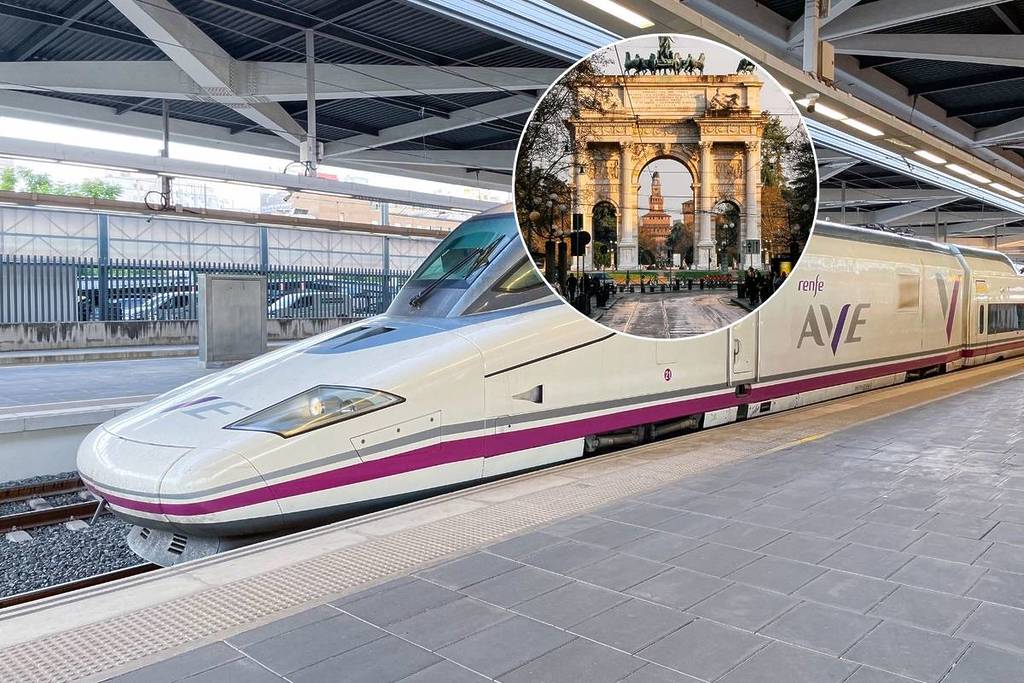
Enjoying dinner in Barcelona and dawn watching the canals of Venice could cease to be a logistical odyssey and become a competitive reality by 2040.
The European Commission has presented its new roadmap for the Mediterranean Corridor, an infrastructure plan that promises to connect the Catalan capital with northern Italy in record times: 8 hours to Milan and 10.5 hours to Venice by high speed.
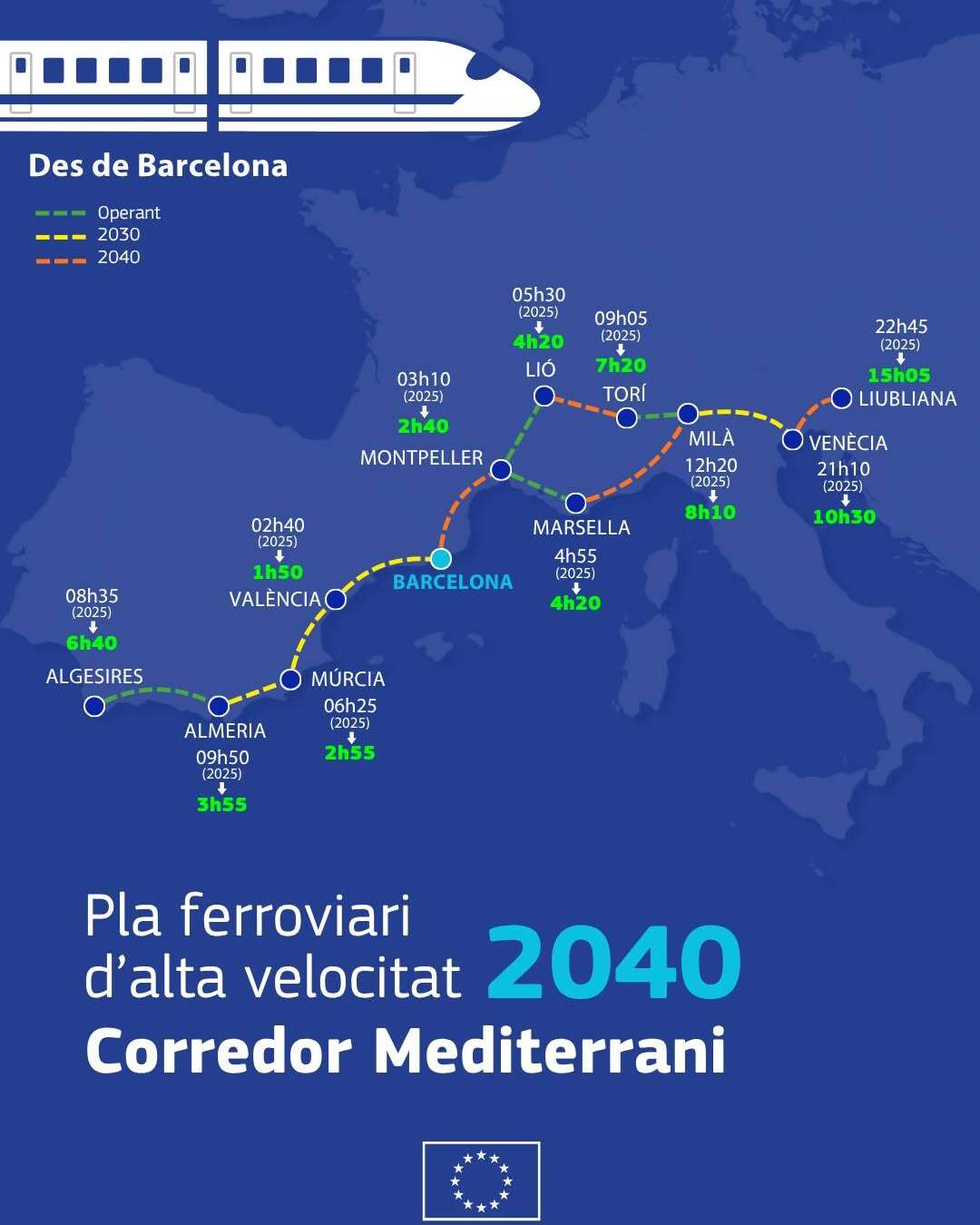
The graph released by the European institutions projects a drastic reduction in travel times thanks to the completion of the Trans-European Transport Network (TEN-T). However, it does not only depend on connecting tracks: the infrastructure will allow speed, but comfort will depend on the management of transfers and the commercial offer of the operators.
How long will it take to reach Milan and Venice from Barcelona?
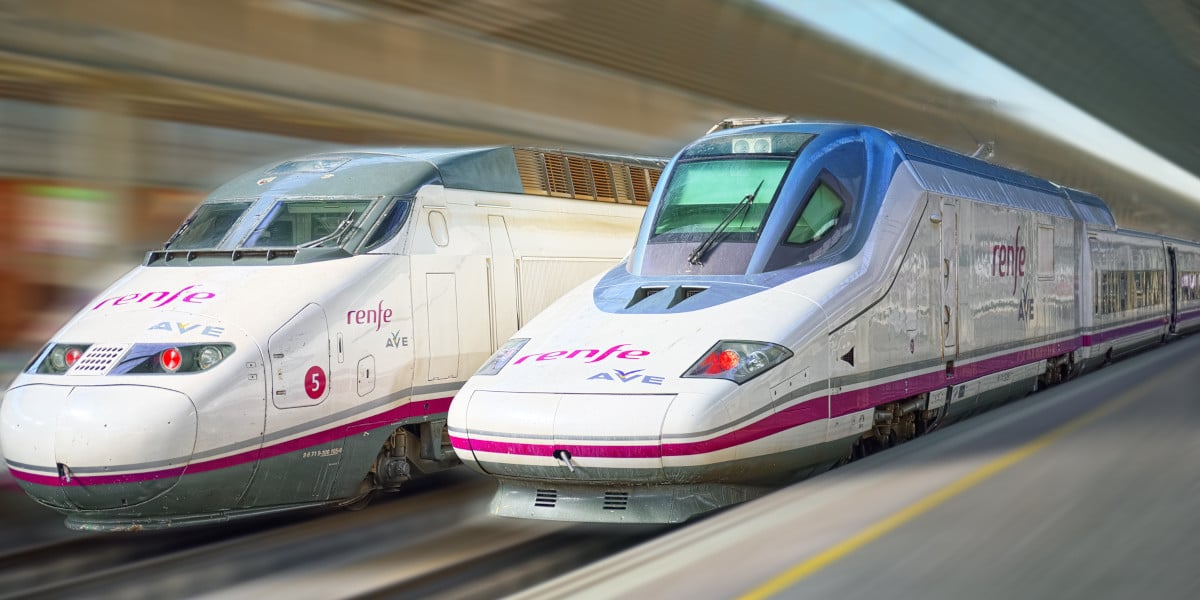
The connection with Turin and Milan, the economic heart of Italy, is the big bet of the international section. The plan is to reduce the journey from the current 12 hours and 20 minutes (which often involves long waits) to 8 hours and 10 minutes for Milan and just over 7 hours for Turin.
Today, train travel requires, in the vast majority of cases, a transfer in French cities such as Lyon or Montpellier, and sometimes a second change of train.
Although the 2040 infrastructure will technically allow a high-speed “direct train”, it is likely that travelers will still have to make at least one transfer in France (Lyon or Marseille node) until operators such as Renfe, SNCF or Trenitalia decide to launch a direct commercial line without interruption.
The network envisages an extension to Ljubljana, the capital of Slovenia, in a 15-hour journey from Barcelona.
Another part of the plan is a connection to Venice. The document foresees a travel time of 10 hours and 30 minutes, compared to the more than 21 hours theoretical travel time of the current route, by combining several regional and high-speed trains.
A 10-hour journey would make it possible to leave Barcelona at 9 p.m. and arrive in Venice at 7:30 a.m. the following day, for example, if the night train is adopted.
However, these estimates depend on France completing its pending high-speed sections, especially the Montpellier-Perpignan section, considered the current major “bottleneck” of the Mediterranean Corridor.
The 2040 plan does not only look to Europe. Improving connectivity to the south of the Iberian Peninsula will also make it possible to connect Barcelona with Valencia in about 2 hours and extend the network to Murcia.