
The skies over Catalonia are gearing up for an unprecedented astronomical event that won’t happen again for more than 150 years, offering unbeatable conditions to enjoy the most famous meteor shower of the summer.
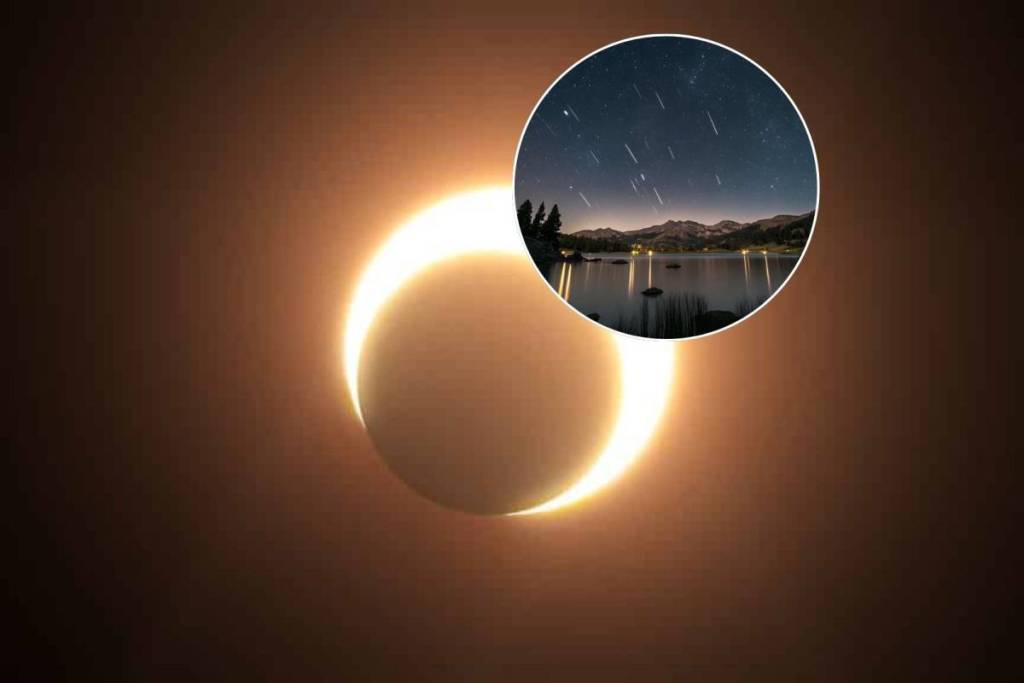
The summer sky usually treats us to unforgettable evenings, but the one on August 12 promises to be etched in everyone’s memory in a very special way. Following the long-awaited total solar eclipse that will transform daylight in Catalonia, the sky will invite us to keep looking up to witness the peak of the traditional Tears of Saint Lawrence, creating a truly unique double astronomical spectacle.
Both Barcelona residents and visitors from across the region will have ideal conditions this year to observe the Perseids. Thanks precisely to the alignment of the Earth, the Moon, and the Sun that causes the daytime eclipse, we’ll enjoy a true new moon; the Moon will remain below the horizon all night long, thus eliminating the major obstacle of moonlight. With the only concern being whether the clouds will cooperate, the stage is set for one of the clearest viewing experiences in recent memory.
The Secret of a Moonless Sky
The big news this year for shooting star hunters is the darkness. Usually, when the Tears of Saint Lawrence coincide with full moon nights or very bright nights, much of the spectacle is lost in the sky’s glare. This August 12, having spent the day obscuring the sun, the moon will leave us with an unbeatable black canvas against which we may be able to spot up to 100 meteors per hour.
Although we call them shooting stars, the Perseids are actually tiny particles of dust and sand left in the wake of Comet 109P/Swift-Tuttle. When our planet, on its journey around the sun, crosses the comet’s orbit, these tiny particles collide with the Earth’s atmosphere and burn up, tracing those brilliant trails that cut through the darkness. Although the meteor shower has been active for days and will continue through August 24, the peak of activity will occur in the early morning hours of August 12–13, right as the eclipse comes to a close.
Where to Look and How to Prepare
To enjoy the moment, there’s no need to lug around telescopes, binoculars, or—much less—protective glasses like those required for the solar eclipse. The best advice is simply to lie down on the ground or bring a good mat to get a panoramic and vertical view of the night sky, without straining your neck and without missing a single detail.
To spot the meteors, look toward the northeast, searching for the constellation Perseus. If you go out early in the evening, you’ll need to look near the horizon. As the night progresses, the radiant will rise higher in the sky, until it’s almost directly overhead before dawn breaks.
Sanctuaries of Darkness: Escaping the Lights of Barcelona
As always, light pollution in Barcelona and its metropolitan area is the greatest enemy of stargazing. To see the Perseids in all their splendor, you’ll need to head out to darker areas.
In Catalonia, the top three strategic viewing spots are the Montsec Observatory, the town of Albanyà, and the Aigüestortes i Estany de Sant Maurici National Park. However , for those looking for something closer to the city, the Garraf Massif and the Ordal area are highly recommended options just a short distance away. A little farther away, but equally worthwhile, are the natural parks of Montserrat, Sant Llorenç del Munt i l’Obac, and Montseny.
Of course, if the plan is to do a double feature and catch both the total eclipse in the afternoon and the Perseids at night, you’ll have to be precise with the map: the strip where the eclipse will be total is located only south of the line connecting Lleida and Vilanova i la Geltrú. That will be the key area for experiencing, in less than 24 hours, two of the most breathtaking phenomena the sky has to offer.