If you have strolled through Ciutadella Park in recent years, you have probably gazed with a mixture of curiosity and sadness at that imposing brick castle that looks like something out of a chivalric novel. The Castell dels Tres Dragons, that jewel of early Modernism designed by Lluís Domènech i Montaner for the 1888 Universal Exposition, has been a sleeping giant for too long, closed to the general public since the former Zoology Museum closed its doors in 2011.
But the wait is over. Barcelona City Council has already named the building’s future: the ‘L’Eix de la Ciència’ (The Axis of Science) project, by the JAAS studio. This is not just a lick of paint, but a total transformation that will turn the castle into the gateway to the ambitious Ciutadella del Coneixement.
An interior to live in (or learn in)
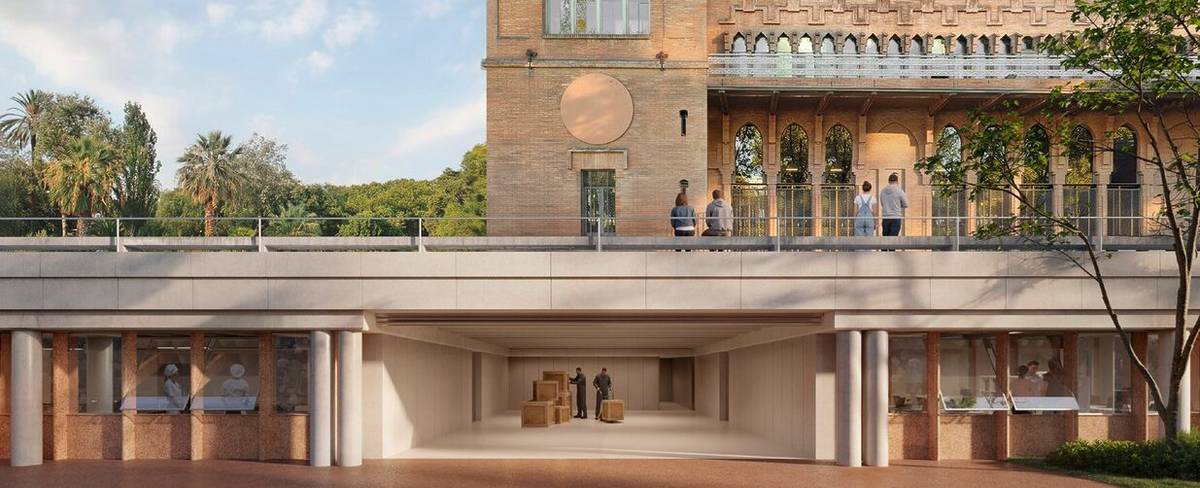
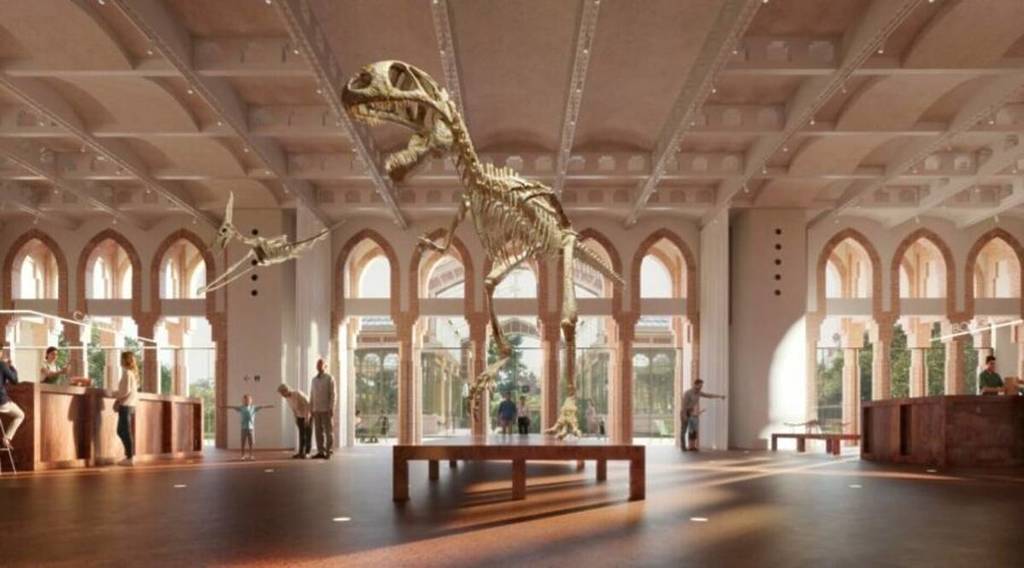
The most interesting thing about the project is that the castle will no longer be a closed-off place where only scientists go to study bones and bugs. The ground floor has been designed as an extension of the park itself. Imagine it: you enter through a large reception hall that connects directly with the natural world outside, where you can see spectacular pieces of Catalan natural heritage, such as the legendary reconstructed Sarrià mammoth.
In addition, the plan includes the creation of an integrated café and restaurant area, which promises to make this corner one of the most interesting meeting places in the area. For those seeking something more peaceful, the second floor will house a public library and permanent exhibition rooms dedicated to the flora and fauna of Catalonia.
Total respect for the modernist DNA
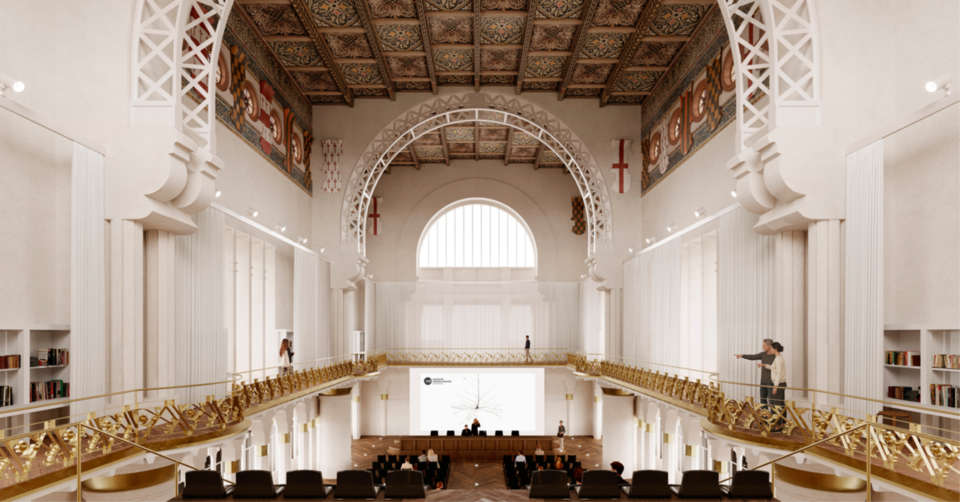
Despite the modernization, heritage lovers can breathe easy. The project is deeply conservative with the original elements. The floors, coffered ceilings, main staircase, and all those ornamental details (coats of arms, bronzes, and polychromes) that make the building unique will be restored and enhanced.
Even the large room on the first floor will be restored to become a multipurpose auditorium with retractable seating, allowing the space to be adapted for both scientific conferences and cultural events, visually integrating with the upper galleries.
When will we be able to go inside?
If you walk past it right now, you will see that the Castell is already surrounded by scaffolding. Work is currently underway on the exterior renovation, an €8 million project that includes the façade, roofs, and balconies, and which should be ready by the first quarter of 2027.
Once the “skin” of the building is finished, work will begin on the interior. According to municipal forecasts, the executive project for this internal renovation will be drafted in early 2027, so we still have a little patience to muster before we can enjoy a coffee surrounded by history and science.
This Castell will not be alone. Its renovation is the centerpiece of a puzzle that includes the recently refurbished Hivernacle, the Martorell Exhibition Center, and the Umbracle, forming a scientific and cultural hub that aims to make Barcelona a European benchmark for science communication.