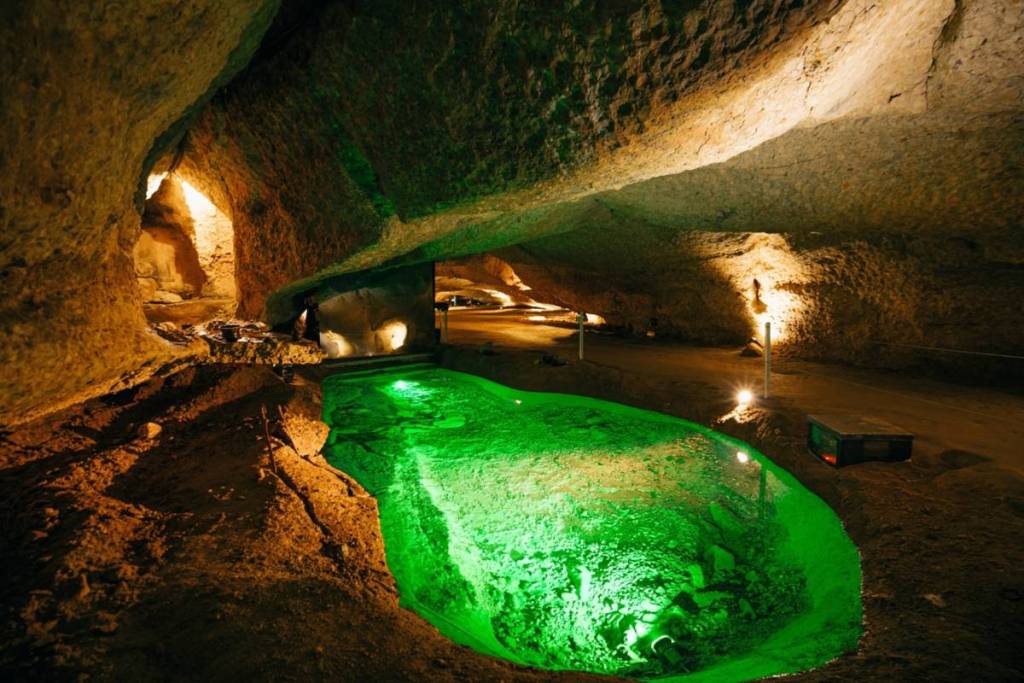

Sometimes, history isn’t found in books or raised as monuments toward the sky, but waits patiently in the darkness, hidden beneath our feet. In the geological heart of the province of Tarragona, rock and water have carved out over the centuries a silent stone labyrinth that invites visitors to delve into the very origins of humanity and connect with nature at its deepest roots.
This underground world takes shape in the Coves de l’Espluga, in the municipality of L’Espluga de Francolí, discovered by pure chance in 1853. Now the seventh-longest cave in the world in conglomerate rock—and the second-longest in Catalonia—these caverns serve as a time capsule where visitors can explore, from Tuesday through Sunday, an immersive tour that spans from the earliest Paleolithic shelters to the wild underground source of the Francolí River.
The heartbeat of the stone and a Neolithic village in miniature
The very name of the town already gives us a clue as to what it hides:it derives from the Latin *spelunca*, meaning cave. This place’s fame dates back centuries, and today you can explore it on a guided tour lasting just over an hour. Don’t expect the typical display cases; here, the museum is integrated into the underground itself. Gigantic projections cast directly onto the rock walls accompany you as you walk, recounting the lives of the communities that once inhabited these shadows. Upon emerging back into the light, the experience continues outdoors with a meticulously crafted, life-size recreation of a Neolithic settlement.
In 2019, the caves revealed their best-kept secret: an impressive sanctuary of rock art with more than 300 engravings dating back 37,000 years. Horses, oxen, deer, and abstract symbols adorn the walls of what is the oldest Paleolithic sanctuary discovered to date in Catalonia. Although this gallery is very difficult to access and visitors are not allowed to walk on the floor to ensure the preservation of the engravings, the beauty of this discovery can be admired in detail through a meticulously crafted audiovisual presentation during the tour.
Wetsuits and headlamps for the most adventurous
For those who prefer to swap a leisurely stroll for an adrenaline rush, there’s a much wilder side to the site: the Adventure Trail. Equipped with a wetsuit, helmet, and headlamp, the most daring visitors can venture beyond the walkways of the standard tour and engage in true caving, wading through the cold waters of the underground river that, on the surface, eventually form the Francolí River.
If you decide to take the tour (the caves are open mornings and afternoons, closed only on Mondays), the Conca de Barberà region offers plenty of reasons to extend your trip. Just a few kilometers away, the Royal Cistercian Monastery of Santa María de Poblet—a UNESCO World Heritage Site—awaits you. This immense complex, open daily, is still inhabited and hides the royal pantheon of the Crown of Aragon among its beautiful cloisters and chambers.
Back on the streets of L’Espluga, the Museu Terra offers a fascinating—and by no means nostalgic—journey through rural life. From Tuesday through Sunday, its dioramas and traditional crafts spark a very timely discussion about our relationship with the environment and sustainability. Finally, you can round out the day at the Fassina Balanyá Museum, a restored former brandy distillery where the old copper stills and original 19th-century machinery still stand, silent witnesses to the powerful economic engine that grapes once were in this region.