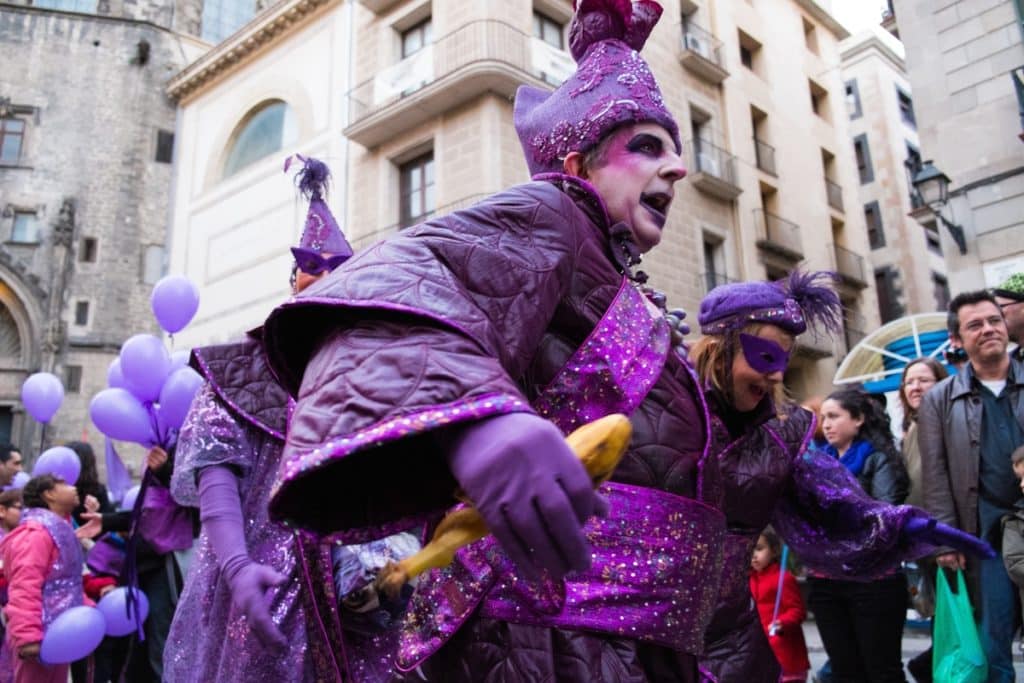
One of the most entertaining popular traditions returns, and Barcelona will celebrate it with parades and activities between February 12 and 18. Get ready, because this year Carnival not only comes loaded with confetti, but also coincides with the Festes de Santa Eulàlia, which means double the party in the streets.
Some say that Carnival dates back thousands of years to the Saturnalia festivals of the Roman Empire. Whatever its origin, if anything characterizes this festival, it is that the king ceases to be king and the commoner can be whoever he wants to be. That is why those in power have always tried to eliminate it at various times, but here we are, more ready than ever to put on our masks and subvert the order.
If there is one thing that sets Barcelona’s Carnival apart, it is the enormous participation that accompanies it. We Barcelonians love to get involved in this festival, and the number of activities, traditions, street parties, and parades that are organized is incredible.
When is Carnival 2026 in Barcelona?
 Editorial credit: Ajuntament de Barcelona/ Pere Virgili
If you’re already looking for a wig for this year’s costume, make a note of the key dates. As you know, the calendar depends on the moon, and in 2026 things will start early: the celebration will kick off on Fat Thursday (Dijous Gras) on February 12 and will last until February 18, the famous Ash Wednesday and the day when, amid crocodile tears, we will bury the sardine.
The Arrival and the grand premiere of Queen Belluga
For a few days, Barcelona will become monarchical, but a monarchy of madmen and fools. The city government will pass into the hands of the Kings of Carnival: King Carnestoltes and Queen Belluga. This year, the Sants neighborhood will once again be the nerve center of the Arribo, with a party shared between the neighborhood’s Carnival and the city’s.
The big news for 2026 is Queen Belluga’s historic change of look. After 14 years wearing the same costume, the queen will debut a new outfit in a show called “symbolic transformation” in front of the Casa del Mig ( in the Espanya Industrial park). The stage will be transformed into a giant tailor’s shop with 24 artists, circus performers, and live music to create Her Majesty’s new costume in front of the entire audience.
Arrival and Taronjada schedule (February 12)
- 5:00 p.m.: Start of the festive day at the Cotxeres de Sants.
- 6:00 p.m.: Parade with the Carnival Giants from the Cotxeres to the Casa del Mig.
- 6:30 p.m.: Main show of the Arribo and debut of Queen Belluga’s new dress.
- 7:00 p.m.: The traditional Taronjada. As every year, this “orange” battle (which is actually an epic shower of confetti and balloons) will close the event in front of the Sants-Montjuïc District Headquarters.
Carnival meets Santa Eulàlia
This year we have a unique crossover. As it falls on the same dates as Barcelona’s winter festival, on Thursday at 8:40 p.m., Carnival will move to Plaça de Sant Jaume. There it will coincide with the Pasejada de les Laies and pay tribute to the Taronjada with dances by Rodanxó and Rodanxona, the Carnival giants dating back to the 19th century, crowning the night with a fireworks display.
Parades in the neighborhoods: Saturday is the big day
 Editorial credit: Barcelona City Council
As every year, neighborhood spirit will be the driving force on Saturday, February 14. It is the day when associations, schools, and popular culture groups take their floats out onto the streets. From the grand parade in Gràcia to the more intimate parades in Nou Barris and Poblenou, the city will be filled with satire and color. It is undoubtedly the best time to see the ingenuity of Barcelona’s residents on the streets.
Sitges and the Merengue War of Vilanova
If what’s happening in the capital isn’t enough for you, you can always escape to the two great temples of Catalan Carnival. The Sitges Carnival remains the undisputed queen with its Disbauxa and Extermini parades, where glamour and partying never end. Meanwhile, in Vilanova i la Geltrú, don’t miss the Guerra del Merengue, where bakeries and streets are transformed into a sweet and sticky battlefield that is unique in the world.
Butifarra d’ou, coca de llardons, cod…The cuisine and typical dishes to eat during Carnivalin Catalonia
 Editorial credit: Wikimedia Commons
One of the highlights of Carnival in Barcelona is its unique gastronomic tradition. Have you heard the sayingPer dijous gras, butifarra menjaràs? Itrefers toDijous Gras orDijous Llarder, aday when friends and family get together to enjoy some of the favorite dishes of our culture: tortilla,coca de llardons, andbutifarrad’ou.
The origin of this day dates back to when Christian tradition dictated abstinence from certain foods during Lent, such as meat and eggs. Thus,Dijous Grasbecame the day when these foods could be eaten without restriction, and butifarra d’ou, the famous yellowish sausage , appeared, among other dishes.
But as we said, it is not the only one:coca de llardons (literally made with pork cracklings), tortilla (where eggs symbolize the same abundance as butifarra),buñuelos(another Lenten classic) or bacalao (this time typical of Holy Week, where it was considered a cheap food that replaced meat during the period of abstinence) are some of the other dishes that are worth trying.
Everything you need to know aboutthe neighborhood Carnival parades: schedules, dates, and routes
Editorial credit: Barcelona City Council
As every year, this Carnival 2025 will see neighborhood Carnival parades, where neighborhood associations, schools, and popular culture groups from many neighborhoods in the city will organize their own parades, Carnestoltes arrivals, or burials of the Sardine. Because where better than in our own neighborhoods to put on thisshow?
Here are the dates, times, and routes for all theneighborhoodCarnivalsin Barcelona.
Ash Wednesday: farewell to Carnival with theBurial of the Sardine
 Editorial credit: Shutterstock
Ash Wednesday is perhaps the saddest day of this festival. According to Christian tradition, it marks the beginning of Lent, a period of sacrifice where there is no longer any room for the madness and revelry of Carnival.
The city will bid farewell to the Kings of Carnival and the traditional Burial of the Sardine will take place. During this day, associations and organizations from the districts will organize events such as community meals, the burning of the sardine, and neighborhood parties to bid farewell to this colorful and frenetic week, putting the finishing touch on the celebration for another year.
If you don’t want to miss anything from this crazy festival, you can check the detailed program on theCity Council’s website.
Sitges Carnival
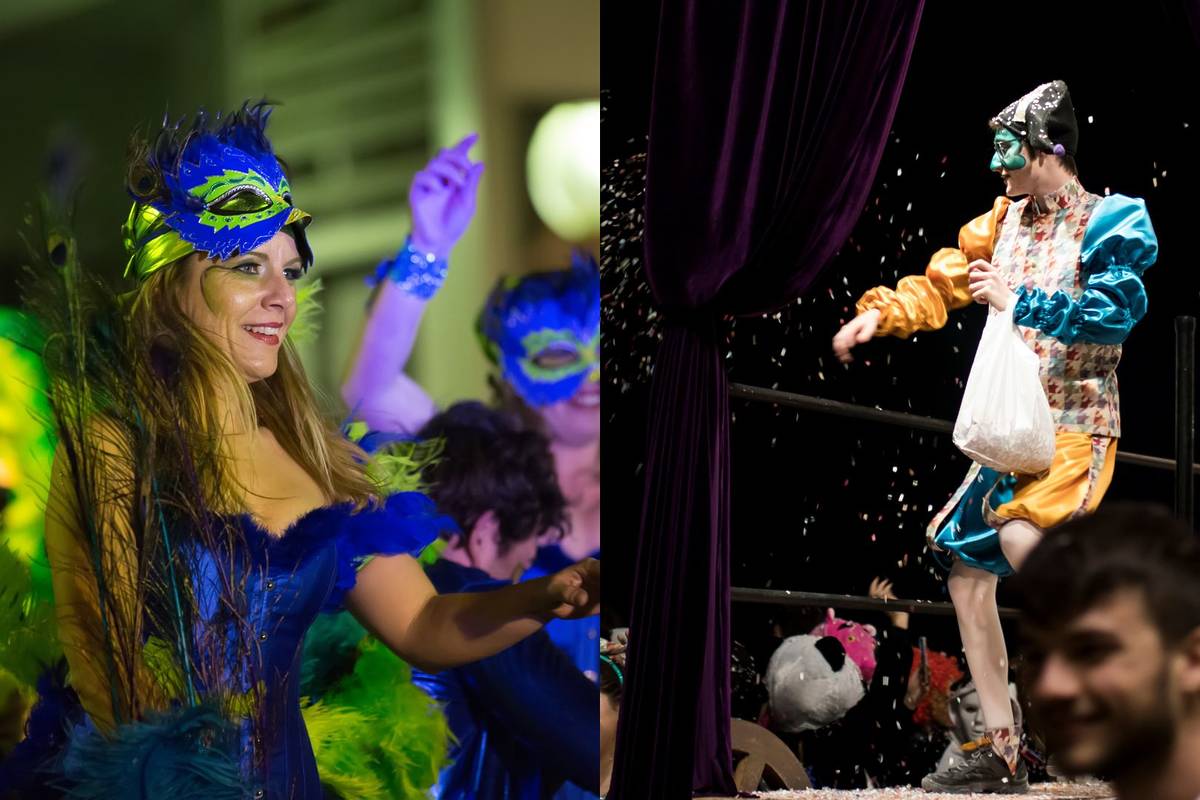 Photo: BearFotos / Elena Rostunova
An alternative option just 40 minutes from Barcelona is to visit the Sitges Carnival, the most important in Catalonia, which will be celebrating its main events until Tuesday, February 17.