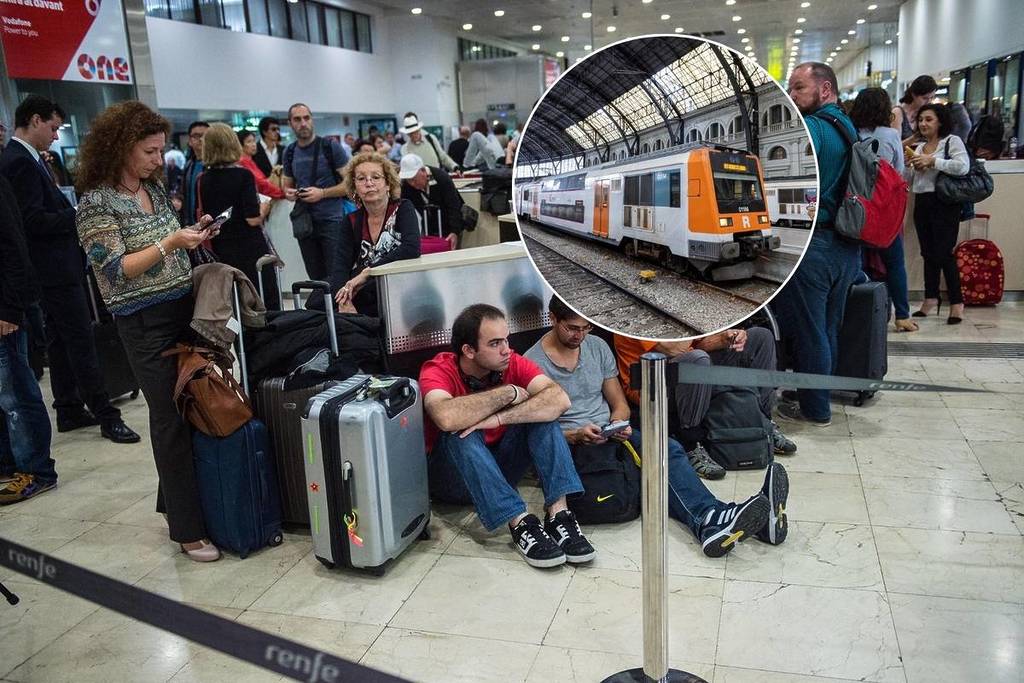
Anyone who has missed a Rodalies train knows that it is not just a delay: it is anxiety, uncertainty, anger, physical discomfort and accumulated frustration. Now, a study coordinated by the Department of Psychology at the Universitat Rovira i Virgili (URV) has scientifically confirmed it: regular users of Rodalies and regional trains have significantly higher levels of stress, anxiety, depression, hostility and physical symptoms than the rest of the population.
The data speak for themselves. Of the nearly 700 people who have participated in the research so far, 88% say that the railway crisis affects their quality of life. Eighty percent say the train is late more than half the time, and almost half say it is always late. And the more you depend on the train, the worse: more symptoms, more frustration, more wear and tear.
On a scale of anxiety from 0 to 20, the usual average for the population is 3.56 . Among frequent Rodalies users, this figure soars to 8.69. In the case of depression, the reference average is 5.32, but those affected by frequent delays exceed 8 points. The same happens with physical symptoms derived from emotional discomfort, which go from a general average of 4.26 to a worrying 8.38 among frequent travelers.
Sergi Martín-Arbós, principal investigator of the study, explained in an interview on RAC1: “Not knowing whether you will arrive on time for work, an exam or an appointment generates an uncertainty that obviously has consequences”.
The impact is such that many people have made vital decisions based on the reliability of transport: changing home, work or studies. “When you see that the situation is dragging on over time and has no clear solution, it is logical to look for alternatives,” adds Martín-Arbós.
The study is still underway and there are plans to extend the analysis to other factors such as gender, family situation or personal context. But it has already put figures to something that thousands of users have been denouncing for years: traveling on Rodalies not only makes you lose time, it can also make you lose mental health.