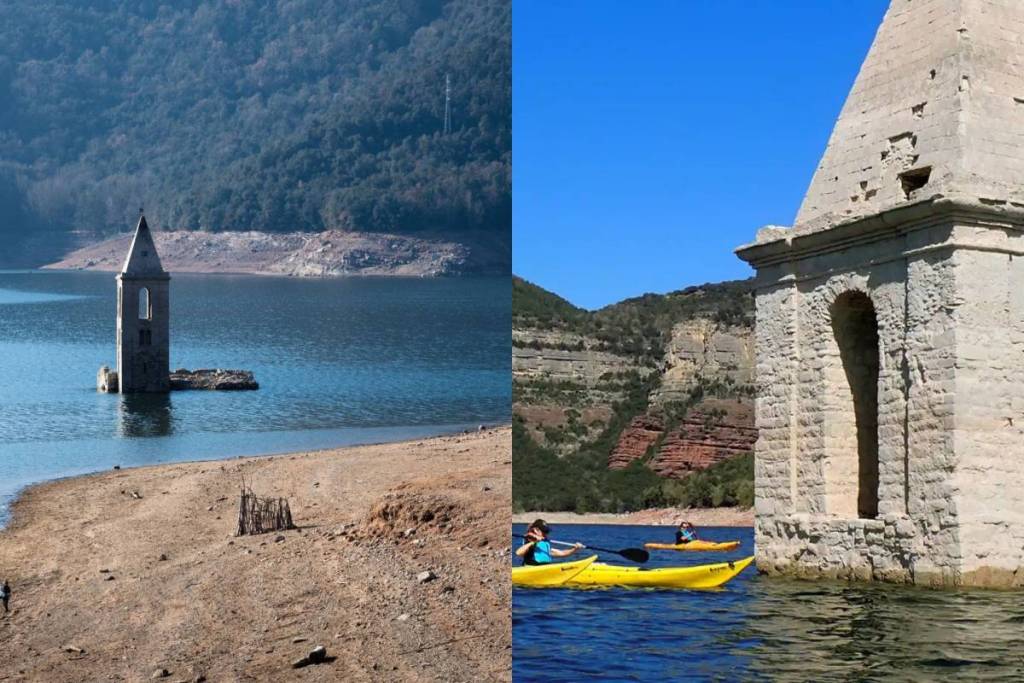

There are images that remain etched in our minds, such as that of the cracked earth that, not so long ago, turned this corner into a sad symbol of the lack of rain. But nature always finds a way to rewrite its script, and the Sau Reservoir has regained its flow, restoring that immense, silent expanse of water embraced by the deep forests of the Osona region. Just an hour and a half by car from Barcelona, this landscape rises once again as a refuge where time seems to stand still and the noise of traffic gives way to the sound of the wind crashing against the cliffs.
With this rebirth, the entire valley is transformed into a vast playground for those seeking fresh air and active tourism. The options for making the most of your days off here go far beyond simply gazing at the shore: visitors can dive into the water to explore ancient submerged ruins, venture into the dense trails of the Collsacabra mountain range, or wander aimlessly through villages with their medieval charm intact. It is, in short, an unbeatable opportunity to connect with the natural and architectural heritage that lies just a stone’s throw from home.
Where to Rent Kayaks at the Sau Reservoir
The Sau Reservoir is a boundless playground for those seeking refreshment. Through the Club Nàutic Vic-Sau or companies like Kayak Sau, you can rent canoes or kayaks to glide across the reservoir with a fascinating goal: to paddle just a few centimeters from the bell tower of Sant Romà de Sau. This 11th-century architectural gem was submerged beneath the water’s surface in the 1960s following the construction of the dam, and paddling around it at water level is a truly awe-inspiring experience. The club also provides equipment for windsurfing and water skiing.
For those who prefer to keep their feet on solid ground, the area around the reservoir offers a network of trails ideal for mountain biking, Segway rides, or Nordic walking with Aquaterraclub. And if you’re looking for a radical change of perspective, Baló Tour organizes hot-air balloon flights that let you gaze down from the sky at the vastness of the Vic plain and the silhouette of the Sant Pere de Casseres monastery—a Benedictine building perched on a bend in the Ter River that, from above, gives the impression of floating.
Legendary Routes in Collsacabra
As you gain elevation and venture into the Collsacabra, the landscape becomes wild. In this area of rugged crags like those of Aiats, stories are still told of Serrallonga, the legendary bandit who used the dense forests of Les Guilleries as his hideout.
The village of Cantonigròs is the perfect base camp for hikers. Routes depart from here, climbing to an altitude of 1,300 meters, where the sanctuary of the Mare de Déu de Cabrera stands. Another unforgettable hike—made especially pleasant by the shade cast by oak, holm oak, and chestnut trees—is the one leading to La Foradada, a geological wonder of rock that looks like something out of a fairy tale.
Moreover, walking through Osona is, in many cases, like traveling back in time. The forest trail connecting the towns of Tavertet and Rupit is proof of this. The route begins under the watchful eye of the Church of Sant Crostófol in Tavertet, winds its way along gorges carpeted in green, and crosses a shady, silent beech forest.
The reward at the end of the road is Rupit. Crossing its wooden suspension bridge is the gateway to a medieval network of terraced streets. Circling the village and following the course of the stream, a path winds through the shade of natural stone walls, allowing you to discover gems such as the medieval Can Badaire Bridge, the Carreguell Fountain, and the ruins of the old palace.
The Charm of Moianès and a Table Set in Vic
Further south, the terrain becomes gentler as you enter the Moianès, a region dotted with small, charming towns such as Calders, l’Estany, and Moià. Its well-marked trails invite you to take leisurely excursions (on foot, by bike, or on horseback) to unusual spots: the “gorgs blaus” (blue pools) of Monistrol, the ice well of Calders, the oak groves of Collsuspina, or the dolmen at Pla de Trullàs. Here you’ll also find the monastery of Santa Maria de l’Estany—a must-see for lovers of Romanesque architecture—and the Toll Cave.
And to top it all off, the regional capital, Vic. After a day spent in nature, its El Mercadal Square is the ideal meeting spot to browse through shops selling crafts and local products. A visit to its imposing cathedral or the Episcopal Museum is bound to whet your appetite, which is satisfied in grand style here: a “olla remenada,” some “farcellets de col,” or a comforting bowl of “escudella de carn d’olla” are the must-try culinary treats before heading back to the big city.