Barcelona is about to add a new cultural icon to one of its most emblematic crossroads. The corner of Passeig de Gràcia and Gran Via, known for housing the Comedia cinema for decades, will be, as previously announced, the headquarters of the Carmen Thyssen Museum in Barcelona after the City Council’s Urban Planning Commission initially approved the modification of the General Metropolitan Plan (PGM) that will allow the project to get underway.
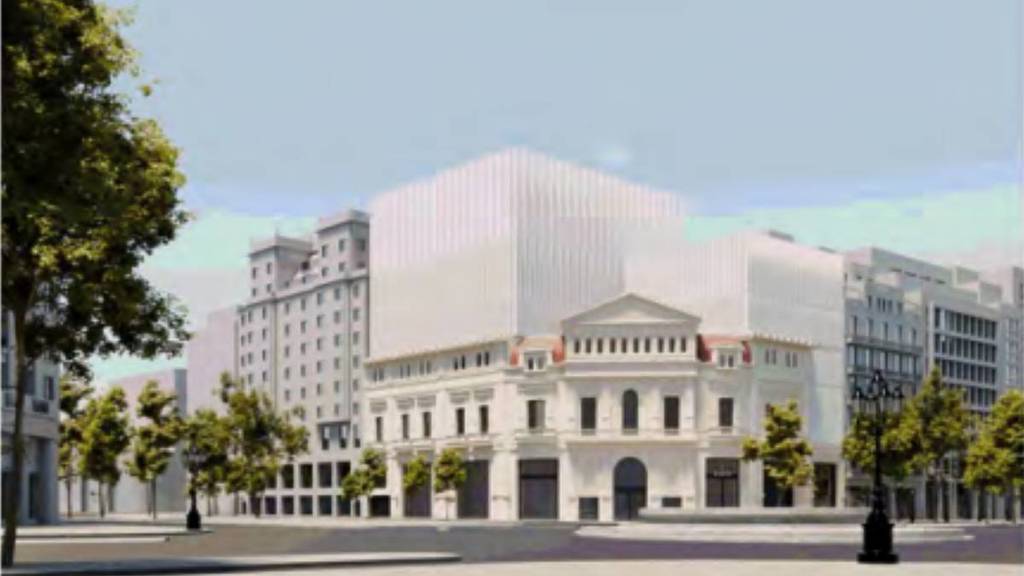
But the most striking aspect of the project is not the announcement itself, which was already known, but the conditions of the project, as it will involve a thorough renovation of the historic Palau Marcet that will house the museum, with a 9-storey extension and a profound change in its appearance and uses.
9 new floors for the Thyssen Museum

The proposal contemplates preserving the historic facades of the Palau Marcet -considered a Cultural Asset of Local Interest-, but will allow the construction of two new volumes that will redefine the profile of this block.
The future museum will have two distinct bodies: one facing the Gran Via, which may reach nine floors (excluding the first floor), and the other, facing Passeig de Gràcia, which will remain at six floors. This new volumetry will allow the building to adapt to the surrounding buildings, which are taller than the current cinema.
One of the most striking aspects of the plan is that 25% of the surface area of the building (which will have almost 10,000 m² of floor space) can be used for catering and retail activities. This was explained by Deputy Mayor Laia Bonet, who explained that the museum will include specialized stores, a restaurant and other multipurpose rooms. That is to say: it will not only be a classic museum, but a space with stores and restaurants.
In addition to the exhibition halls that will house the Thyssen collection, the future museum will also include an auditorium with capacity for 450 people, educational spaces for workshops and courses, and versatile areas to host all kinds of cultural activities.
The museum is expected to open its doors in 2027, with an investment of more than 19 million euros, financed entirely by the private promoters of the project.